











Textile ducts help preserve samples from the polar regions at -30°C
Texte Wouter Polspoel | Photos Air Ambiance
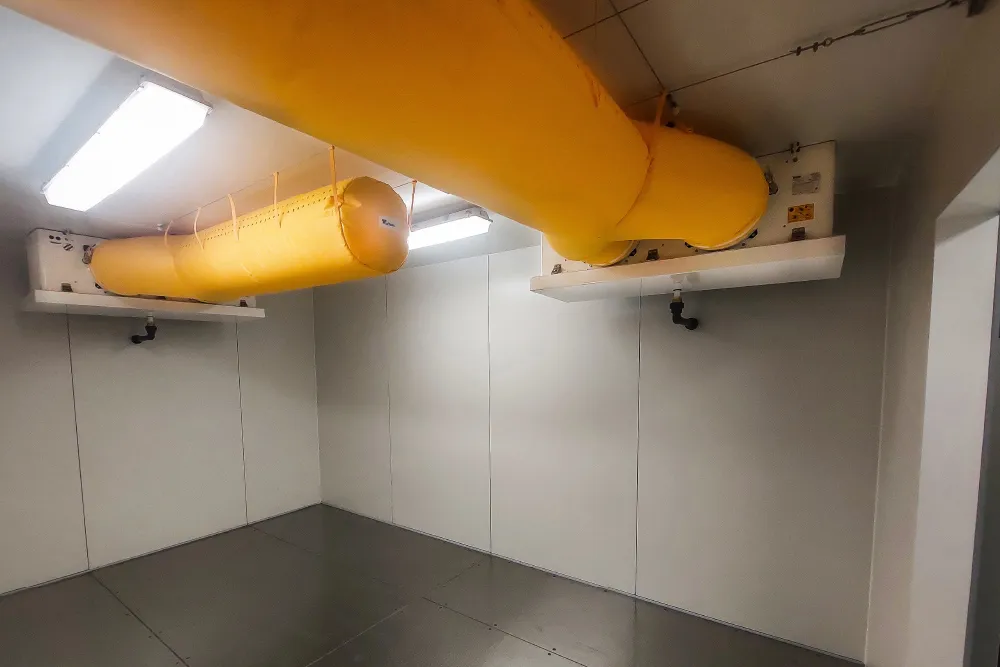
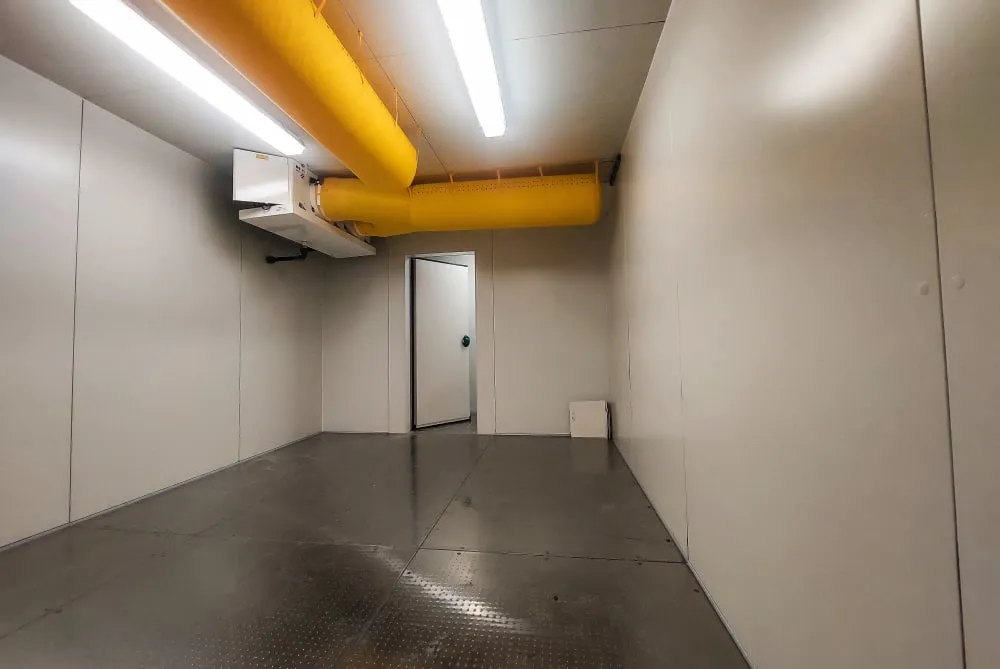
The Université libre de Bruxelles (ULB) recently opened a laboratory dedicated to preserving samples collected in Antarctica and Greenland at a constant temperature of -30°C. Cooled, ventilated air is supplied to the glaciology laboratory through textile ducts provided by Prihoda. “The fabric of the ‘airsocks’ has been treated with an antibacterial finish, and the suspension cables are stainless steel. Anyone entering the laboratory feels no draught thanks to the custom-designed air distribution,” explains Lawrence Jacob, sales manager at Prihoda.
Although this project may seem unusual to an outside observer, it was entirely routine for Prihoda. “We regularly supply textile ducts for environments where hygiene is paramount, such as food production areas, cleanrooms and various laboratories,” says Lawrence Jacob. “These projects require stainless steel suspension cables and antibacterial fabrics. Stainless steel prevents condensation from causing corrosion, while the fabric’s antibacterial treatment, which involves applying a silver layer just one nanometre thick, prevents bacteria and other organisms from settling on the ducts. We had to take the same approach in the glaciology laboratory.”
On-trend yellow
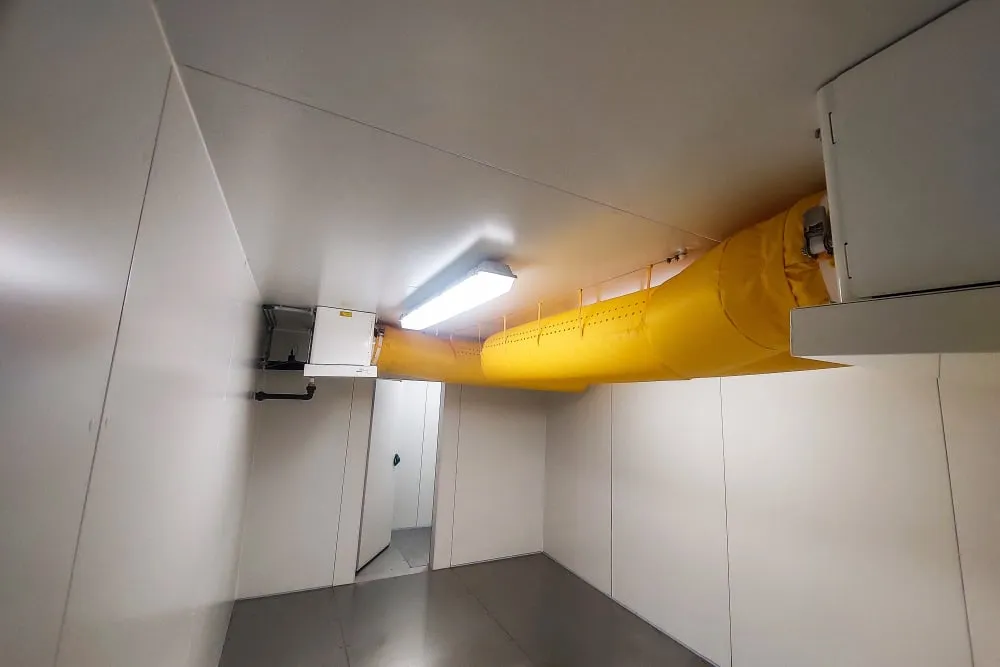
Not only the antibacterial treatment, but also the fact that the ‘airsocks’ are made of fabric, ensures that they meet the strictest hygiene standards. “Choosing a permeable material such as fabric eliminates any risk of condensation forming,” explains the sales manager. “This is different, for example, from perforated metal ducts. Another advantage is that textile ducts can simply be machine-washed, whereas maintaining metal ducts requires the services of costly specialist companies. Textile ducts also offer far more aesthetic options. For this project, the client chose an on-trend yellow, giving the space a different look from traditional metal solutions.”
Benefits for installers
Textile ducts also offer practical benefits for installers, according to Lawrence Jacob. “Prihoda textile ducts are lightweight products. This makes them easier to transport than metal ducts. Their weight, which places very little load on the roof structure, and their shape also make them much easier to install. They are supplied to measure, too. And speaking of bespoke solutions, the airflow is also set to measure. In practical terms, this means that users feel no draught when they enter the space, in this case the refrigerated laboratory.”
The fabric Prihoda uses for its ‘airsocks’ is ISO-certified. “But as they are made from a single material, polyester, the textile ducts are also fully recyclable at the end of their service life,” says Lawrence Jacob.
Growing demand
According to the sales manager, the use of Prihoda textile ducts is becoming increasingly common. “Whereas we used to work mainly in industrial environments, we are now seeing strong growth in other segments, such as the office market, thanks to new aesthetic options and other innovations. That is what is interesting about our textile ducts: they can be used in any environment.”
Lawrence Jacob looks back with satisfaction on the ULB project. “Our collaboration with the installer, Air Ambiance, went very well. We work regularly with Air Ambiance, and the company always delivers a professional installation. As usual, the managing director insisted that we visit the site together before starting work, so we could discuss everything in detail. That says a lot about his professionalism.”
The positive sentiment is shared. “Prihoda supported us throughout this project, which we consider a true reference because of the specific hygiene requirements and the sensitivity of the samples stored in the laboratory, from the design stage through to final completion. Drawing on our experience, we can confirm that their textile ducts were the right choice in this case,” concludes Daniel Blaise, technical and sales director at Air Ambiance.
Een zakelijke vraag aan Linumgroep? Get in touch
Companies in this story

Keep following this
Get an email when a new story is published. No account needed.
- ThemeHealthy indoor air
- SubjectNews
- CompanyLinumgroep







