A highly flexible door communication system with no cabinet components
Texte Piet Andries | Photos GIRA
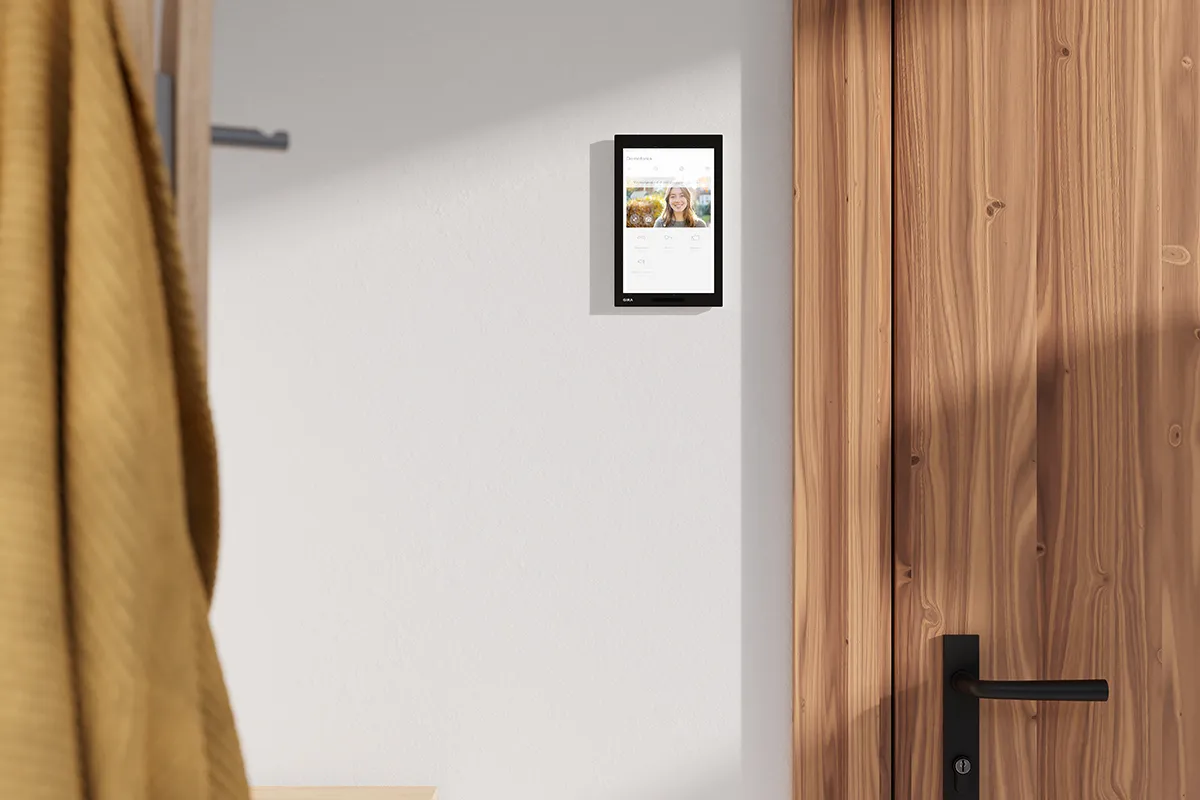
With System 106 IP, GIRA is finally turning the page on the era of analogue two-wire systems. This fully network-based door communication system is quicker to install, integrates seamlessly into smart home environments and stands out above all for its high level of security. It also has the advantage of not severing all ties with the renowned two-wire technology…
Analogue two-wire systems paired with separate gateways are gradually disappearing from the average installer’s vocabulary. They are being widely replaced by video door entry solutions based entirely on Internet Protocol (IP). GIRA, best known for its smart switches and home automation innovations, is responding to this trend with System 106 IP, a scalable, customisable solution for projects of all kinds, from a detached house to a residential neighbourhood or an apartment block with several dozen units. Up to 1,000 connection points can be configured.
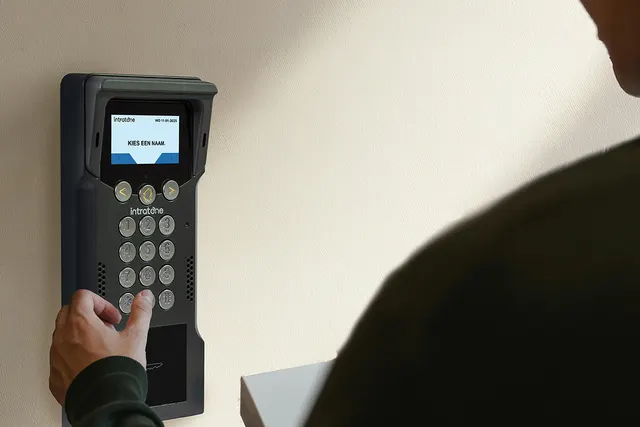
“As this is now a pure IP solution, the door station connects directly to the Power over Ethernet switch, just like the indoor station. That means there are no cabinet components to install,” explains Steven Moreau, Sales Manager at GIRA Belgium, highlighting how straightforward installation is.
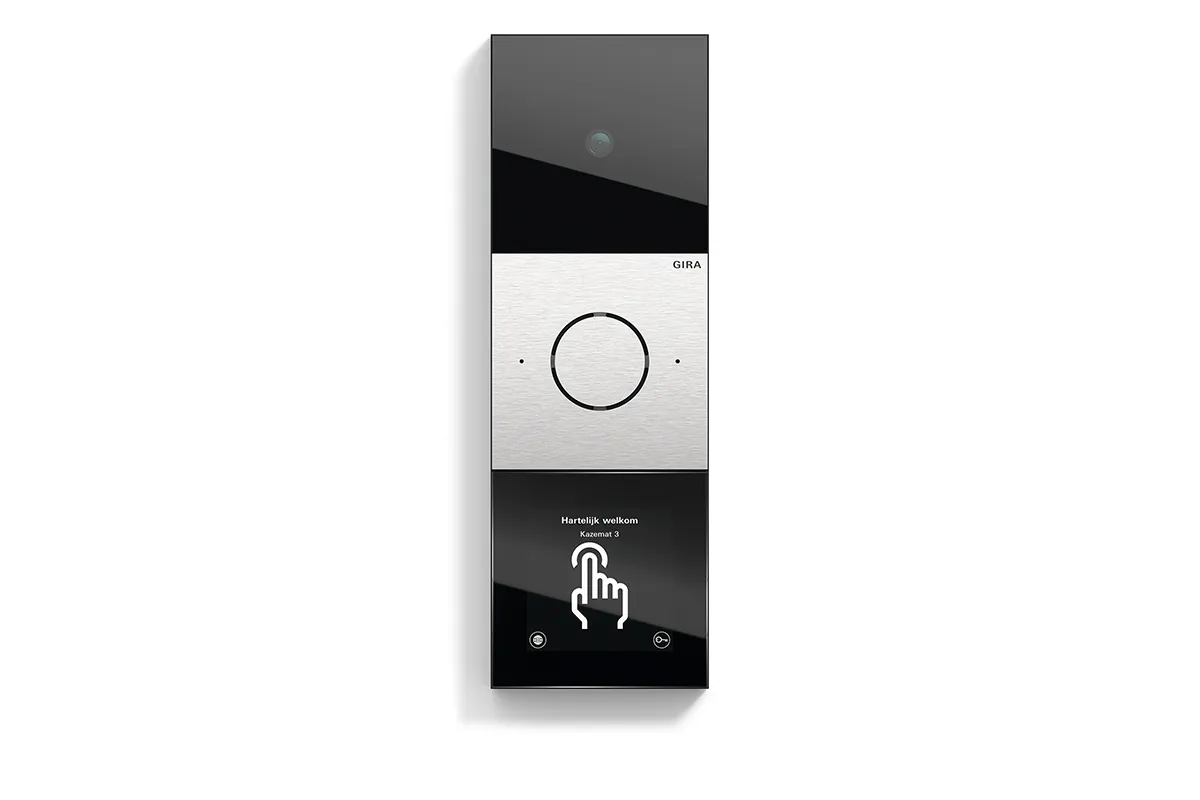
No need for an additional screen
The intermediate layer, consisting of a dedicated IP gateway for forwarding calls to a smartphone, is eliminated entirely. The door and indoor stations simply connect to the existing network infrastructure. Tenants or owners who want to receive door calls on their smartphone just scan a QR code displayed on their indoor station and link it to their Google or Apple account.
For the indoor station, users can also opt for the G1, GIRA’s central control unit for managing the entire smart home, and use its screen directly for video door entry. “The G1 combines home automation, the residential server and video door entry,” wappartments where the G1 is connected to the occupant’s private network, for example, while the video door entry system runs on the building’s network, the F1 module (a network segmentation module with SIP gateway, ed.) automatically connects the two. Here again, the installer does not need to do anything extra. The F1 works with or without a home automation system, in which case it simply connects to a standard video screen.”
Ultra-fast commissioning
For step-by-step configuration, installers can use the Gira Project Assistant (GPA). The process starts with selecting the building type, naming the door stations and apartments, and assigning the call buttons.
“But the cleverest part comes next,” explains Steven Moreau. “Each product, whether a door station, indoor station or actuator, comes with a label bearing a QR code that the installer can scan directly using their smartphone camera. There’s no need for an additional reader. They then just click ‘commissioning’ and the entire download starts automatically. It’s that simple. The GPA also supports phased deployment, minimising disruption during commissioning on sites that do not yet have an Internet connection.”
Also suitable for renovations
The thousands of apartment blocks in Belgium still equipped with conventional two-wire systems are not being left behind. GIRA will launch an IP converter for two-wire systems in early 2027. The module will use the existing wiring for the door station, quadruple the video resolution and offer the same flexibility as in new-build projects.
As straightforward as it is to install, System 106 IP can handle even the most complex situations.
On the very day of our interview, the Belgian army’s cybersecurity division issued a symbolic warning about the hacking risks associated with Internet-connected video doorbells. Steven Moreau is keen to reassure users, however: “End-to-end encryption is enabled by default, with no settings required from the installer or end user, and all communications pass exclusively through German servers. System 106 IP is therefore already compliant with the requirements of the Cyber Resilience Act (CRA), which will come fully into force next year.”
And, since we’re talking about the military, the screen on the door station is military grade, ensuring excellent visibility even in direct sunlight.
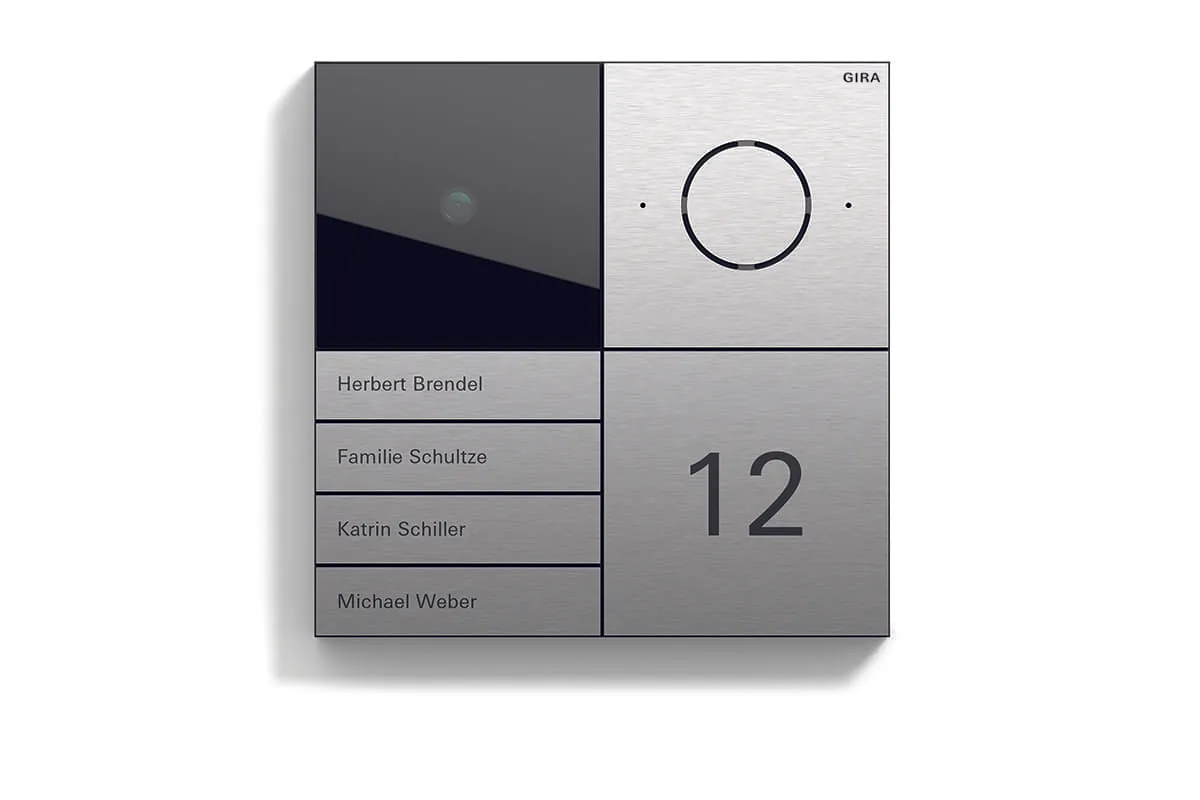
Finally, GIRA can incorporate a blank module that allows signals from external RFID readers to pass through, enabling them to be discreetly installed behind the door station. This makes it possible to combine the customer’s existing access control systems, such as those from Paxton, with GIRA’s elegant design. With finishes available in bronze, stainless steel and matt black, plus the option of laser-engraved names, System 106 IP certainly has plenty of aesthetic appeal.
Een zakelijke vraag aan Gira? Get in touch
Companies in this story

Keep following this
Get an email when a new story is published. No account needed.
- SubjectElectrical engineering
- CompanyGira