Heat pump noise: how to prevent nuisance
Texte Frixis & Wouter Polspoel | Visuels Frixis & IA
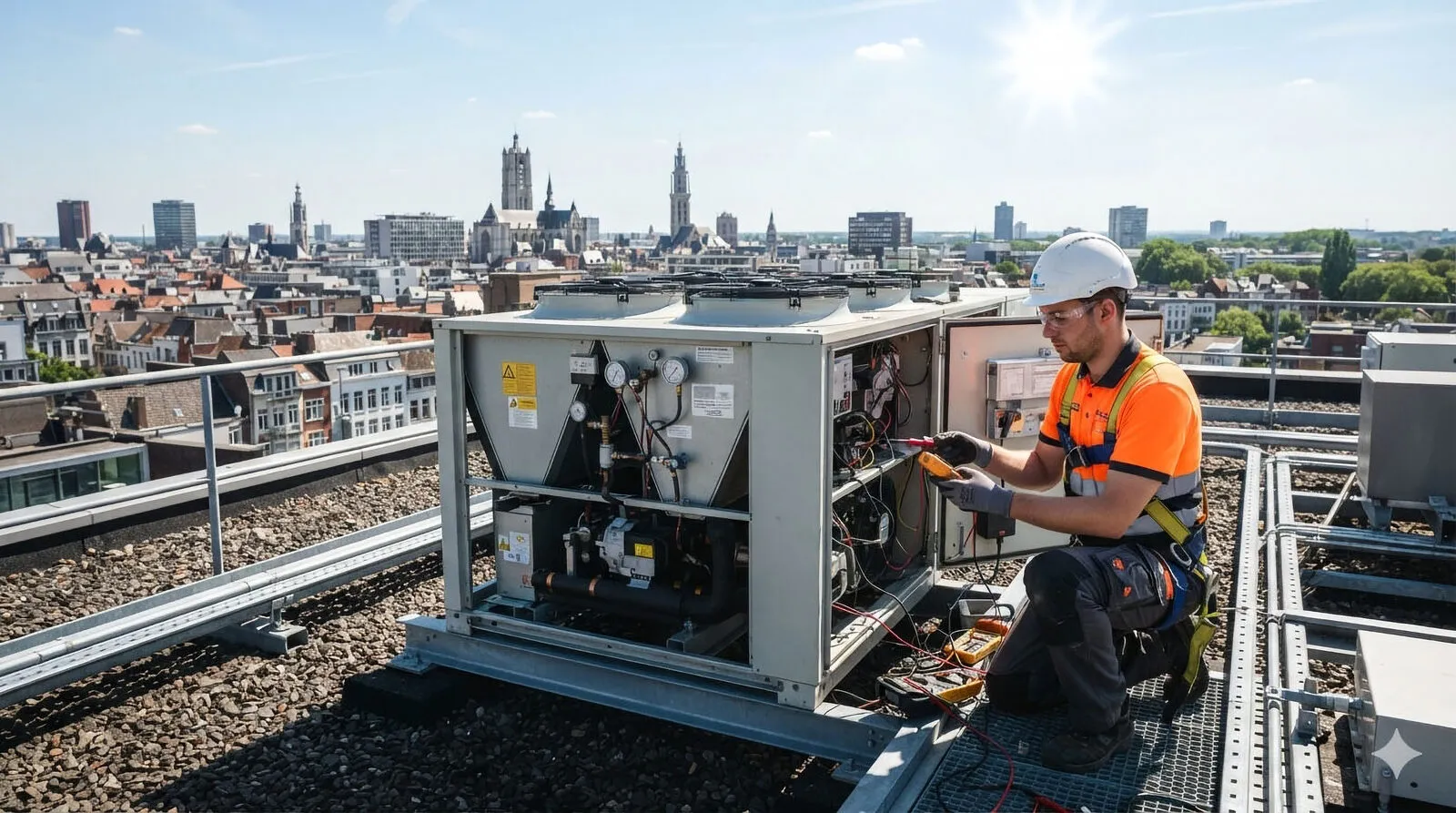
Noise from a heat pump’s outdoor unit can sometimes cause tensions between neighbours. Its location and orientation therefore deserve careful consideration from the design stage onwards. To guide designers, installers and permitting authorities, while avoiding a proliferation of different rules from one municipality to another, the Flemish authorities have produced the guide « Omgevingsaspecten bij warmtepompen en airco-installaties », which covers the environmental aspects of heat pumps and air-conditioning systems. Frixis, the Belgian trade association for the refrigeration and air treatment sector, contributed to its development and presents its main recommendations in this article.
In Flanders, many residential outdoor units are not subject to specific noise requirements, but local rules may apply. It is therefore essential to check the requirements with the municipal environmental department beforehand.
Where no specific legal requirements apply, the recommended maximum sound pressure level is 45 dB(A) during the day, between 7 h and 22 h, and 40 dB(A) at night, between 22 h and 7 h. These values are assessed outdoors, at a height of 1.5 metres, at the property boundary, the boundary between gardens or the edge of a neighbour’s terrace. The opening windows of neighbouring houses or flats must also be taken into account.
A clearly audible hum or drone is perceived as more disturbing than a steady noise. A 5 dB correction is therefore added to the measured sound pressure level during the assessment. Where several outdoor units are installed on the same plot, they are assessed together: their combined sound pressure level must comply with the guideline value.
Choosing the right unit
Choosing a suitable unit starts with correct sizing. An undersized heat pump runs more often at high output and therefore produces more noise. Conversely, an oversized unit has more frequent start-stop cycles, which attract more attention because of the changes in sound level. A heat loss calculation is therefore essential.
When choosing a unit, use its declared sound power level as a reference. This is given in the technical documentation or on the energy label. If the manufacturer gives several values for different operating conditions, use the maximum sound power level. A quiet night mode is strongly recommended, particularly as the night-time value is 5 dB lower than the daytime limit.
The importance of positioning
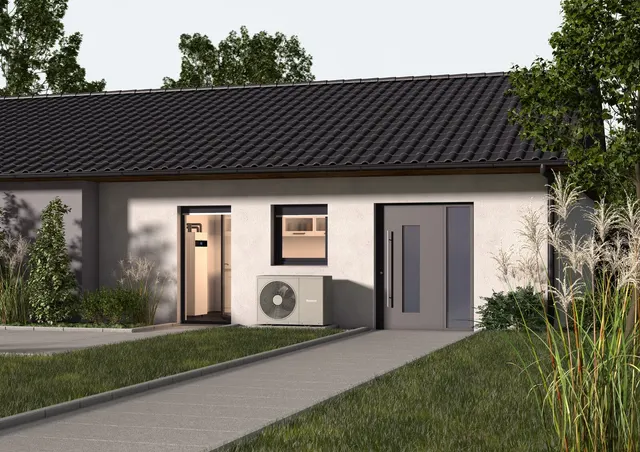
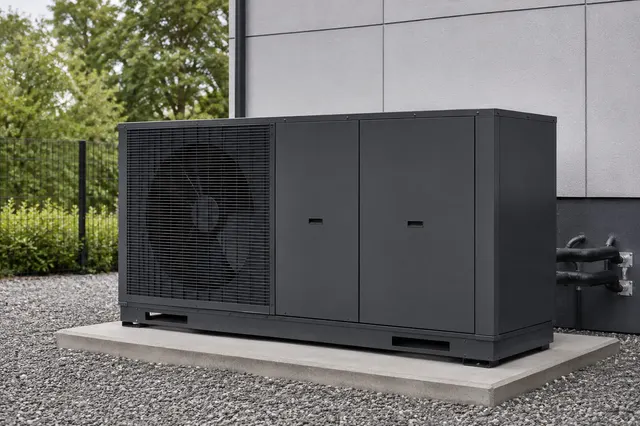
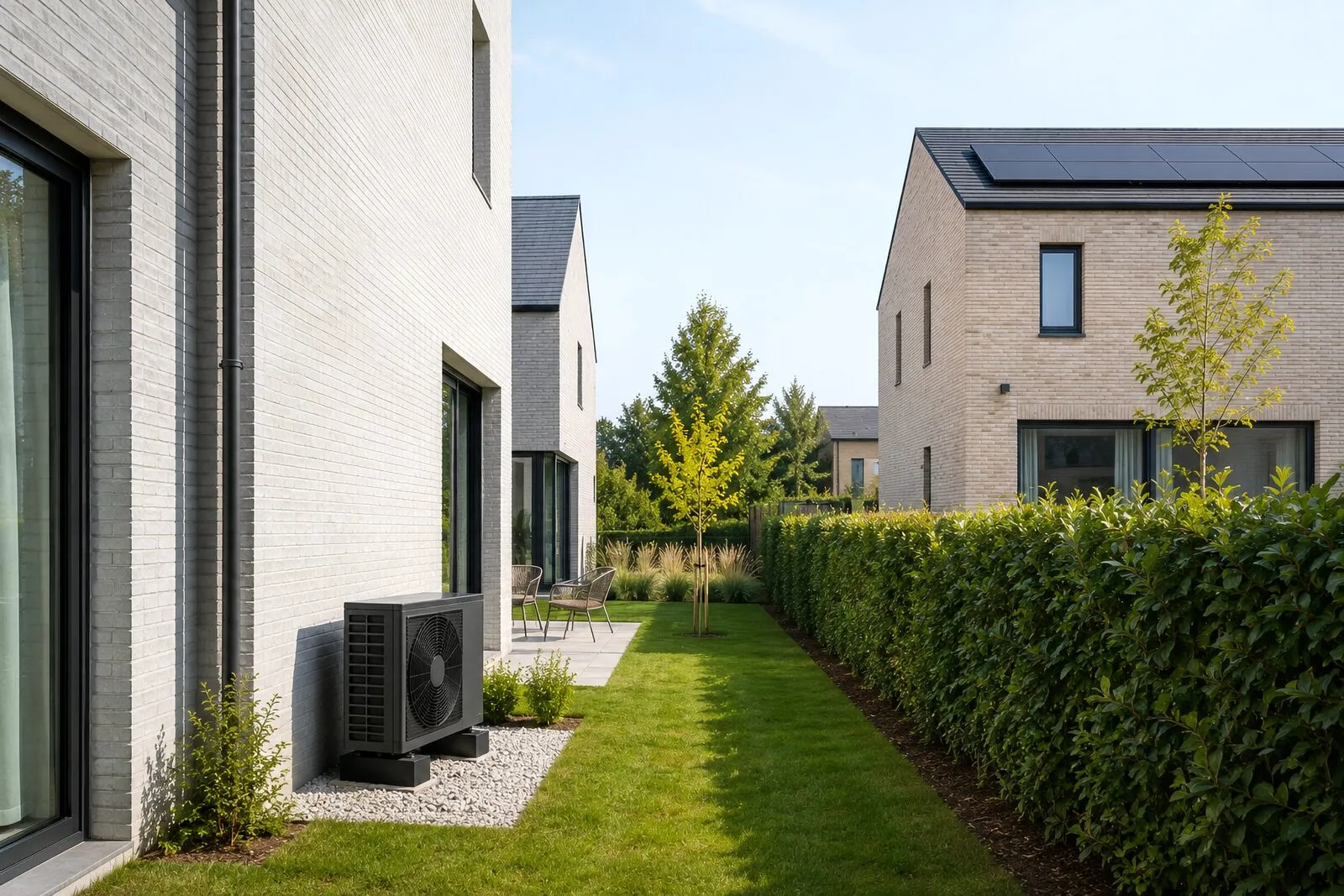
Careful positioning and orientation of the outdoor unit greatly reduce the risk of noise nuisance. Place it as far as possible from property boundaries, terraces and opening windows. Always follow the manufacturer’s installation requirements, including maximum pipe lengths, while assessing the acoustic impact on the surrounding area.
Avoid directing the air outlet towards neighbouring terraces, opening windows, ventilation grilles or other noise-sensitive areas. Also take the surroundings into account: hard surfaces such as walls, floors and roofs reflect sound, while a well-designed acoustic screen or sufficient distance can reduce noise levels.
The « Code van goede praktijk. Geluid van buitenunits van residentiële lucht-lucht (airco) en lucht-water warmtepompen », a separate publication by the Departement Omgeving of the Flemish authorities on good acoustic practice for outdoor units of residential air-to-air and air-to-water heat pumps, provides several practical examples and positioning layouts that can achieve the recommended acoustic values.
Alongside airborne noise, structure-borne noise also deserves particular attention: vibrations can travel through bases, walls, pipes or lightweight structures. It is therefore preferable to install the outdoor unit on ground or on a heavy, stable base, using correctly selected anti-vibration mounts. Use flexible connections and acoustic pipe clamps, and avoid rigid contact where pipes pass through walls and ceilings.
What can be done if noise nuisance persists?
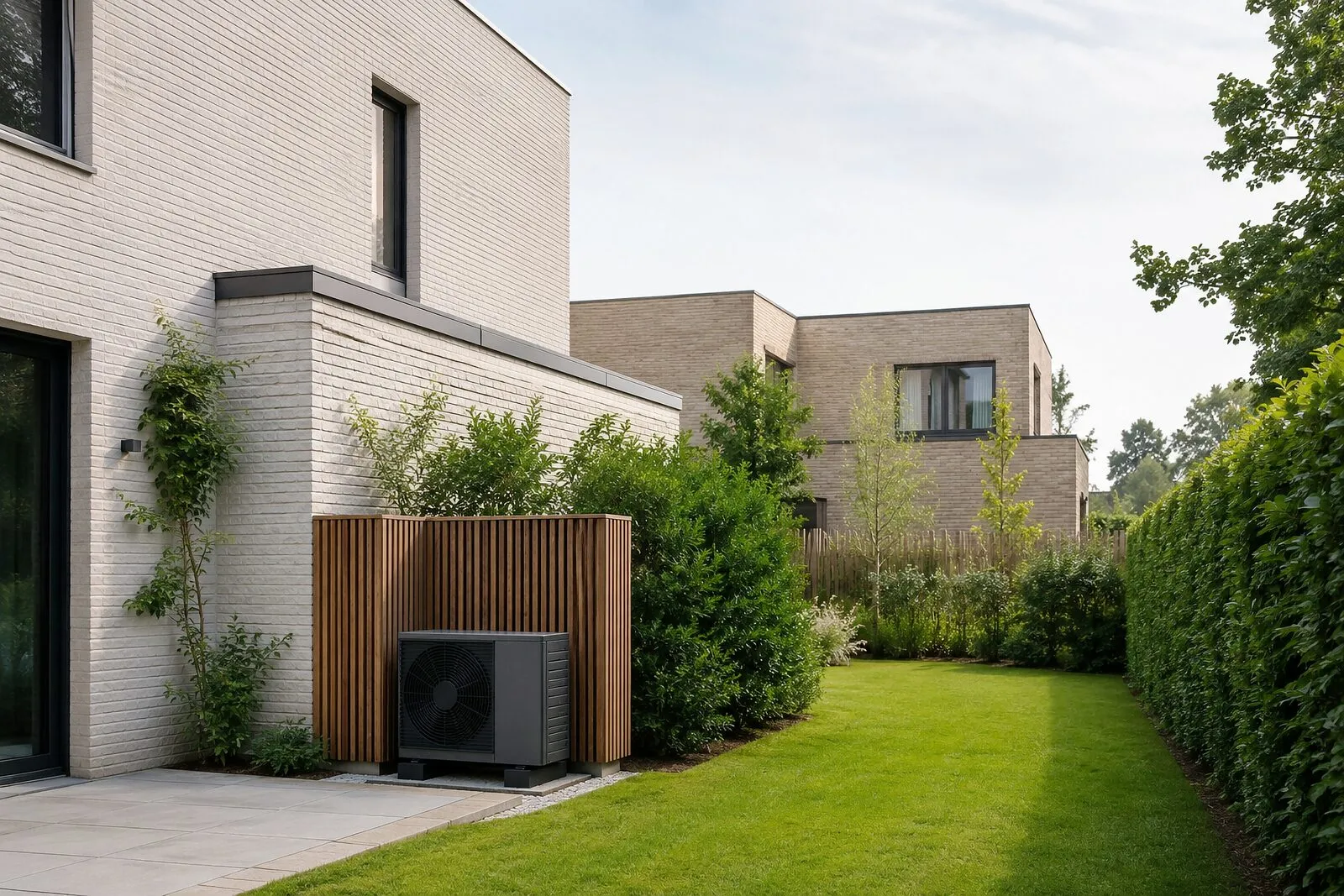
If nuisance occurs after installation, start by checking the system and its controls: dirty heat exchangers, damaged fans, incorrect settings or inadequate anti-vibration insulation can increase noise levels. If necessary, a quiet mode, suitable controls, a buffer tank or an acoustic screen can be used. A solid, sufficiently heavy screen with no openings can also significantly reduce noise levels. If these measures are not enough, repositioning the outdoor unit may solve the problem.
Informing owners and neighbours in good time helps communication. As perceptions of noise are subjective and vary from person to person, open dialogue helps clarify everyone’s expectations. In apartment buildings, consultation with the co-owners’ association is also useful to ensure that both current and future installations are integrated in an acoustically satisfactory way.
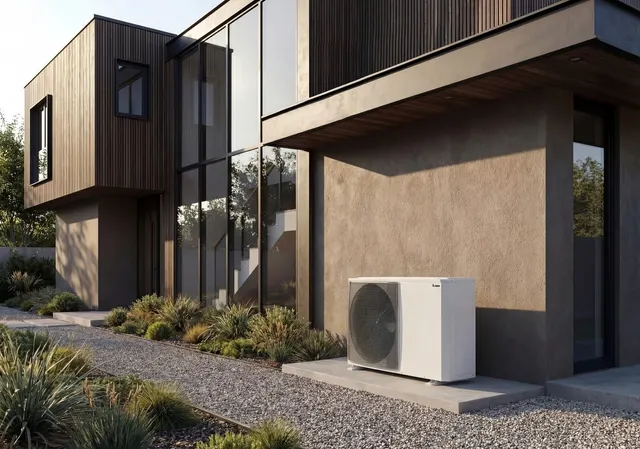
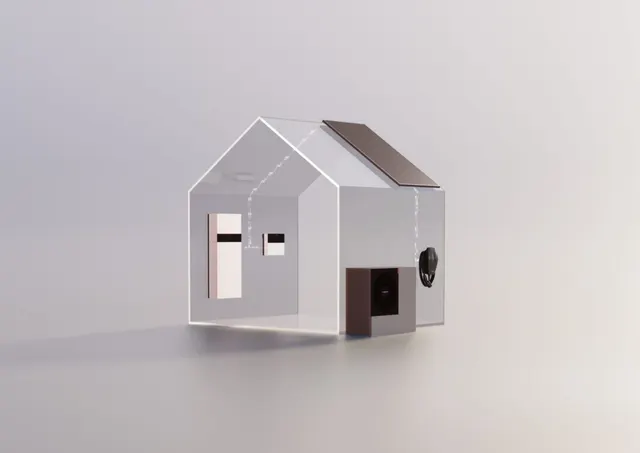
According to the guide, good practice is to position the outdoor unit as far as possible from property boundaries, terraces and opening windows. (Image: AI)
Question about this story? Ask your question
Keep following this
Get an email when a new story is published. No account needed.
- ThemeAlternative heating and cooling
- SubjectHeat pumps