Sector-wide project puts an end to PU waste on construction sites
Texte Marlies Decavel | Photos Soudal
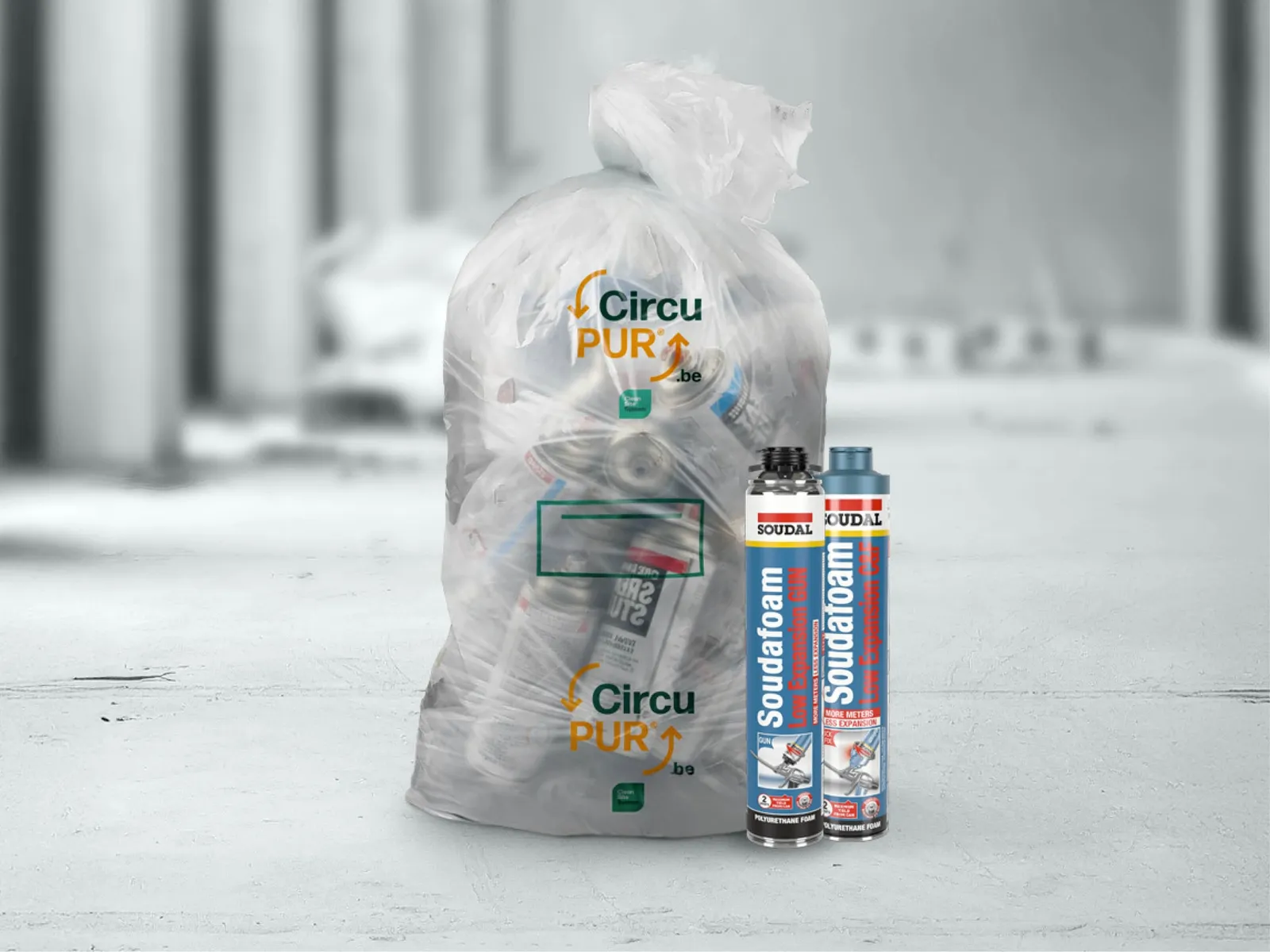
Simple collection, proper treatment and… ready for the new regulations!
PU foam is used every day on virtually every construction site for sealing, insulation and installation. Once used, the packaging is left on site, usually with a small amount of chemical residue still inside. What should be done with it all? Since 4 May, CircuPUR has offered a simple, comprehensive solution. Collect it, return it, and that’s it. It really is that simple. A sector-wide initiative that makes a difference on site and anticipates the challenges ahead.
Filling the joints around windows and doors, sealing cracks against air leaks and quickly fixing components: PU foam comes in useful several times a day on a construction site. “PU foams are indispensable in the construction sector,” explains Luc Thys, marketing and R&D director at Soudal. “Once used, these cans are left on site, often with chemical residue still inside the packaging.”
This waste often ends up mixed with ordinary construction waste, as until now there has been no simple, viable alternative. This approach carries risks. Because of their residual contents, containers may be classed as chemical waste, which can lead to additional costs and uncertainty about their collection.
The sector therefore looked for a solution suited to the realities of construction sites, without adding to the administrative burden or wasting time. That solution is now taking shape under the name CircuPUR. Soudal tested it for a year in collaboration with Wienerberger before rolling it out on a large scale from May, together with ten manufacturers.
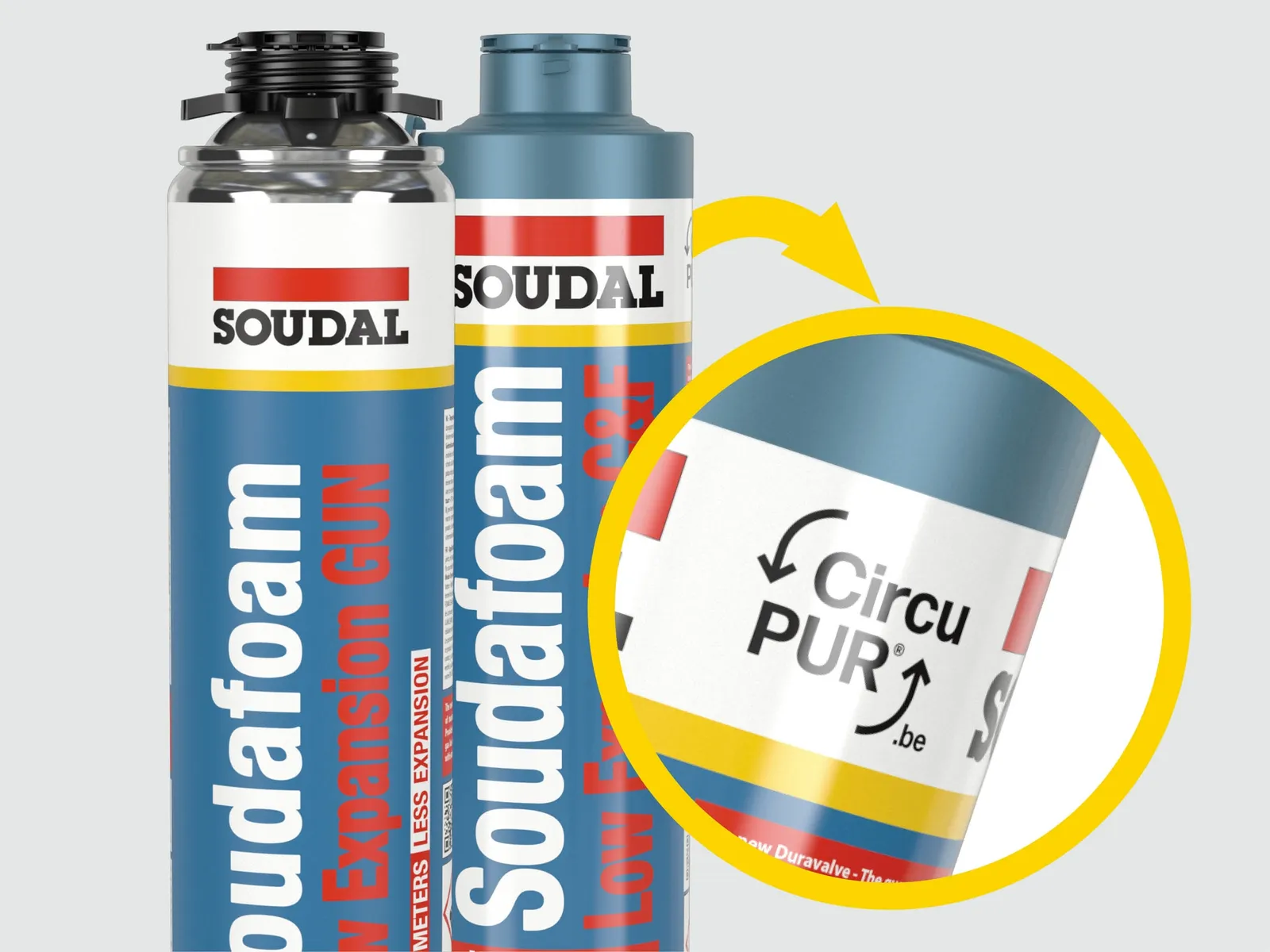
Simple on site
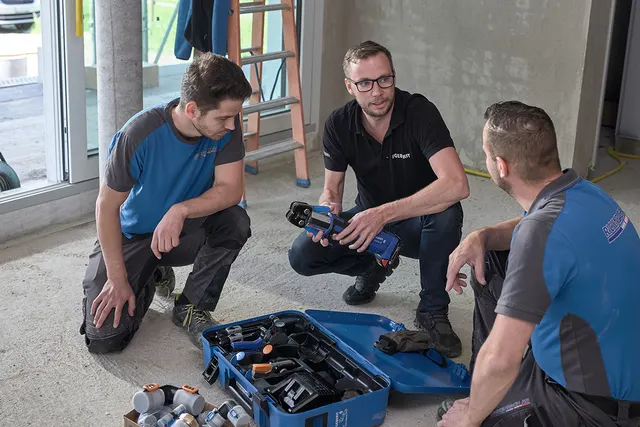
The system is built around the working practices of construction professionals. On site, empty PU foam cans are collected in special bags. These are then dropped off at your usual retailer when you go to pick up new materials. With around a hundred collection points currently in Flanders, and many more to come, there is always one nearby.
The treatment costs will be included in the product price. In return, a complete service is provided: a network of collection points and compliant treatment of the collection bags returned. Luc Thys: “We work with Valipac to treat this chemical waste. This ensures everything is handled properly.”
For construction professionals, it’s simple. “In Belgium, we’ve been sorting our household waste for years. Why should it be any different on site?” The result is a lower risk of additional costs due to incorrect sorting and better control on site.
A proven approach, ready for the new regulations
The concept builds on experience gained abroad. A similar system has been in place in Germany for years, with Soudal among its pioneers, while more targeted initiatives are under way in the Netherlands. “These real-world examples show that it works,” explains Luc Thys, who has also been appointed president of CircuPUR. “We are applying this knowledge to a Belgian model designed for the realities of construction sites: simple, clear and scalable.”
With CircuPUR, the sector is also anticipating tighter European packaging and waste regulations (PPWR), which will start to take effect this summer. Luc Thys: “Recyclability is gradually becoming the norm, including for product residues. This initiative fits perfectly with that principle: we prevent waste and give residual streams value again. It is the only logical path that we, as a sector, can and must take.”
Let’s set the standard together
Ten manufacturers are joining the system from the outset, including Soudal, Wienerberger, Rectavit, DL Chemicals, Tremco and Ploegsteert. The ambition is greater still: to make CircuPUR the standard in Belgium. Scale is crucial. Behind the scenes, this involves technically complex treatment and a sophisticated logistics chain. The more companies that join the system, the more efficient and robust it will become. Luc Thys concludes with a clear call: “This requires a joint effort from manufacturers and construction professionals. It’s something new, so it will take a little time to get used to. At the same time, it makes sense and is simple to use. The transition will then happen quickly. With CircuPUR, the proper treatment of PU waste becomes an integral part of the construction process.”
Question about this story? Ask your question
Keep following this
Get an email when a new story is published. No account needed.
- SubjectProducts