Geothermal energy and ice storage ensure an ideal indoor climate for artworks and visitors at BRUSK Bruges
Texte Josefien De Bock | Photos MVL Media Groep
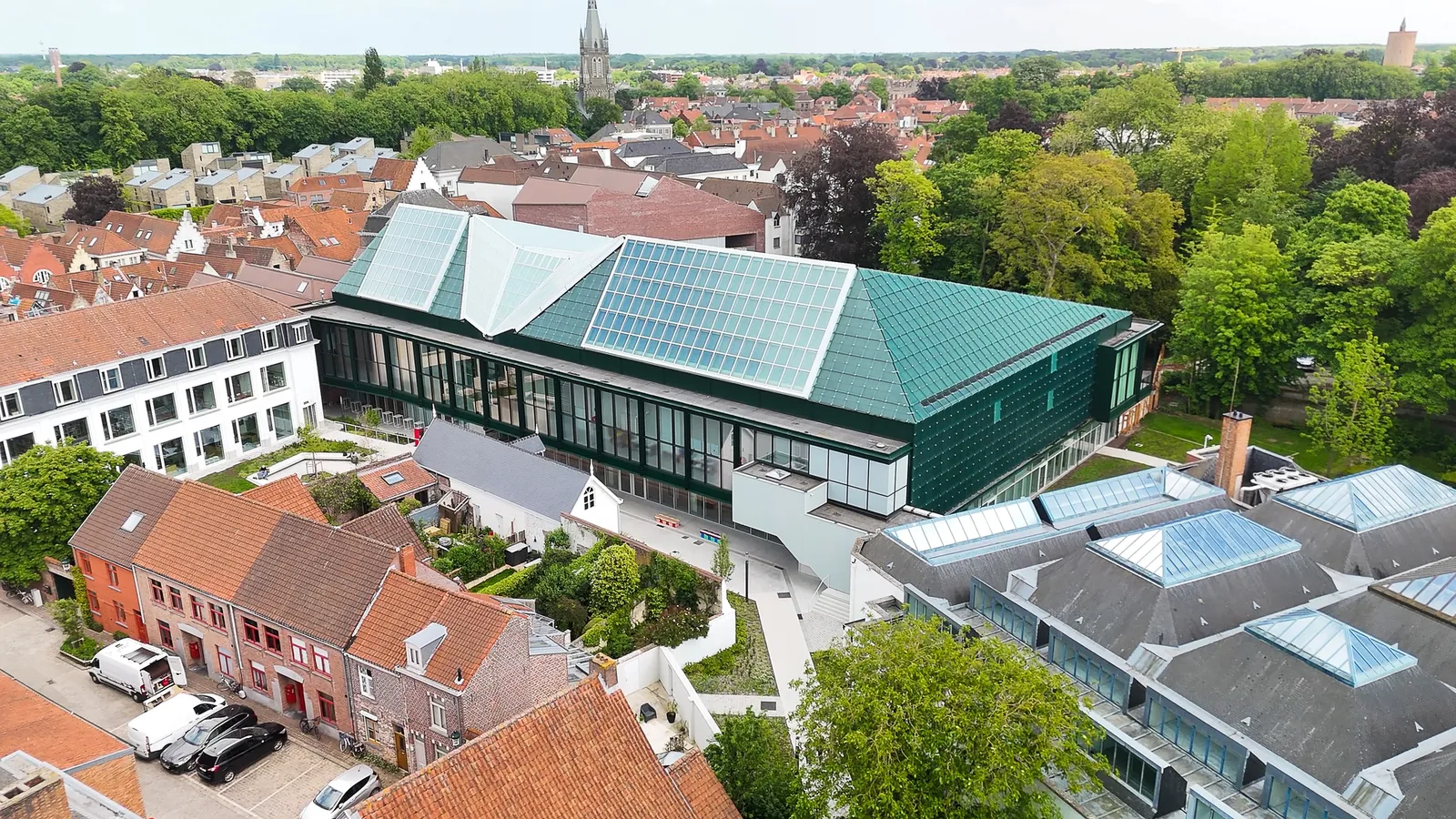
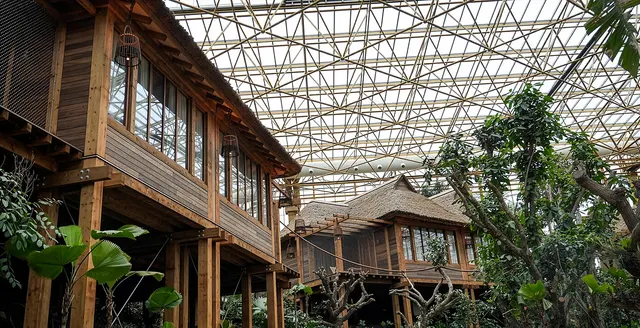
Behind BRUSK’s striking architecture, officially inaugurated in early May, lies an equally impressive technical achievement. The city of Bruges’ new museum site, designed by architectural practices Robbrecht & Daem and Olivier Salens, must keep its internationally renowned artworks in identical conditions throughout the year. For the HVAC installation, the city of Bruges worked with SPIE Belgium, which, as a multi-technical services provider, developed a complete solution in collaboration with Mitsubishi Electric, incorporating geothermal energy, heat pumps and ice storage. The system had already been running for a full year on a trial basis before the first artworks arrived in Bruges. No detail was left to chance.
“For BRUSK, it wasn’t just a matter of heating or cooling,” explains Lode Lanszweert, account manager at Mitsubishi Electric. “The temperature and humidity must be kept perfectly constant at all times, both for visitors and for the art collections.”
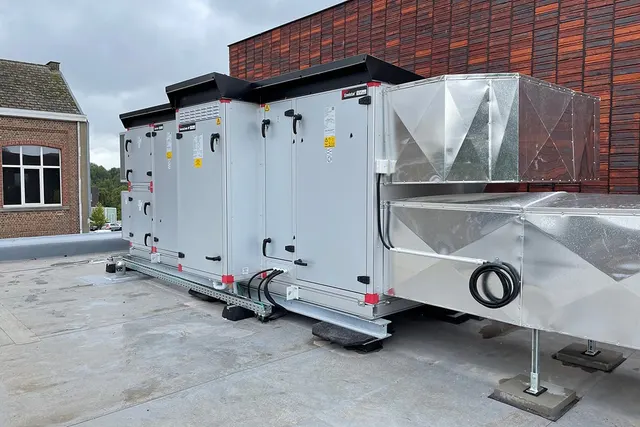
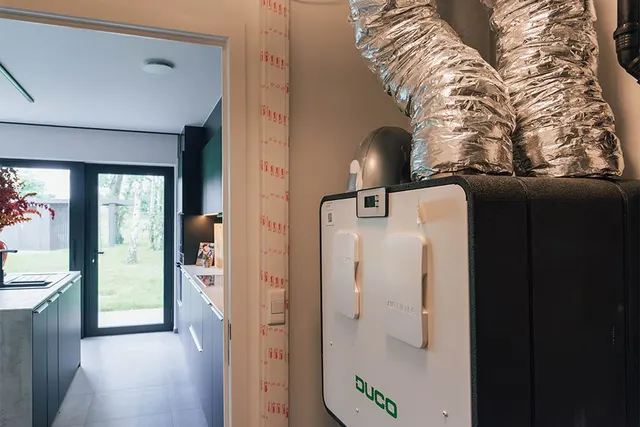
BRUSK was designed as a design-and-build project, with SPIE Belgium contributing to the definition of the technical aspects under the guidance of the engineering consultancy. Sustainability was built into the project from the outset. The building operates without fossil fuels and makes maximum use of green energy, thanks to integrated solar panels and a BTES field. One notable feature is that all the heat pumps are installed indoors. “This was a deliberate choice,” explains Lode Lanszweert. “The roof had to remain completely clear for the integrated solar panels and to preserve the building’s architectural appearance. That is why we are using an air-to-water heat pump here, with outside air ducted in and out.”
An ice store buried beneath the museum
One of the most striking elements of the installation is located in BRUSK’s technical basement: a six-metre-long ice store. During periods of peak sunshine or off-peak hours when electricity is cheaper, water is turned into a huge mass of ice. “This ice storage system allows us to store energy intelligently,” explains Lode Lanszweert. “In the event of a power cut, the stored cooling enables us to maintain suitable conditions in the museum galleries for another eight hours.”
Two six-pipe geothermal heat pumps have also been installed: one for comfort cooling and the other for low-temperature cooling for dehumidification in the air handling units. This latter aspect is particularly important in a museum environment. “With this low-temperature cooling, we can control relative humidity precisely,” continues Lode Lanszweert. “This ensures an ideal level of humidity for the artworks throughout the season.”
Another advantage of six-pipe technology is that the system can provide both cooling and heating. Thermal energy is exchanged internally between warm and cool zones, without having to draw additional energy continuously from the BTES field. This enables the system to achieve a very high efficiency.
Comprehensive 3D preparation
For SPIE Belgium, the complexity lay not only in the technologies themselves, but also in the practical execution of the project. “Everything you see here was fully modelled in 3D beforehand,” explains Stijn Uiten, HVAC project manager at SPIE Izegem. “Many components were prefabricated, which made installation on site very smooth.” Coordination between the different systems was also very well organised. At the weekly site meetings, the contractors and engineering consultancy carefully coordinated every aspect, generally resolving issues before they arose.
According to Patrick Van Heste, Business Unit Manager at SPIE Izegem, precision was at the heart of this project. “Visitors should never feel that it is too hot or too cold. We also have to keep the artworks in perfectly identical conditions at all times. That requires a system that operates with complete stability.”
A year of testing before opening
The entire climate control system was tested for a year before BRUSK actually opened its doors. Throughout this period, the system had to demonstrate consistently that temperature and relative humidity remained perfectly stable. “This was essential to earn the confidence of international lenders,” explains Stijn Uiten. “Only after proving that the indoor climate remained fully under control throughout all four seasons could the artworks be brought to Bruges.”
For Mitsubishi Electric, the strength of this project lies above all in integrating all the technologies into one coherent system. “It brings together a range of applications: geothermal energy, ice storage, air-to-water and water-to-water heat pumps,” concludes Lode Lanszweert. “Because everything is perfectly coordinated, the controls remain manageable for the installer and long-term operational reliability is assured.”
Een zakelijke vraag aan Mitsubishi Electric Belgium? Get in touch
Companies in this story

Keep following this
Get an email when a new story is published. No account needed.
- ThemeAlternative heating and cooling
- SubjectAir treatment
- CompanyMitsubishi Electric Belgium