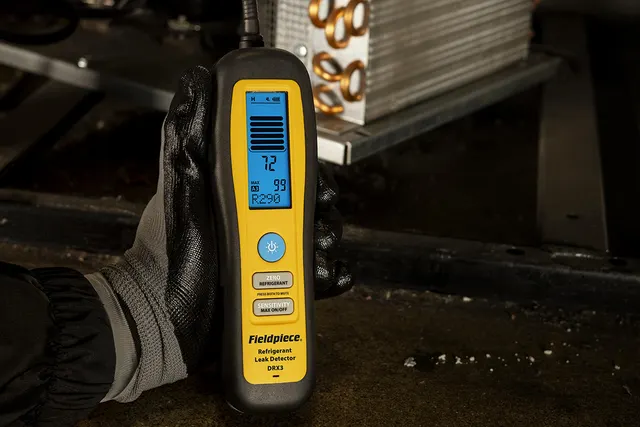
Maintenance, the forgotten part of technical installations
Texte Wouter Polspoel | Photos AI
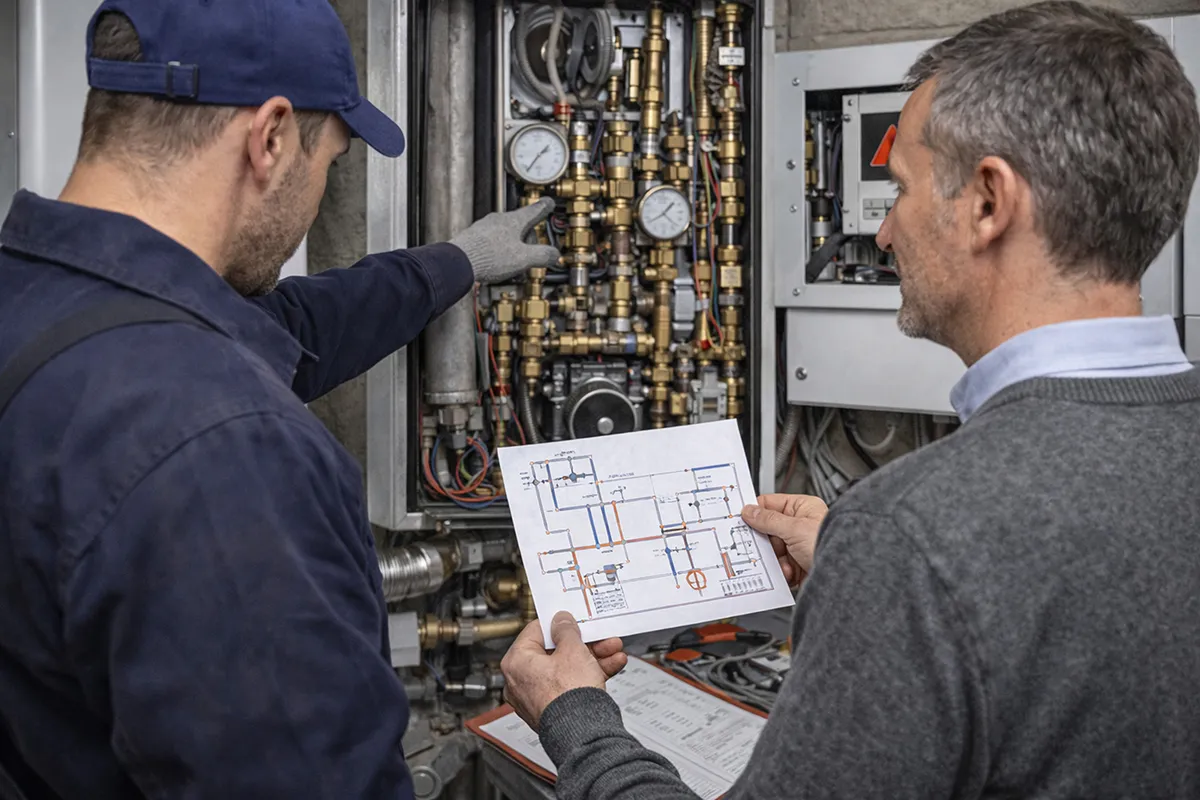
We design increasingly high-performance installations: heat pumps with impressive COPs, ventilation systems with heat recovery, hydraulically balanced distribution systems, intelligent building management systems that control everything… Nowadays, installations rarely fail because of fundamental design errors. Problems are often due to a lack of maintenance. That is why it is important to stress once again that an installation does not stop at commissioning; ongoing monitoring remains essential.
When designing an installation, the primary focus is on efficiency, comfort and compliance. Maintenance should always be an explicit design consideration too, but that is certainly not always the case, to put it mildly. As a result, installation components are often hidden behind ceilings or in ducts, so they can only be accessed after one or more panels have been removed. Clear labelling of valves, for example, may also be missing. “Maintenance is something to worry about later” sometimes seems to be the motto. Of course, it is something to deal with later, but it still needs to be anticipated during the design and installation of a system. Two requirements that are not necessarily linked. Indeed, even having a concrete maintenance plan does not guarantee that maintenance will actually be carried out. This may be down to a negligent user: a gas boiler, for example, must be inspected every two years, but it is up to the user, particularly in the private market, to make an appointment for this inspection. Or it may be due to the installer’s other priorities. Maintenance takes time and generally earns far less than installing new equipment. It also delays the replacement of installations, but it would be unfair to suspect installers of having ulterior motives in this respect.
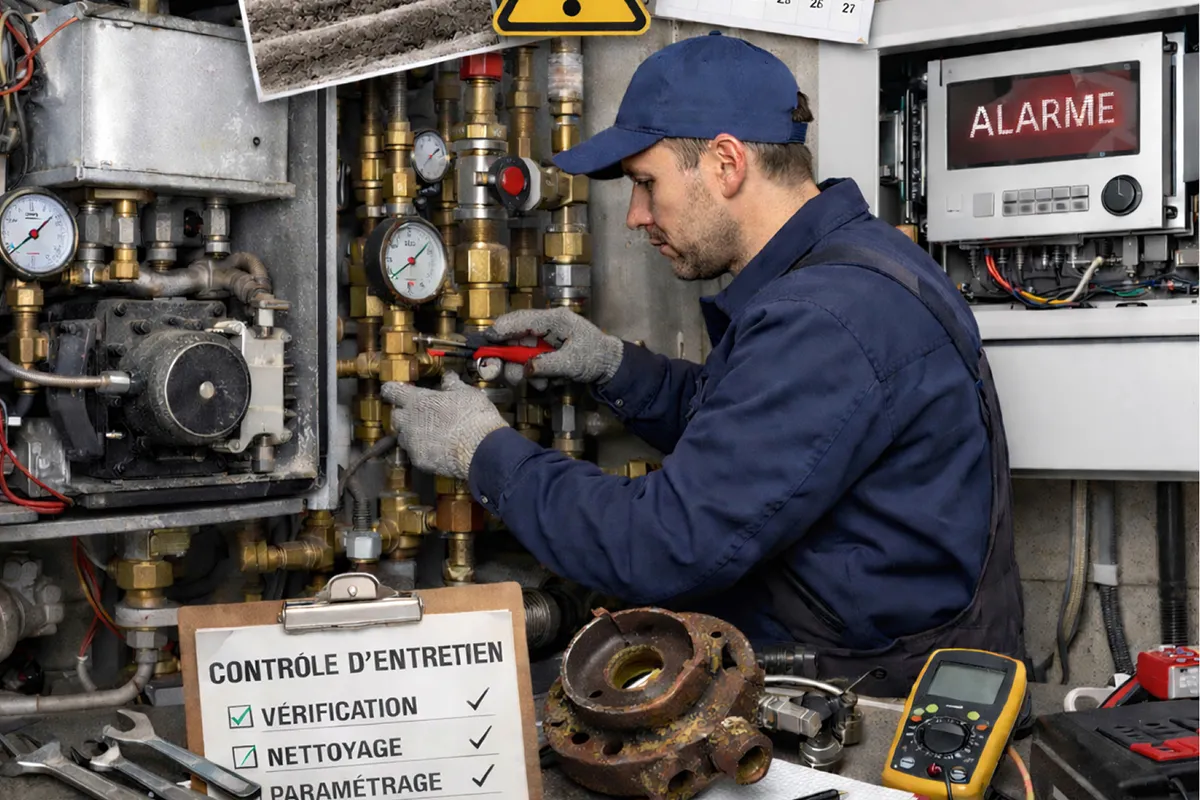
Maintenance rarely makes itself a priority
What certainly does not help is that installations that receive little or no maintenance deteriorate gradually, often without any obvious signs. Think of heat exchangers that gradually become dirty, flow rates that fluctuate or sensors that lose accuracy. As a result, the need for maintenance is often not immediately apparent.
And even when it is, there is no guarantee that the work will be done properly. For example, if a maintenance technician changes the control strategies in response to complaints about energy consumption or comfort, without recalibrating the system as a whole, the user may feel that the installation can continue working for several years. The system is working again, but its optimum operating point will have changed, usually without the user noticing.
Regulations set a minimum standard
But surely statutory inspections prevent all of the above, you might think. In theory, they do indeed guarantee a minimum standard of quality. In practice, however, they focus mainly on safety and basic operation. They do not guarantee optimum performance. A ventilation system may be fully compliant yet underperform because of dirty ducts or incorrectly adjusted flow rates. A heat pump may function correctly from a technical point of view, but its efficiency can be compromised by incorrect settings or changes in usage patterns. In other words, regulations set a minimum standard. More is needed to keep an installation running optimally.
And what about maintenance contracts? Do they not prevent maintenance from being forgotten or done poorly? Unfortunately, not always. What they specify is often the bare minimum.
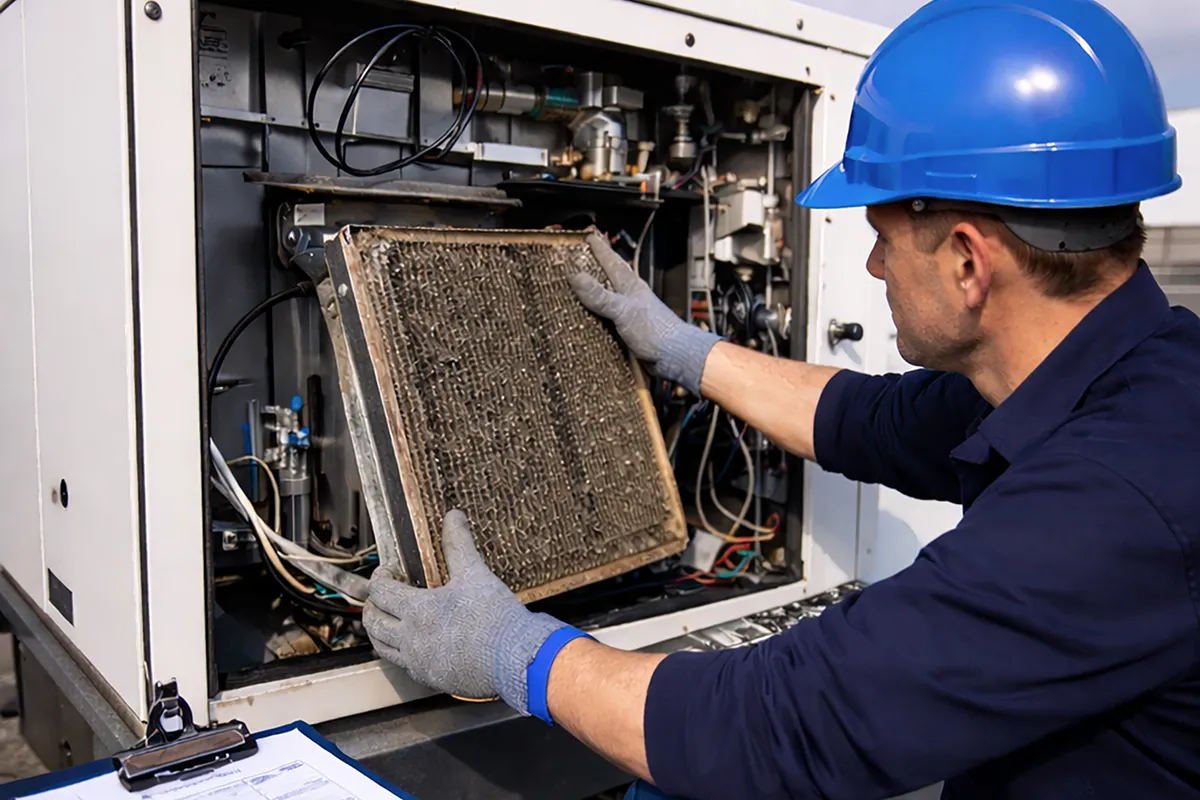
Maintenance reduced to breakdown call-outs
Maintenance is thus reduced to a call-out when something breaks down: replacing a faulty part, resetting an alarm… There is no structural optimisation. Preventive monitoring, readjustments based on actual use, performance assessments against design values… all of this calls for a different mindset. In other words, handover should mark the start of operation more clearly. This moment is still too often seen as the end of the process: the documentation is handed over, the settings are explained and a brief tour is given. Then attention shifts to the next project. But without clear performance indicators, agreed review points and technical settings that are clearly explained to building managers, the installation is left to its own devices.
Take a long-term view
From a project client’s point of view, it is particularly striking that maintenance is rarely an integral part of the project rationale. Investment costs are calculated down to the last cent and efficiency is optimised, but the question of how an installation will perform in ten years’ time is often left unspoken. Yet that is precisely where the difference lies. In short, installation projects need to shift from a component-based approach to one focused on long-term performance. The quality of an installation is not revealed at commissioning, but by how it performs after five or ten years of use. Anyone who recognises this principle can no longer treat maintenance as a secondary concern.
Question about this story? Ask your question
Keep following this
Get an email when a new story is published. No account needed.
- ThemeAlternative heating and cooling
- SubjectHVAC