What HVAC installers need to know
Texte Wouter Polspoel
Air conditioning is becoming increasingly important
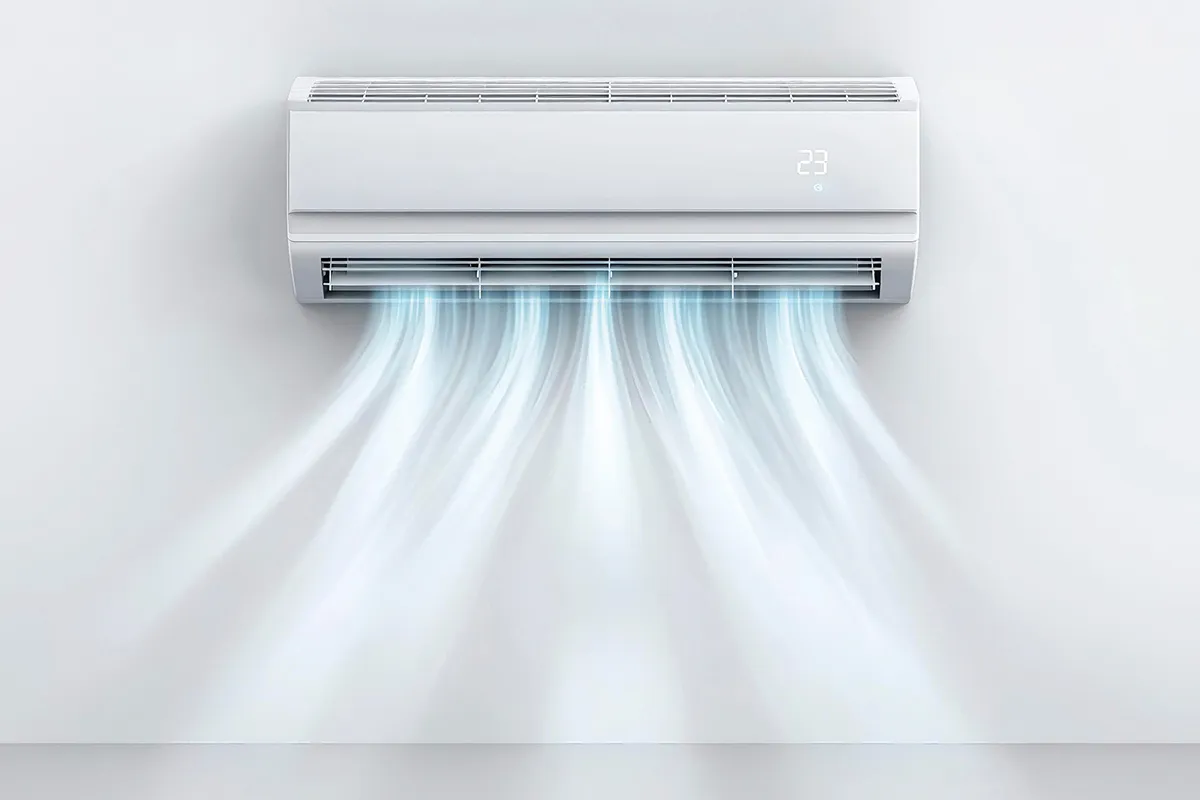
Air conditioning has become essential in contemporary buildings. Whereas air conditioners were once used mainly in offices, hotels and high-end homes, rising summer temperatures, increasingly strict EPB requirements and the growing popularity of heat pumps, particularly air-to-air heat pumps, which cool in the same way as air conditioners, have also persuaded homeowners to opt for active cooling. The air conditioning market is therefore undergoing a major transformation: new technologies are making air conditioning systems more energy-efficient, quieter and easier to use. For HVAC installers, this means more choice, but also greater complexity. This article sets out what they need to know today.
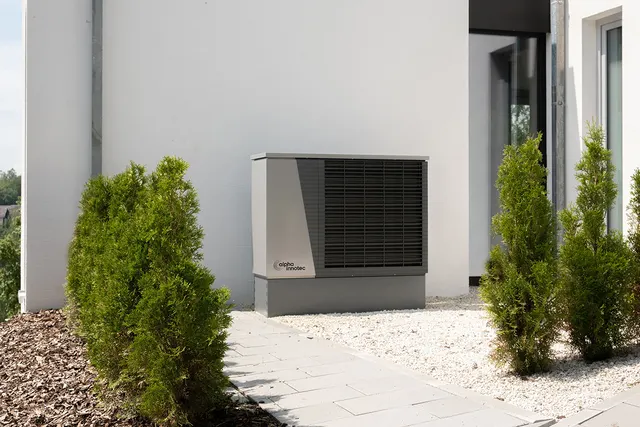
Traditional air conditioners, which only provide cooling, are still available, but most systems sold today as air conditioning, at least for homes and offices, are actually air-to-air heat pumps. By reversing their operation, they can provide active cooling instead of heating. Air-to-air heat pumps are becoming increasingly important because they are more energy-efficient than conventional heating systems and use an energy source that can be renewable: electricity. It makes perfect sense for owners of an air-to-air heat pump not to invest in a separate air conditioning system if their heat pump can also provide active cooling. What is more, combining heating and active cooling in a single unit saves space. In the rest of this article, we will therefore mainly refer to air-to-air heat pumps when we talk about air conditioning (or air conditioning systems). That said, cooling-only air conditioners have not disappeared. They are still found in plant rooms or industrial applications where heating is not required.
Air conditioners with air purification are gaining ground
For the average HVAC installer, none of this is of course new. However, there are some things they may not be aware of that are important to know. For example, air conditioners with air purification have been gaining ground in recent years. Since the coronavirus pandemic, units featuring ionisation (a technique that actively purifies the air using electric charges, ed.), UV filters or active air purification have increasingly become the preferred choice. These air conditioning systems require more maintenance.
Refrigerants under pressure
The European F-gas Regulation, which dates back to 2015 but was tightened in 2024, also has a direct impact on HVAC installers. The regulation requires the sector to speed up the transition to fluorine-free refrigerants, hence the F in “F-gas”, as these have a lower global warming potential (GWP). R32 is now the standard in most residential air conditioning systems. It replaces R410A, which is more harmful to the climate and less energy-efficient, and has been prohibited in new HVAC installations since this year. Unlike its predecessor, however, R32 is highly flammable, so it requires adapted working methods, adequate ventilation and compliance with safety instructions.
For larger installations, more environmentally friendly refrigerants such as propane (R290) and CO2 are also now used. These require specific skills and tools. HVAC installers should also be aware that the F-gas Regulation led to Belgian legislation requiring the registration of every installation that uses fluorinated refrigerants.
The importance of correct installation
When installing an air conditioner, HVAC installers also need to take several factors into account. First of all, correct sizing is essential. Oversized units and pipework add little in the way of comfort, but increase energy consumption and the risk of draughts. It is therefore essential to calculate the required system size accurately, based on transmission heat losses and solar gain. The outdoor unit should not be placed too close to walls either, as this significantly reduces its efficiency and greatly increases its noise level. The latter issue, which is of course more noticeable than the former, is a major annoyance for most end customers. They are also increasingly demanding quiet air conditioning inside the building.
Condensate must also be drained correctly to prevent unpleasant odours and/or water damage. Cables, fuses and earthing devices must be suited to the actual load and the installation’s datasheet
.
More and more end customers also want air conditioning units to blend seamlessly into their interiors and be easy to use, meaning they can be controlled via an app or the home automation system. Most manufacturers now offer protocols for this, but as an installer, you need to know
how to use them.
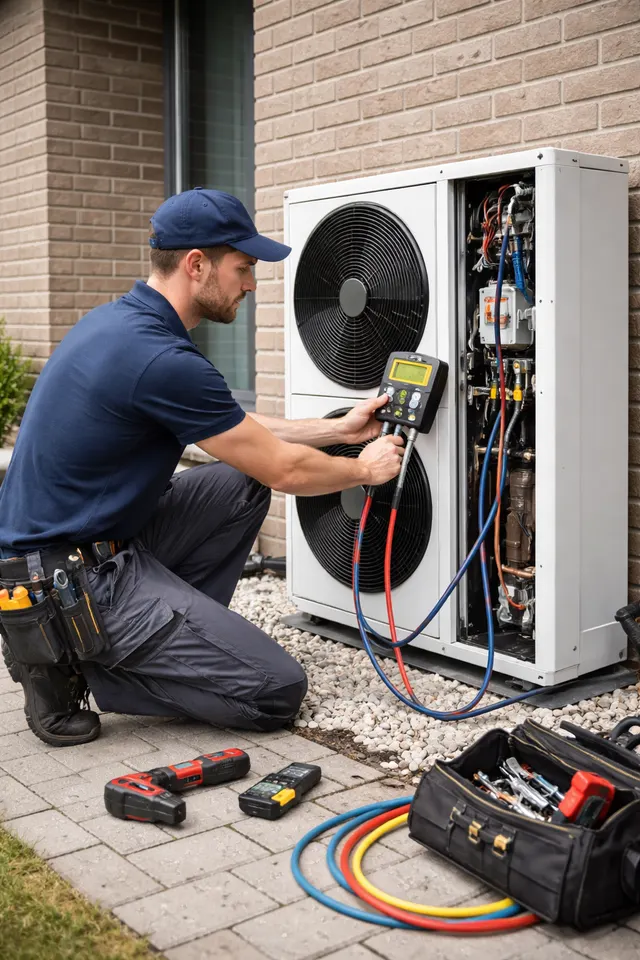
Installation does not end with positioning the unit. HVAC installers need to know that good commissioning makes all the difference to comfort and energy consumption.
Smart control for even better performance
One thing HVAC installers must not overlook is that some air conditioning units can adapt their operation based on occupancy detection, CO2 concentration or the outdoor temperature. This makes them even more energy-efficient and improves comfort. This product segment also includes units that can control the air conditioning separately in different rooms, which also improves efficiency.
Maintenance as an additional service
HVAC installers who offer not only installation but also air conditioner maintenance, which is generally required once a year, naturally build lasting relationships with their customers. In this case, it is important to know that some air conditioners can now detect impending faults or premature wear themselves, enabling predictive or preventive maintenance. It is also important for HVAC installers to choose brands that provide good after-sales service and make spare parts readily available. Their own reliability as installers depends in part on suppliers’ logistics.
Conclusion: the air conditioning market is growing, not only because of rising temperatures, but also as a result of increasingly strict EPB requirements and the associated shift towards all-electric systems. HVAC installers who keep up with these developments and undertake training where necessary, while still paying due attention to the basic principles of correct air conditioning system installation, will stand out in this expanding market.
Question about this story? Ask your question
Keep following this
Get an email when a new story is published. No account needed.
- ThemeAlternative heating and cooling
- SubjectHVAC