











Smart buildings: where are we now?
Texte Tim Janssens | Photos Kurt Van Strijthem & Pixabay
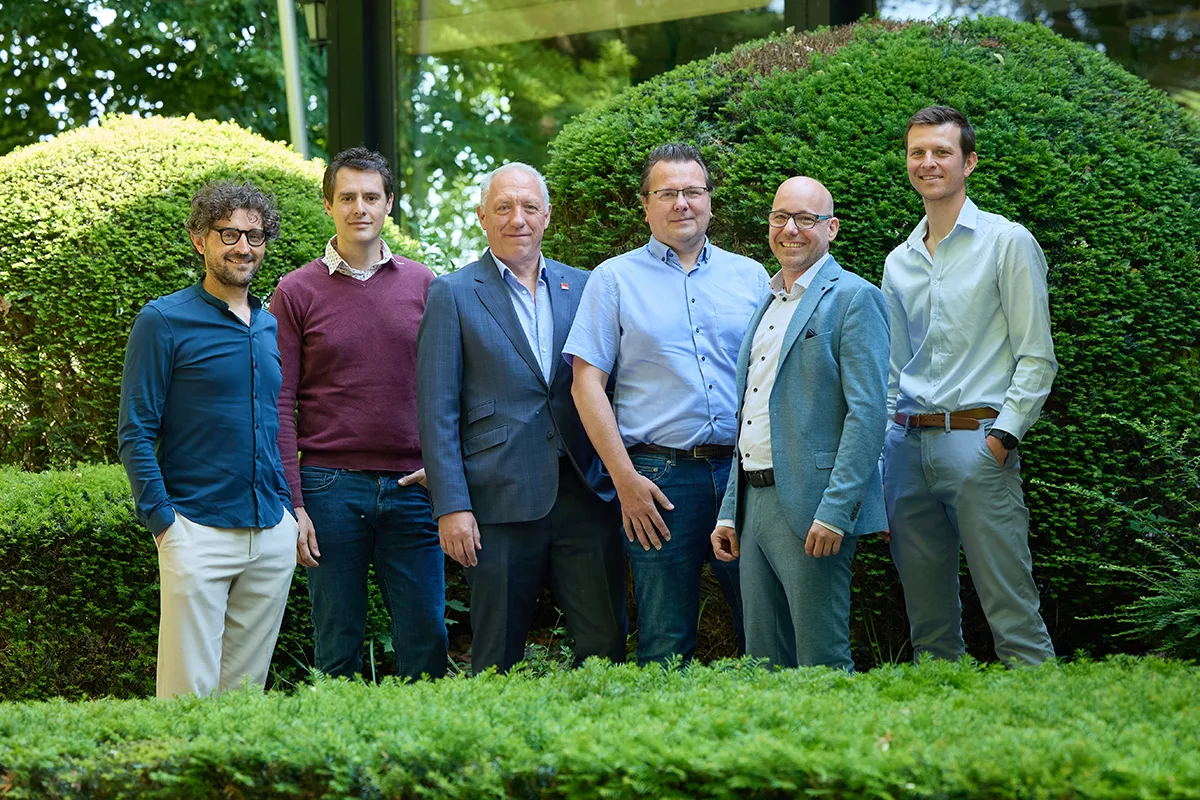
“Smart building” is on everyone’s lips in the construction and installation sector today. Yet it is not always easy to know exactly what it means. Where does “connected” end and “smart” begin? Can most new buildings legitimately be described as intelligent, or is there still huge untapped potential? And what impact will the new European legislation and the advent of AI have on the ongoing “smart transition”? Installation & Construction brought together five experts to provide relevant, well-founded answers to these and other pressing questions.
Participants
Paul van Hinsberg:
Managing Director at B.E.G. Belgium
Philippe Kygnée:
Sales Manager at WAGO BeLux
Alexander Hermans:
Account Manager at Beckhoff Automation Belgium
Kristof Van Gorp:
Home & Building Specialist at Rexel Belgium
Johan Vercammen:
Product Manager at Wygwam, a division of Niko NV
Good morning, gentlemen, and thank you for joining us. To start, could you explain exactly how your companies contribute to the creation of smart buildings?
Paul van Hinsberg: “B.E.G. Luxomat is known as a developer of motion and presence detectors. From there, we moved into automation, mainly for non-residential buildings, where we can control various building systems, including lighting, HVAC and solar shading.”
Johan Vercammen: “At Niko, we launched the first version of our home automation solution around thirty years ago. Initially, the focus was on individual products and functions. We gradually evolved towards a fully intelligent, open platform that takes account of the latest technologies and trends. A separate division, Wygwam, was set up for this purpose.”
Kristof Van Gorp: “As a wholesaler, Rexel aims to inform installers about the various options available in home and building automation systems. Our focus is not limited to control systems, but also covers building infrastructure, including HVAC, distribution boards and IT rooms.”
Alexander Hermans: “Beckhoff Automation supplies hardware and software solutions for different types of buildings. The aim is to make them smarter and ensure that all connected systems work seamlessly together.”
Philippe Kygnée: “WAGO is a manufacturer of interconnection and automation solutions. With our building automation solution, we are mainly active in the non-residential and industrial markets. We ensure that all building systems, including HVAC, electrical systems, lighting, solar shading, charging stations and energy supply, can communicate with one another, as can the overall control system and any cloud connections.”
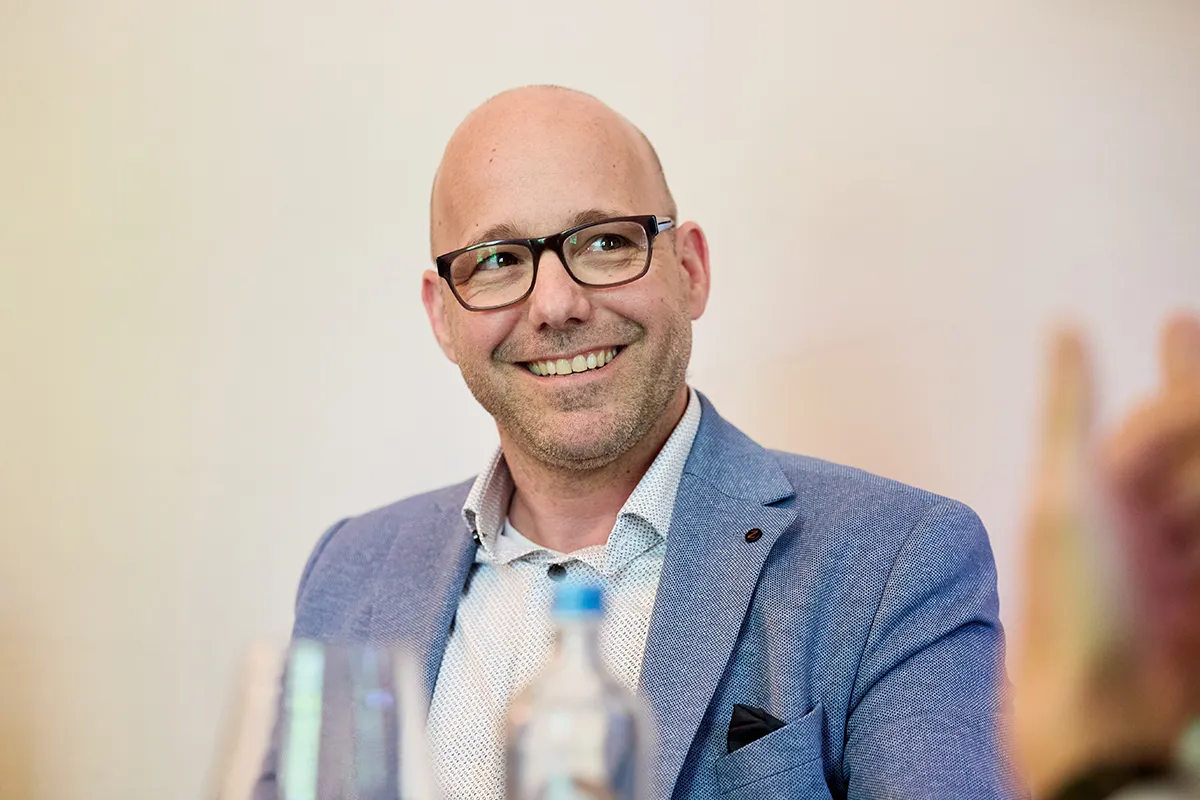
“As well as providing connection and communication data, the automation layer must ensure that energy and comfort targets are met.”
Philippe Kygnée, WAGO BeLux
In your view, what criteria must a building meet to be described as a “smart building”?
Kristof Van Gorp: “A key requirement for claiming that a building is ‘smart’ is that the different building systems and their operation are coordinated. It is important to have common components that allow certain controls to be combined.”
Johan Vercammen: “Alongside combining the different building systems, there must also be interaction with the user. Their behaviour and wishes need to be taken into account as effectively as possible, consistently and through perfectly configured systems.”
Paul van Hinsberg: “For now, this is easier to achieve in residential settings than in non-residential buildings. In the latter, we still talk more about connectivity than intelligence, because systems are too often operated in silos. This naturally makes the seamless integration of different building systems much more difficult. Fortunately, we are seeing more smart applications, such as automatic controls based on motion and presence detection. The transition to smart has begun, but we are not there yet.”
Alexander Hermans: “It is about creating synergies between different building systems to maximise both energy efficiency and end-user comfort. This includes implementing user-friendly, easy-to-maintain platforms that use open standards. The higher-level control system acts as an interpreter, translating all the different open standards into a set of data. A programmer can then use this data to link the systems effectively, so that together they are more than the sum of their parts.”
Philippe Kygnée: “That’s right. As well as providing connection and communication data, the automation layer must ensure that energy and comfort targets are met. Ideally, users should not even notice this, particularly in non-residential buildings. The new European legislation also requires us to go further in this area.”
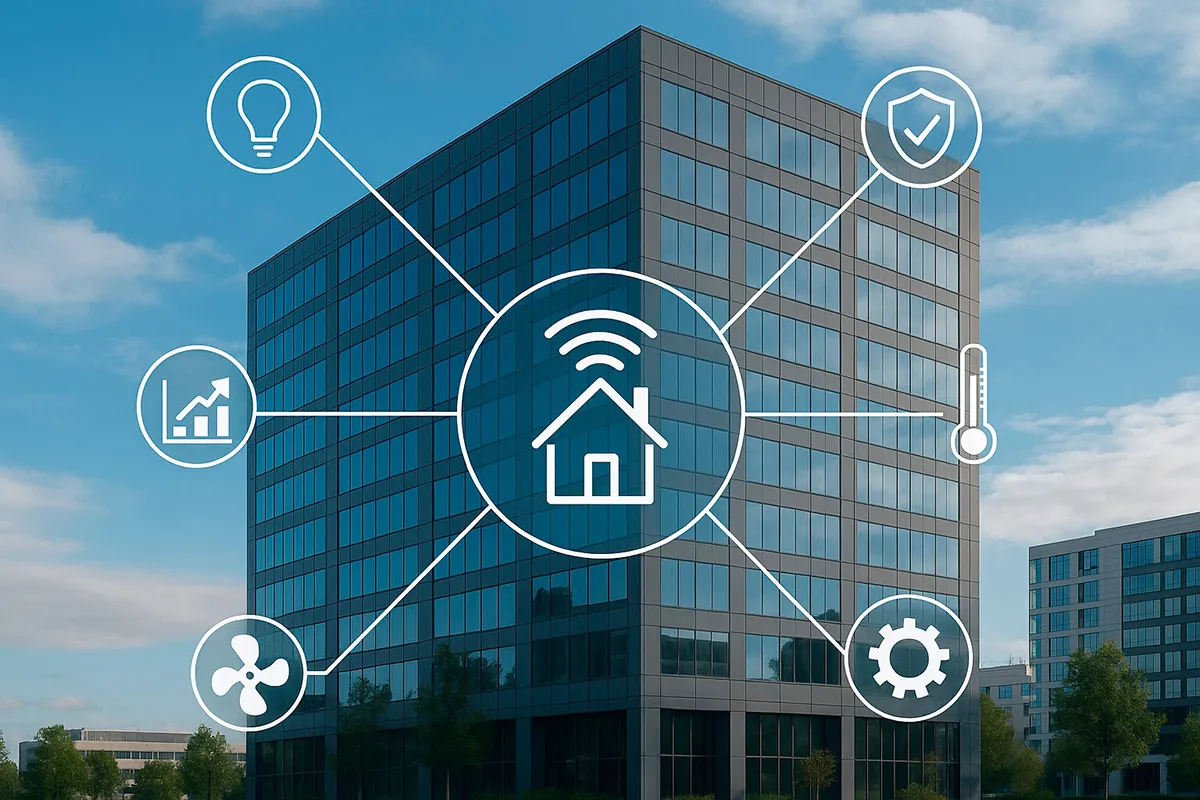
You are referring to EPBD IV, which more and more companies will have to comply with from 2026. What impact will it have?
Paul van Hinsberg: “All new non-residential buildings will have to be smart, without exception. Manufacturers will also have to work with open, standardised protocols, whether they like it or not. Some companies will continue to develop their own software, but closed protocols will no longer be an option. That is a very good thing, because it is one of the factors that distinguishes connected from smart.”
Alexander Hermans: “These open standards make it possible to respond quickly when problems arise, without depending on the party that originally installed the system. The new European legislation could also encourage investors, who previously tended to favour the cheapest technologies, to better meet end users’ needs and wishes in order to keep their projects attractive.”
Philippe Kygnée: “Indeed, purely energy-related measures such as improved insulation will no longer be enough for property developers to make their buildings compliant. Integrating building systems, with all the functional requirements that entails, will become essential. There will be no getting around it.”
Kristof Van Gorp: “For installers, integrating new technologies into existing installations is going to be a real headache. Other players will also enter the picture. They may not know the technologies, but they do know the standards. They will be able to use the data provided by the building operating system to improve the user experience, without needing to know the technical details.”

“In the past, installers simply carried out the tasks assigned to them. Today, they are broadening their knowledge and helping to lay the foundations for fully-fledged smart buildings.”
Paul van Hinsberg, B.E.G. Belgium
European directives do not apply to the single-family residential market. The residential market is smaller. Will smart buildings eventually become the norm in this sector too?
Johan Vercammen: “Certainly. We are already seeing some developments in this direction, although there is not much standardisation yet. The question is how to make all these different connected systems work together simply and in a user-friendly way. It is an issue that many integrators are grappling with today. Local partnerships between electricians and heating engineers are also an option. We are also doing our bit by helping installers and end users integrate different building systems. In any case, smart home solutions are currently in demand, partly as a result of innovative technologies such as photovoltaic installations, heat pump systems and EV charging infrastructure, as well as the legal obligations that come with them. Take a smart charging station and an air-conditioning system connected to a photovoltaic installation with a battery, so they can run on as much green electricity as possible.”
Kristof Van Gorp: “I get a lot of questions from installers about these smart applications. Because the residential segment remains fragmented, they have to keep looking for suitable integration concepts, but gradually a degree of structure is emerging. Thinking in terms of overall interconnectivity is also becoming the new norm in the residential segment, although, unfortunately, intelligent control of all these technologies is still often lacking. The fact that users can monitor certain technical data through an app does not, of course, mean that everything is working optimally. The possibilities are there, but it will take a little more time to put them into practice. Often, it is simply a question of budget and/or knowledge.”
Philippe Kygnée: “Let’s be clear: there are still areas in the non-residential sector where standardisation is lacking. Charging stations are a good example. There is a multitude of different solutions, and everyone does things their own way. It is high time to bring them into better alignment. The same goes for new wireless technologies, which are very useful for renovation projects but are used in closed systems by many manufacturers. Until an organisation is established to introduce testing and standardisation procedures, as with DALI, BACnet and KNX, this could cause communication and integration problems. Each time, bespoke solutions have to be used, which of course costs more time and money.”
Alexander Hermans: “Sometimes manufacturers use an existing standard but also develop their own dialect to keep things proprietary. This can make it impossible for certain technologies to communicate with the relevant application.”
Philippe Kygnée: “Of course, they put the ‘open protocol’ label on their products, but in reality they create a grey area. This is the case with many new technologies, whose aim is to maximise return on investment. DALI was like this for a long time. It was only with the arrival of DALI-2 that full standardisation was introduced. The result is a fantastic solution that makes it easy to switch from one component to another.”
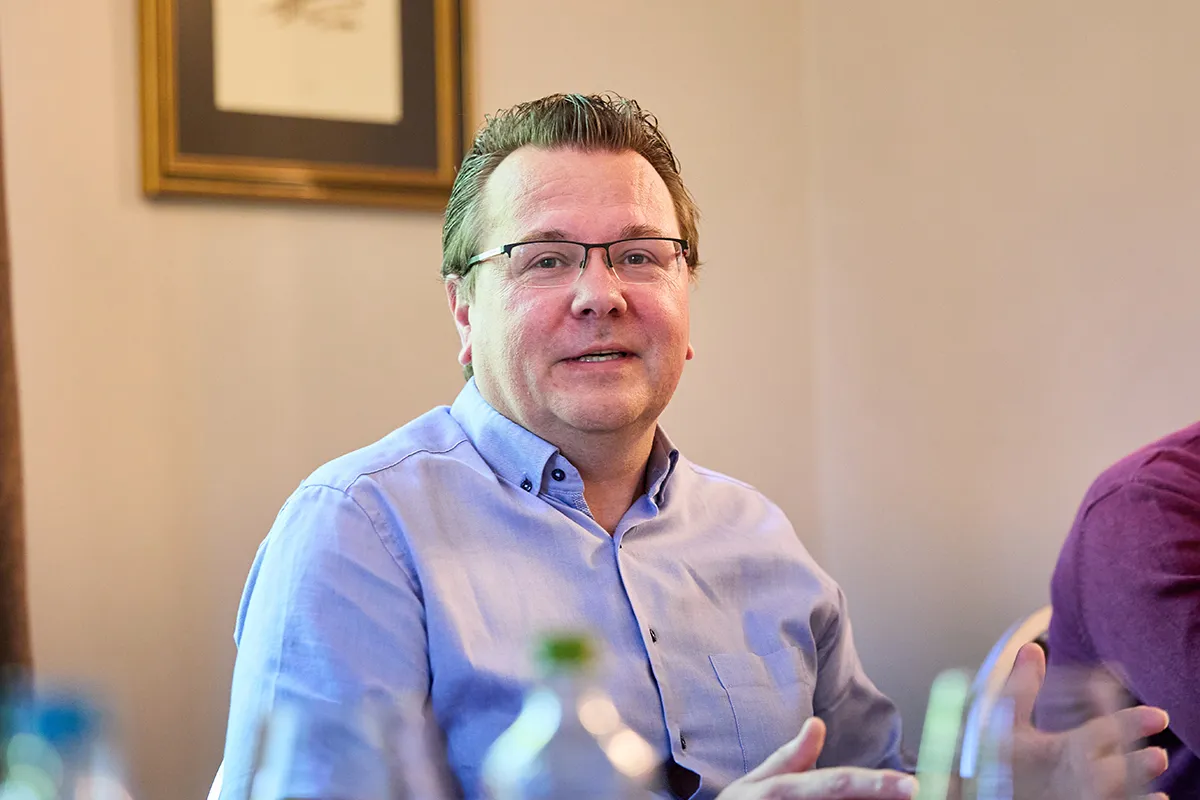
“Smart home solutions are currently enjoying significant growth, partly thanks to
innovative technologies and the resulting
legal requirements.”
Johan Vercammen, Wygwam
Can most new buildings already justifiably be described as smart? Or is there still considerable untapped potential?
Paul van Hinsberg: “There are regional differences in the non-residential sector. Brussels is leading the way. Everything currently being delivered there, often older office buildings undergoing major renovation and/or being put to a new use, can be described as ‘smart’.”
Philippe Kygnée: “But just how smart is it really? In the Belgian property development market, it is still difficult to think long term. Property developers are more interested in the cost per square metre than in the total cost of ownership. They are much less interested in the fact that intelligent building management can deliver significant benefits after installation. That is why we advocate turnkey projects with a maintenance contract, as this automatically gives greater attention to the quality and performance of the building services infrastructure. It is up to consulting engineers to make this clear in their specifications. That is where it all begins.”
Alexander Hermans: “Exactly. In this respect, it is positive that the parties responsible for integrating the building services are involved from the early stages, when the consulting engineers are drawing up the specifications. This makes it possible to consider how new buildings can be made future-proof, so that they remain easy to maintain even after several years and any future technical innovations can be implemented with ease.”
Kristof Van Gorp: “It is also up to us to inform small and large installers who are not yet very familiar with the subject. That is why, in the projects I support, I always look into the possibilities for communication, connectivity and integration. It often turns out that certain technologies are replaced by other systems operating according to the same standard, creating valuable synergies.”
Philippe Kygnée: “Smart building applications are much more straightforward in projects where the client remains the owner. Industrial companies are very willing to invest in this area, because they of course reap the benefits themselves. Energy monitoring, intelligent control… everything they implement can generate substantial, or even very substantial, returns, often in the very short term.”
Alexander Hermans: “The benefits go far beyond automating certain scenarios and detecting and correcting potential losses. I am thinking in particular of predictive maintenance, which makes it possible to forecast when certain components are likely to fail. By taking proactive measures, companies can avoid downtime and therefore increase their overall productivity.”

How can we encourage property developers to opt for smart building applications?
Paul van Hinsberg: “The new European legislation will certainly make a significant difference in this respect. Until now, many property developers have focused mainly on the BREEAM score and delivered shell-and-core buildings that were smart in theory, but whose smart equipment was not used in practice, or was not even properly connected, as we recently discovered when moving into our new offices. If they want to continue selling and letting their projects, they will now have to raise the bar, including by opting for high-performance technologies and intelligent control and monitoring systems that can stand the test of time.”
Philippe Kygnée: “I wonder how many SMEs have spent a lot of money on a smart-looking installation that does not work properly. When I think of all the problems we uncovered in the existing installation during the renovation of our own office building, I shudder to think of all those companies that, unlike WAGO, do not have the expertise needed to collect the right data and keep everything under control from A to Z.”
Kristof Van Gorp: “That is why it is worth businesses of this kind having their installation thoroughly audited on a regular basis by a specialist company. This can then identify any faults. Better control of a heat pump can already make a big difference to the energy bill. As well as day-to-day management, this is an excellent way to ensure buildings operate efficiently and to optimise the performance of smart building applications.”
Alexander Hermans: “Highlighting problems is one thing, but solving them is another. The technicians responsible for implementation also need to adapt to this digital (r)evolution. One of the main priorities for the near future will therefore be ongoing training for these professionals, who often still lack technical knowledge and an understanding of the complexity of modern installations. We can certainly start designing and delivering smart buildings on a large scale, but they will then need to be maintained properly. We must not overlook this aspect of the smart transition.”
Philippe Kygnée: “Another major challenge is the Cyber Resilience Act, which now imposes much stricter cybersecurity requirements. Manufacturers, integrators and end customers are all affected.
This requires considerable effort and investment from all stakeholders. And it makes interoperability between the different systems even more complex, now that all protocols are strictly secured (BACnet Secure Connect, KNX Secure, etc.), not to mention the added complexity at infrastructure level.”
Is the role of installers changing with the advent of smart buildings?
Paul van Hinsberg: “I am convinced it is. Installers used to simply carry out the work. Today, they are broadening their knowledge and helping to lay the foundations for fully fledged smart buildings. In the non-residential sector, most integrators are now part of large installation companies that are working to develop all the expertise needed in-house to make a building smart. Clients therefore no longer depend on various different parties (installer, programmer, software provider, etc.) and have just one point of contact, which is a considerable advantage given the technical complexity of smart building projects.”
Kristof Van Gorp: “These ‘full-service installers’ can be called on from start to finish and also provide the necessary after-sales service. I think that is very positive. There will always be a need for hands-on professionals, but we are also seeing new roles emerge. Take an energy consultant in the residential construction sector, for example, who knows how to coordinate different technologies.”
Johan Vercammen: “Indeed, the different technologies require additional expertise to work together. In the near future, different types of installers will work closely with the technical experts who design a home or handle its programming and configuration. And, as Paul has already mentioned, they will often be part of the same installation company.”
Philippe Kygnée: “This is a major challenge in itself, because everything is organised around separate disciplines (HVAC, electricity, energy supply, etc.), and consulting engineers also base their specifications on this division. Considerable effort is therefore needed to move beyond these traditional boundaries. In addition, expectations for buildings are rising, particularly in terms of future flexibility. Companies that ensure the technology they install is easy to reprogramme and reconfigure, with any changes immediately reflected in the higher-level system, will always be one step ahead. In any case, the more you can streamline building management, the more open building owners, facility managers and users will be to smart building applications.”
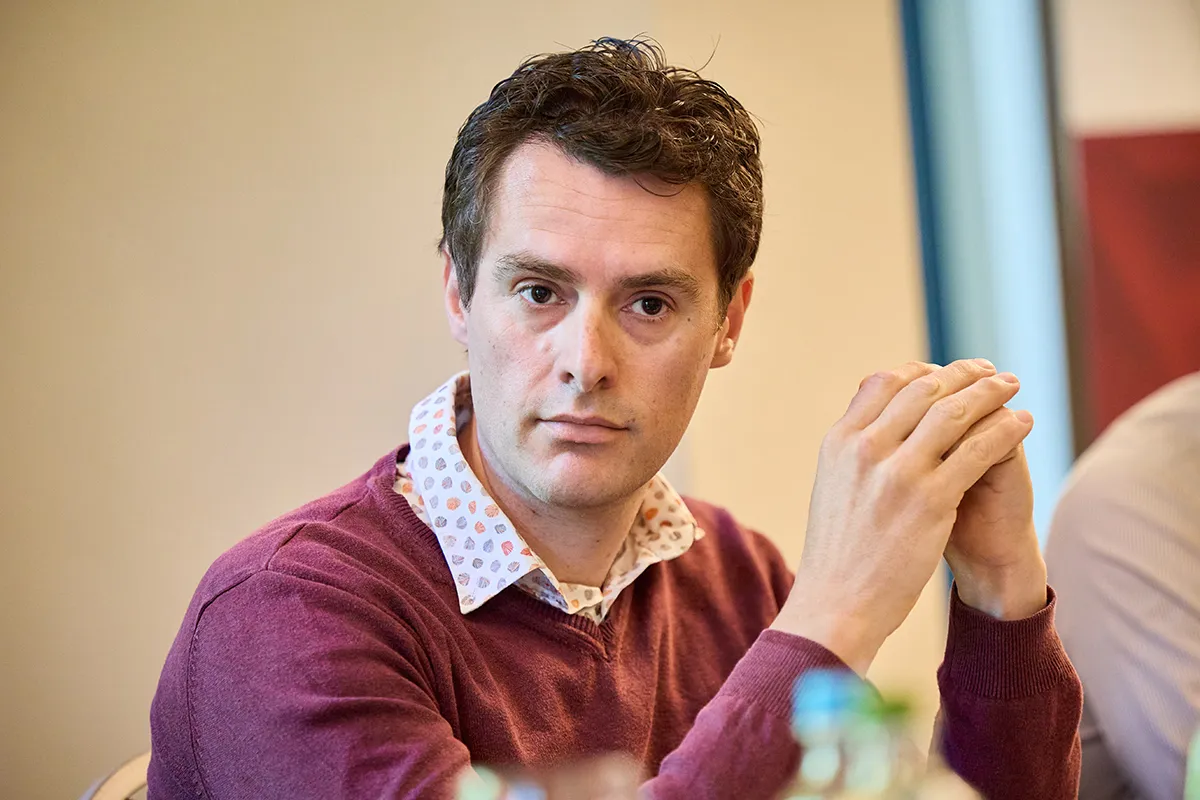
“Thinking further in terms of overall interconnectivity is also becoming the new norm in the residential segment.”
Kristof Van Gorp, Rexel Belgium
What is the potential of AI in this field? Is it already being used effectively in smart building solutions?
Philippe Kygnée: “Absolutely. For large non-residential buildings, the trend is to use a kind of digital twin which, either through a third-party company or otherwise, optimises all processes and setpoints based on the available data.”
Alexander Hermans: “Many research institutes are already looking into this and conducting experiments. The data is available, so if you use the right tools, you can anticipate situations very quickly and respond to them accurately. The possibilities are endless.”
Johan Vercammen: “When people talk about AI, many immediately think of complex applications and calculations, but it can start with something very simple. For example, predicting the ideal times to charge an electric car based on energy flows and user behaviour. AI offers a host of smart ways to report on and analyse data.”
Philippe Kygnée: “AI is, however, a buzzword that has been used indiscriminately of late. Heating a building according to occupancy levels and the outside temperature does not in itself require artificial intelligence, but this is often classified as AI. AI undoubtedly has a promising future, but we still need to find ways to use it to best effect.”
To conclude, which building, project or solution do you think best reflects what a smart building is, or should be?
Kristof Van Gorp: “An interesting solution we recently supported in our advisory role is a hotel application based on a KNX structure, in which HVAC is linked to room management.”
Alexander Hermans : “The ZIN project in Brussels is an excellent example. This circular building was made fully smart by our installation partner VMA using our hardware. We are very proud of it. All kinds of research into smart building applications are also being carried out at EnergyVille, in Thor Park in Genk.”
Paul van Hinsberg: “In Brussels, most new or refurbished office buildings are smart ready. OXY, Brucity, Frame and M10 are some excellent examples.”
Johan Vercammen: “As part of its refurbishment, the Van der Valk hotel in Beveren opted for Niko Home Control. Smart technology was integrated into 130 rooms and various suites to give guests greater comfort and enable staff to work more efficiently.”
Philippe Kygnée: “In our own building, everything is automated from A to Z: HVAC, electricity, heat pumps, charging stations, access control, the master SCADA system… It really is a showcase of what we can do. In principle, we can deliver every smart building solution imaginable, but of course they have to remain manageable. The big challenge going forward will be to ensure that, despite growing requirements and the added complexity this brings, installations remain accessible enough for installers and users. After all, the many benefits of smart buildings need to be fully realised in practice…”
Question about this story? Ask your question
Companies in this story



Keep following this
Get an email when a new story is published. No account needed.
- ThemeSmart and open buildings
- SubjectNews
- CompanyB.E.G. Belgium
- CompanyBeckhoff Automation
- CompanyRexel Belgium







