How are wholesalers responding to more flexible energy consumption and the imminent requirement for building automation?
Texte Wouter Polspoel | Photos Cebeo en Ai
As a wholesaler of electrotechnical materials and HVAC solutions, Cebeo closely follows developments in the installation sector to ensure its range remains relevant. Two trends are emerging today: on the one hand, many people and businesses want to be able to use the electricity they generate themselves more freely and, on the other, the imminent European requirement for large non-residential buildings to be equipped with building automation and control systems. Michaël Van Audenhove and Nico Moeyaert, HVAC and Renewables experts at Cebeo respectively, shed light on these issues.
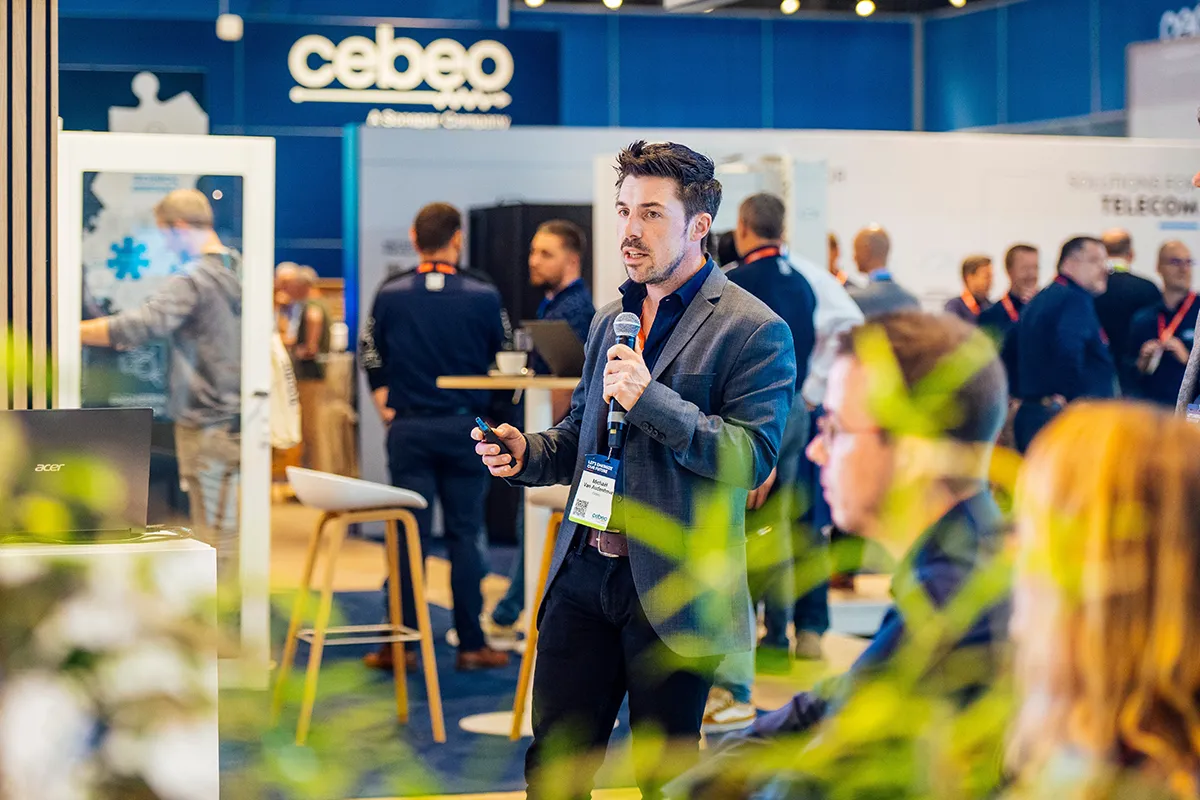
Michaël Van Audenhove and Nico Moeyaert first discuss the move towards more flexible energy consumption and explain how Cebeo sees this taking shape in practice in HVAC and renewable energy installations. “For us, flexible energy consumption in this context means that a building can store energy when conditions are favourable and use it later, without compromising comfort,” explains Michaël Van Audenhove. “It is important to take account of fluctuations in energy prices and building occupancy.”
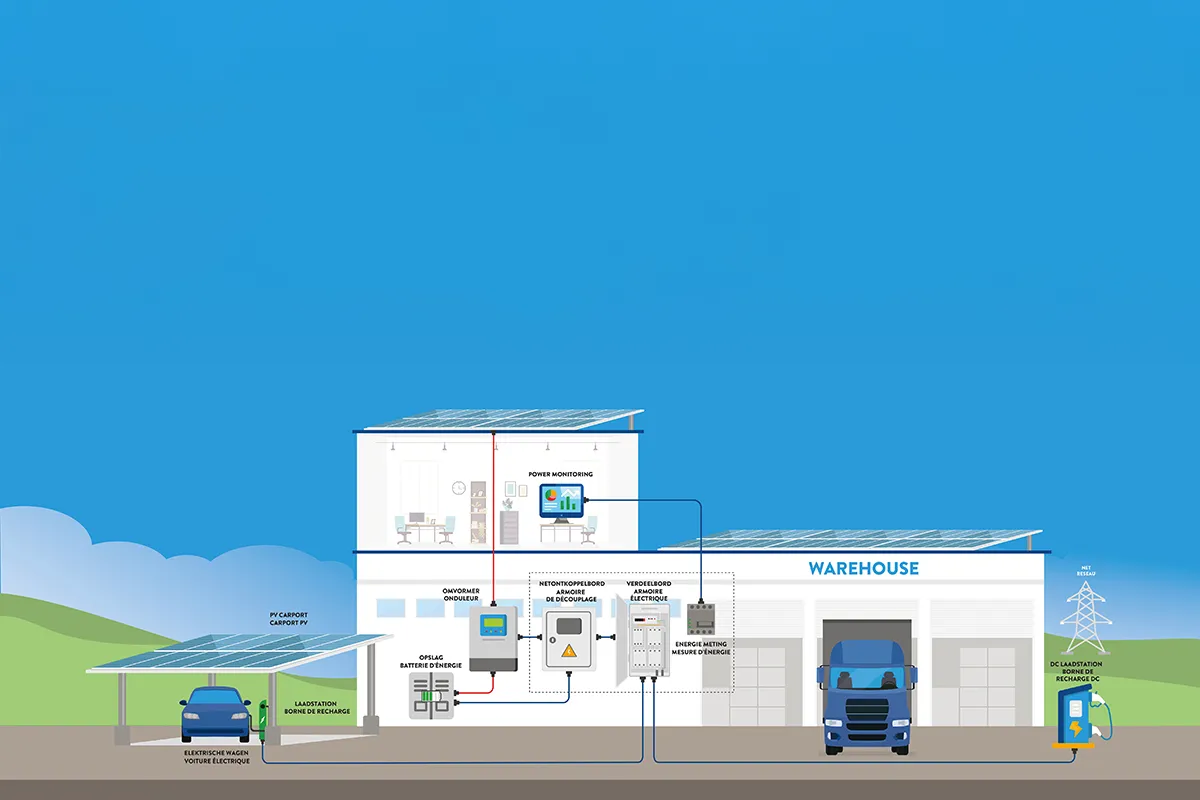
“In short, it is about increasing self-consumption, smoothing consumption peaks and responding intelligently to volatile electricity prices,” adds his colleague. “Building automation plays a key role here. More flexible use of self-generated electricity can significantly reduce energy bills and also helps stabilise the electricity grid. Cebeo no longer sees renewable energy and HVAC as two separate entities.”
Smart buildings
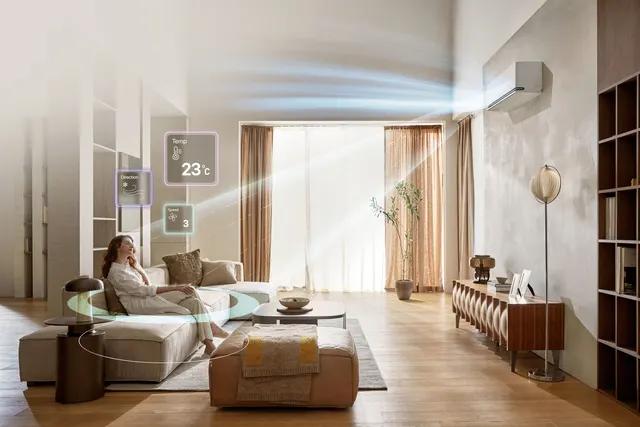
According to the experts, smart building control and automation systems are essential for ensuring flexible energy consumption. “They enable installations to respond intelligently to grid signals, dynamic tariffs or clean solar electricity generation. Conventional buffers, such as thermal storage tanks or batteries, also have a role to play,” explains Michaël Van Audenhove. “Add demand management strategies such as load shifting and peak shaving to these technologies, and you create a building that uses energy more intelligently and helps make the grid more stable.”
“It is particularly in the non-residential sector, where larger energy storage systems are used, that this also makes energy trading possible. However, it is essential that the system is charged and discharged at the right time, which requires appropriate controls,” adds Nico Moeyaert. Asked about the main opportunities for integrating HVAC systems with renewable energy, particularly to increase flexibility, the two men point first to heat pumps. Michaël Van Audenhove: “If you connect a heat pump to a photovoltaic system and a battery or thermal buffer tank, you can store electricity or heat respectively on sunny days or when energy prices are favourable. Heat can also be stored in the building fabric. Cooling and ventilation systems can of course also be connected to renewable energy. The same applies to any vehicle charging infrastructure.”
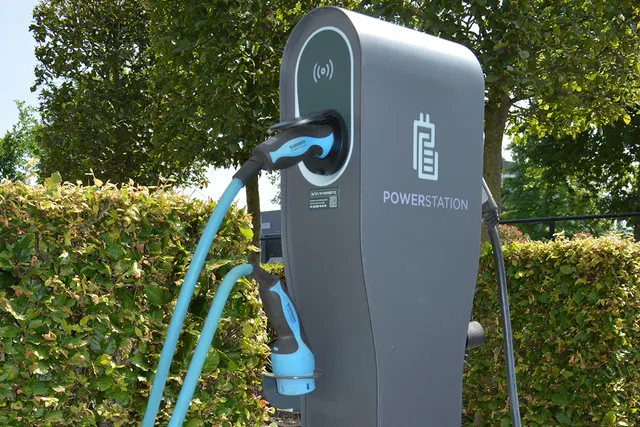
“Our own headquarters has around 30 charging points for electric cars. When people are cooking at lunchtime and the kitchen is therefore using a lot of electricity, the cars charge more slowly so that consumption is spread out,” says Nico Moeyaert, giving a practical example.
Mandatory building automation
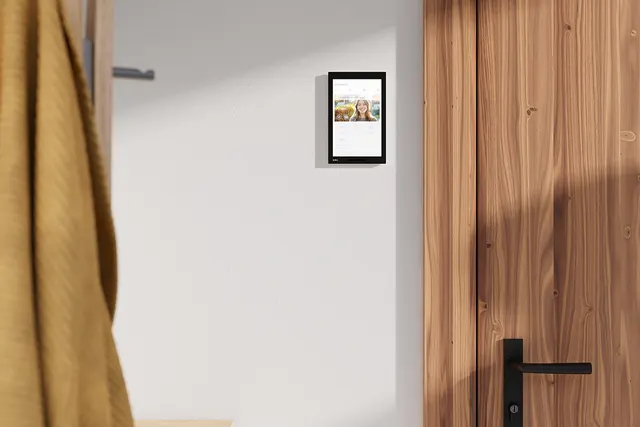
A second development with tangible consequences for the installation sector is the European requirement for large non-residential buildings to be equipped with a building automation and control system from 31 December 2025. Initially, this requirement applies to buildings with a heating or cooling system with a rated thermal output of more than 290 kW. It is sufficient for either system to exceed this figure. The threshold will be lowered gradually over the coming years. The requirement also applies to non-residential buildings with air conditioning, or a combination of air conditioning and ventilation, where the total rated output exceeds 290 kW. Michaël Van Audenhove and Nico Moeyaert explain how Cebeo is preparing its customers for this change. “It is best to start with an analysis: what systems are already in place, and what are the requirements? We then work with the manufacturer to support the installer from component selection through to implementation,” explains Michaël Van Audenhove. Nico Moeyaert adds: “In non-residential projects, building automation is almost always bespoke, while plug-and-play solutions are often used in residential projects. Our major advantage over other wholesalers is that we have the right solutions and expertise for every area: HVAC, renewable energy and controls.” Cebeo sees this requirement as an opportunity. “Smart control systems make it possible to reduce energy consumption, smooth peaks and make better use of photovoltaic systems. This results in lower energy bills,” explains Michaël Van Audenhove. “And with systems monitored continuously, problems can be detected and resolved more quickly, extending the service life of the installations. The value of an automated building also increases.”
Clear dashboards
Building automation and control systems must also enable energy consumption to be monitored and analysed. What solutions does Cebeo offer to not only record data, but also make it actionable for facility managers and technical teams? “Solutions that make the figures easy to understand and show where action is needed,” explains Nico Moeyaert. “Readings are of little use if the data are not translated into insights and actions. Facility managers want clear dashboards that show not only energy flows, but also deviations and improvement measures.” The requirement also stipulates that systems from different brands must be able to communicate with each other. Michaël Van Audenhove: “That is why Cebeo offers comprehensive energy monitoring systems that allow HVAC systems, photovoltaic installations and charging infrastructure from different brands to communicate with one another. We are also working to build a portfolio in which solutions from different brands are compatible. To do this, we regularly consult our colleagues.” “For older installations that cannot be integrated into an overall energy concept, a major renovation may be necessary,” adds Nico Moeyaert.
What does the future hold?
To conclude, the two men discuss the developments they expect to see in the coming years in the combination of HVAC, renewable energy and building automation. “AI-driven monitoring that enables building managers to optimise these three areas themselves will evolve into systems that optimise themselves autonomously,” explains Michaël Van Audenhove. “We can already see this trend today. In other words, systems will make their own decisions based on the renewable energy available, energy prices, weather data and expected occupancy levels in the building. Thermal and electrical storage will also become commonplace, and heat pumps will remain important. Thirdly, regulations will become even stricter: buildings will have to move further towards zero emissions, making building automation the norm. And from 2028, lighting will also have to be controlled intelligently, although this is not yet part of the imminent building automation requirement. In this future scenario, Cebeo positions itself as a partner offering a complete solution: from products to expertise, and from design to after-sales service.” Nico Moeyaert adds a fifth and sixth prediction: “In the wake of building automation, cybersecurity will also become more important. I also expect the car to play a crucial role in a building’s energy management by returning energy to it, under the so-called ‘vehicle-to-grid’ or V2G principle.” To conclude, the experts highlight two important points: “Product quality and correct configuration are crucial for building automation: without high-quality sensors, there is no reliable data. And building automation is not an end in itself, but the start of a process towards truly sustainable buildings. Just as Wi-Fi is now taken for granted in a building, building automation will be too. This will require ongoing collaboration between the manufacturer, the installer and us as the wholesaler. But installers can rest assured: Cebeo keeps abreast of the market and keeps its catalogue up to date.”
A business enquiry for Cebeo? Get in touch
Companies in this story
Keep following this
Get an email when a new story is published. No account needed.
- ThemeGenerating and managing energy
- SubjectElectrical engineering
- CompanyCebeo