Practical experience informs best practice
Texte Philippe Selke
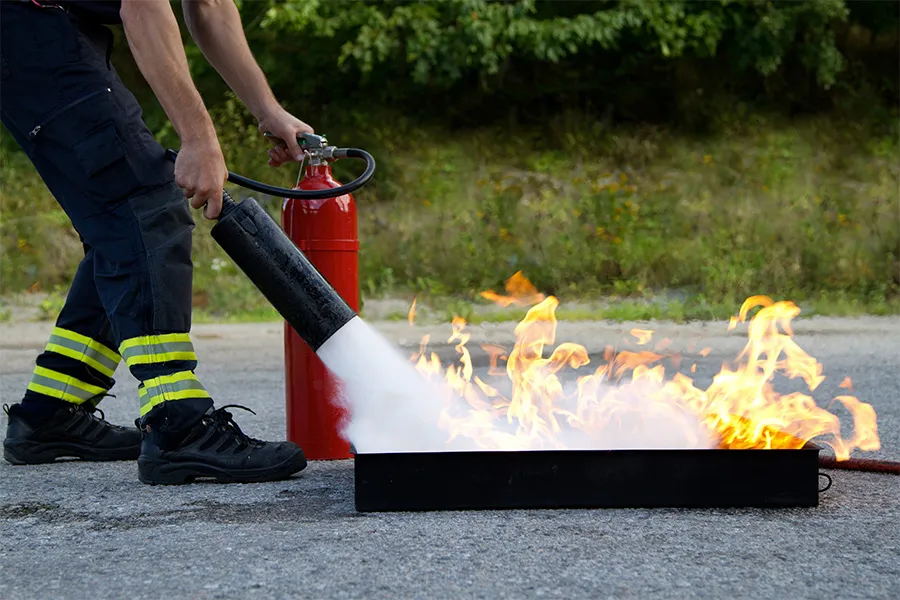
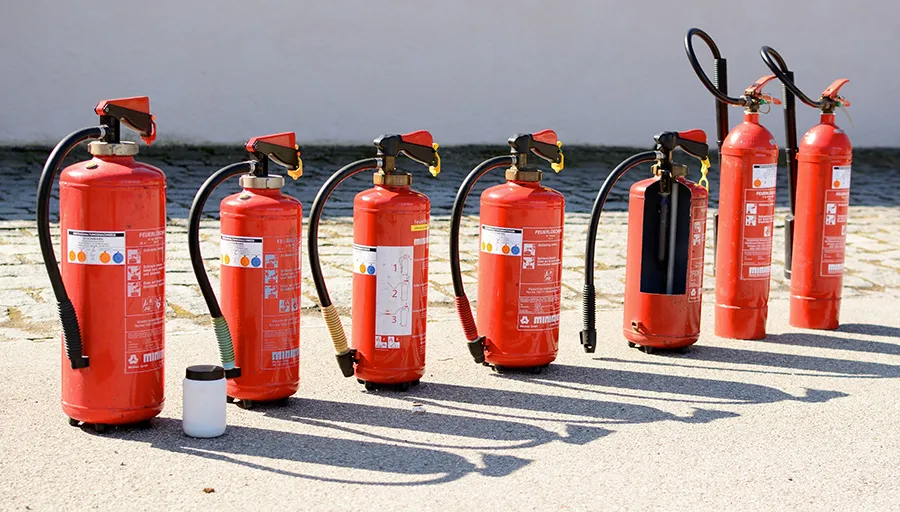
In fire safety, as in other fields, prevention is better than cure. But when a fire does break out, the protection of people and property must be supported by fully operational signage and robust organisational measures, especially evacuation plans and procedures. Who better than a firefighter to advise the owner of the premises to be protected?
Jean Quinzin is managing director of BFS Consulting, a consultancy based in Thuin. A professional firefighter and fire prevention technician, he developed his consultancy work to bridge the gap between risk analysis and prevention, as the two go hand in hand. His hands-on experience of fire behaviour enables him to interpret risks accurately and determine ways of reducing them by considering different scenarios. Over time, he has developed a kind of best-practice guide for translating all the regulatory and standards-based theory on fire safety into practical measures.
Whether it is an office building, residential building, industrial site, glamping-style tourist accommodation, the High-Speed Train facilities at Gare du Midi, a waste treatment site in Namur Province, a very large pharmaceutical facility in Wavre or Brussels schools, BFS Consulting’s work focuses mainly on the “construction” aspect of fire safety, including compartmentation and the fire resistance of structural elements, as well as organisational measures, including evacuation plans and procedures, and signage. For fire-fighting systems, he works in partnership with Pierre Cochet (EFSafety, see pages 94-95).

Consider fire safety as early as possible
Jean Quinzin spends most of his time carrying out risk assessments, commissioned by the client at the outline design stage or later at the request of the consulting engineer. Clearly, the earlier he is involved in a project, the less time and money will be wasted if subsequent changes are needed to meet fire safety requirements. Jean Quinzin: “We identify how to improve the construction in line with current standards and our practical experience. To give just one example, compartmentation of horizontal and vertical service shafts is a recurring problem. I have never seen a project in which this aspect was properly addressed from the outset in terms of fire protection.”
Risk assessment and remedies
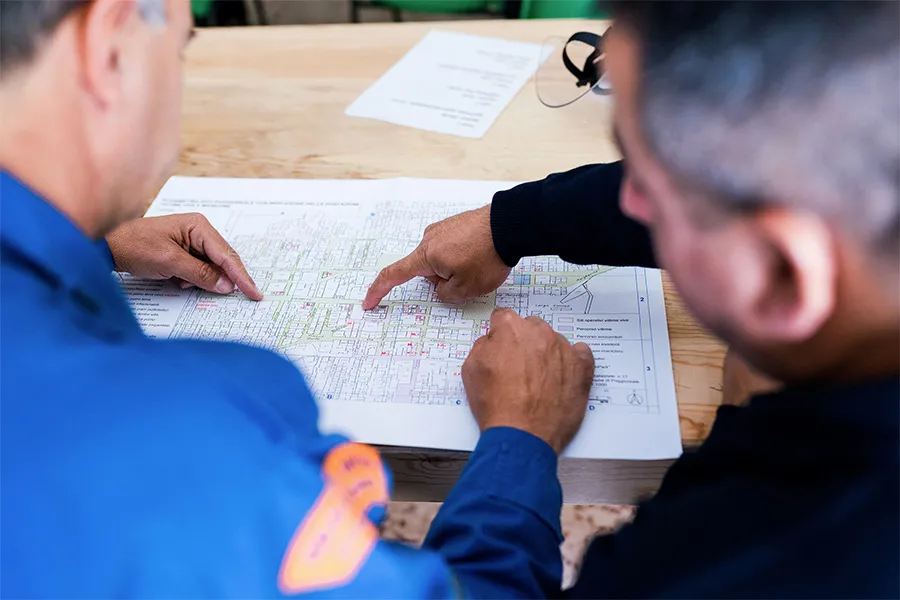
“When assessing risks in an existing building, I identify technical, construction-related and organisational non-compliances and recommend ways to address them. I use the ‘6 steps assessment’ method, which produces a clear, colour-coded report with scores for the client. I then link the risk assessment to different scenarios to explain why some of the situations identified are genuinely problematic and dangerous, as employers are expected to do everything possible to reduce risks. The priority in everything I propose is protecting the building’s occupants. Next comes protecting the building itself, because buildings often have a history that must be respected. Their destruction would have social, economic and psychological consequences for their occupants.” Jean Quinzin also stresses the importance of fire safety during works to bring a building into compliance with fire safety requirements.
Improving signage
One subject close to professional firefighter Jean Quinzin’s heart is signage that enables firefighters and occupants to identify escape routes and their direction, emergency exits, fire safety points and fire-fighting equipment. ISO 16 069:2020 now specifies Class C photoluminescence for all types of pictogram and building. “This standard does not apply until it has been transposed into Belgian national legislation, but being able to identify the location of fire-fighting equipment at low level, that is, 40 cm above the floor, is something the emergency services were already asking for 20 or 30 years ago. Today, as a fire prevention technician and as a consultancy, I no longer want emergency lighting separate from its signage. Integrating the two is more practical, safer and more attractive.”
Question about this story? Ask your question
Keep following this
Get an email when a new story is published. No account needed.
- ThemeFire prevention
- SubjectNews