Passive fire protection: renowned manufacturer focuses on testing, training and digitalisation
Texte Wouter Polspoel | Photos Promat
New types of service penetrations, combinations of services and innovative insulation materials are making fire stopping around service penetrations one of the most complex aspects of passive fire protection today, as you can also read elsewhere in this issue. For Promat, a manufacturer of fire protection boards, intumescent coatings, spray-applied fire protection and fire stopping products, this growing complexity is precisely why it is investing heavily in testing, training and digital tools for installers.
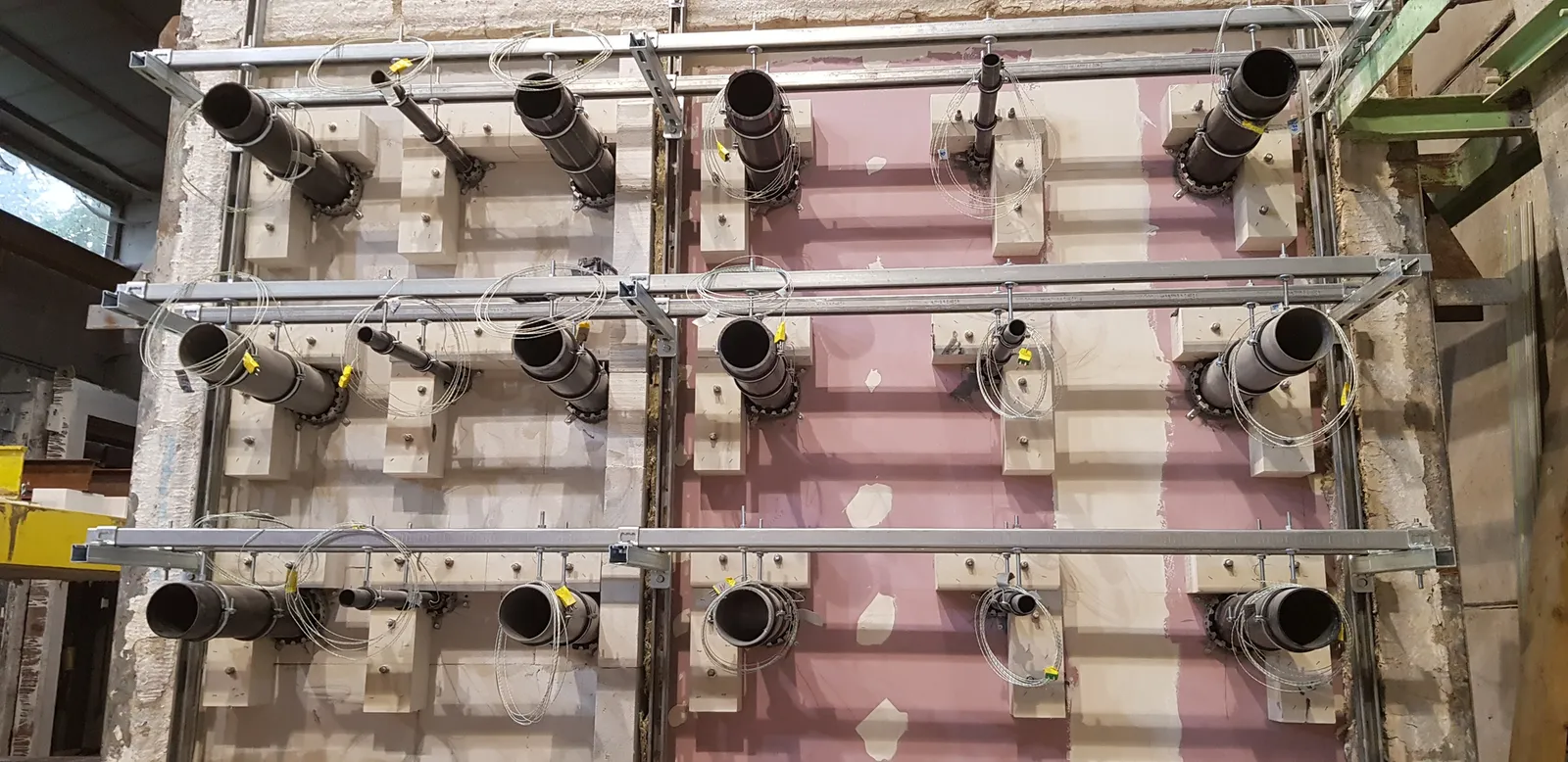
“The days when a single pipe passed through a fire-resistant wall are over,” explains Steven Gabriël, Sales Engineer Fire Stopping at Promat. “Today, installers group HVAC, plumbing, electrical services and data cabling together in a single penetration. Each combination behaves differently in the event of a fire.” To map this complexity accurately, Promat carries out more than two hundred fire tests worldwide each year. The company works to the European EN 1366 standards for fire-resistant penetration seals and linear joint seals. The performance of the solutions is then recorded in an ETA (European Technical Assessment). “Our approach to testing is extremely thorough,” says Steven Gabriël. “It is not just the type of service that matters, but also the manufacturer, diameter, insulation and type of wall or floor. Concrete, plasterboard, sandwich panels and CLT timber each require different test configurations. A PVC pipe from one brand does not behave in the same way as one from another brand. Add insulation or cable trays, and you have another configuration. That is why we continuously invest in further testing.”
According to the Sales Engineer Fire Stopping, the need for proper compartmentation is also becoming more pressing as new materials emerge. “High-performance insulation systems offer energy benefits, but at the same time they impose higher requirements for fire safety.”
A mobile demonstration facility
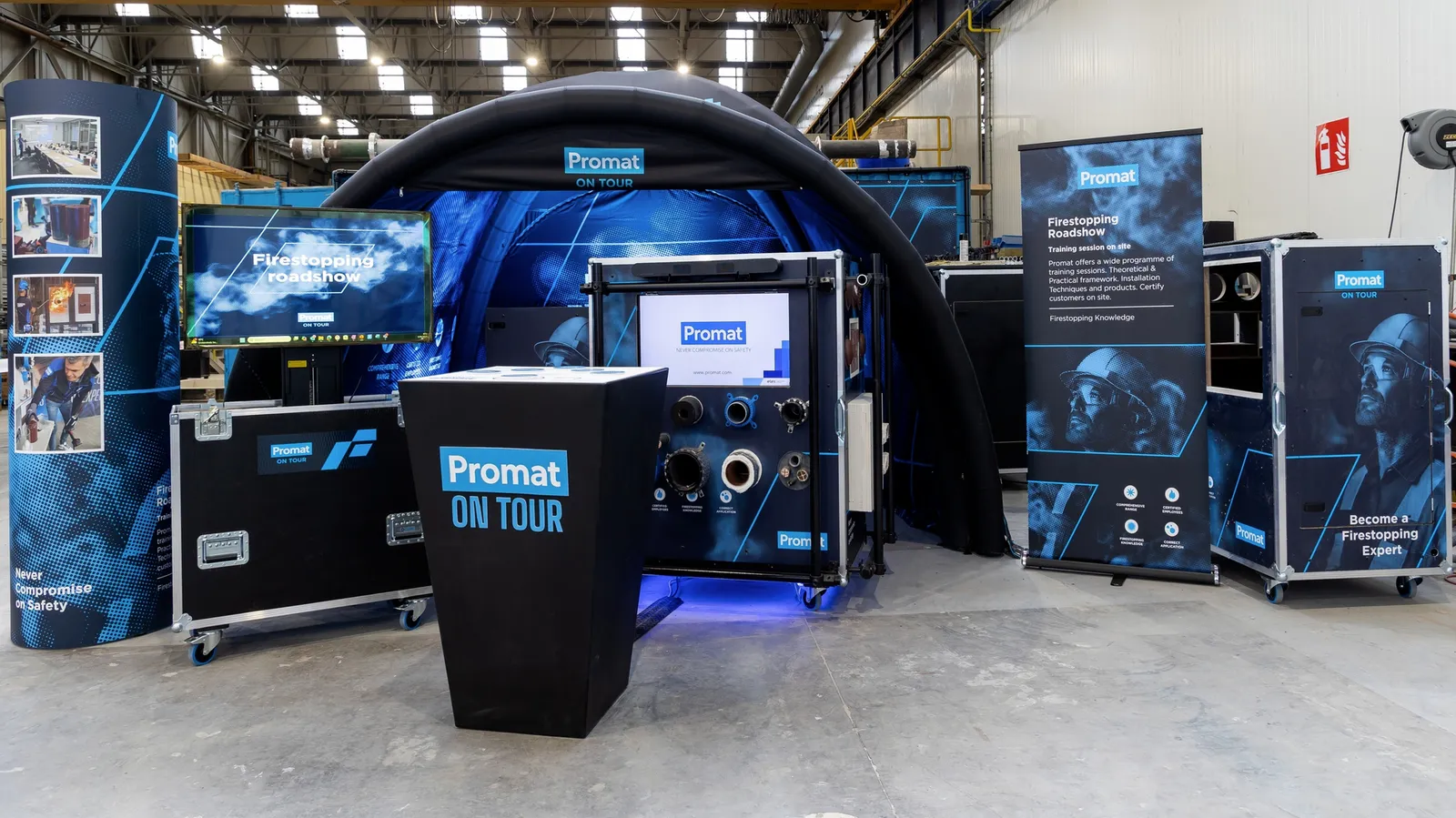
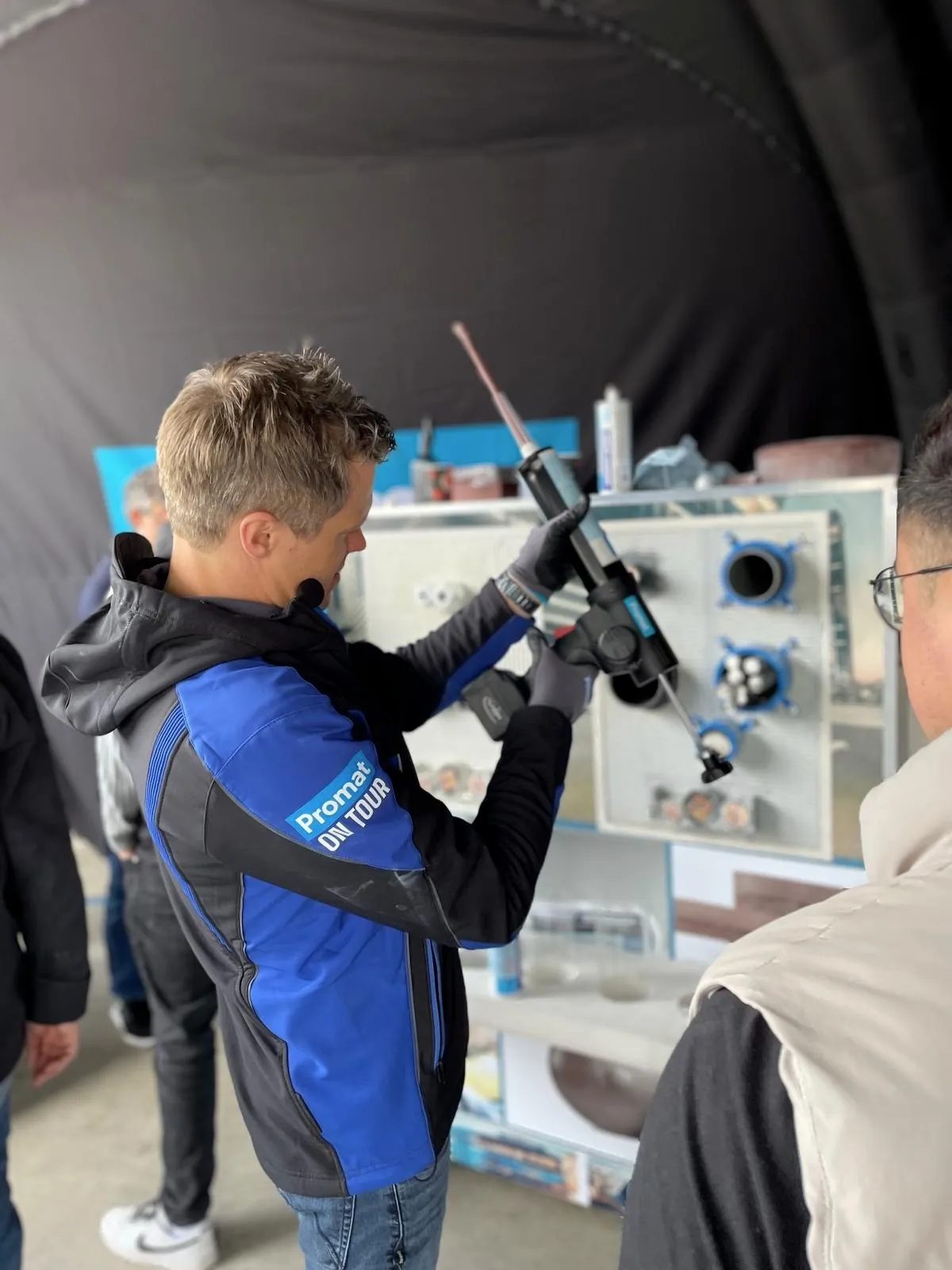
In addition to testing, Promat also wants to raise installers’ awareness. With this in mind, the company launched Promat on Tour, a mobile demonstration facility that visits clients, distributors and installers on site. For Steven Gabriël, the added value of Promat on Tour is clear: “On construction sites, we still too often see standard silicone or PU foam being used as a fire stopping system. That is simply not good enough.”
“In an interactive tent of around 25 m², groups of ten to fifteen people receive practical guidance on compartmentation, good installation practice and the most common mistakes,” he continues, describing Promat on Tour. “The demonstrations show exactly how fire and smoke can spread through poorly executed service penetrations. Many installers only truly realise the impact that a small opening can have on a building’s fire safety during this kind of demonstration.”
A free web tool
Promat has also noticed that inspection bodies are becoming increasingly demanding when it comes to the documentation and certification of fire protection solutions. This is another reason why the company is investing heavily in digitalisation. Steven Gabriël says: “With the free Promat Selector web tool, we help installers choose the right solution. Through a step-by-step selection process, they specify the type of construction, the required fire resistance level and the type of service, among other things. The tool then presents suitable systems and the corresponding documentation.” This selection process is far from simple. “The database now contains thousands of possible combinations,” says Steven Gabriël. He adds that Promat is currently developing a new digital platform to help installers prepare reports and as-built documentation. The aim is not only to simplify product selection, but also to improve administrative follow-up on site.
A shared responsibility
Finally, the Sales Engineer Fire Stopping emphasises that ensuring a building’s fire safety does not begin when service penetrations are sealed, but during the design phase. “When services are positioned intelligently from the outset of a project, complex and costly fire safety solutions can often be avoided later on. Fire compartmentation is most effective when everyone involved in the construction process takes it into account from the start,” he concludes.
Have a business enquiry for Promat? Get in touch
Companies in this story
Keep following this
Get an email when a new story is published. No account needed.
- ThemeFire prevention
- SubjectNews
- CompanyPromat