Geothermal energy set to continue its growth
Texte Niels Rouvrois | Photos Smeyers
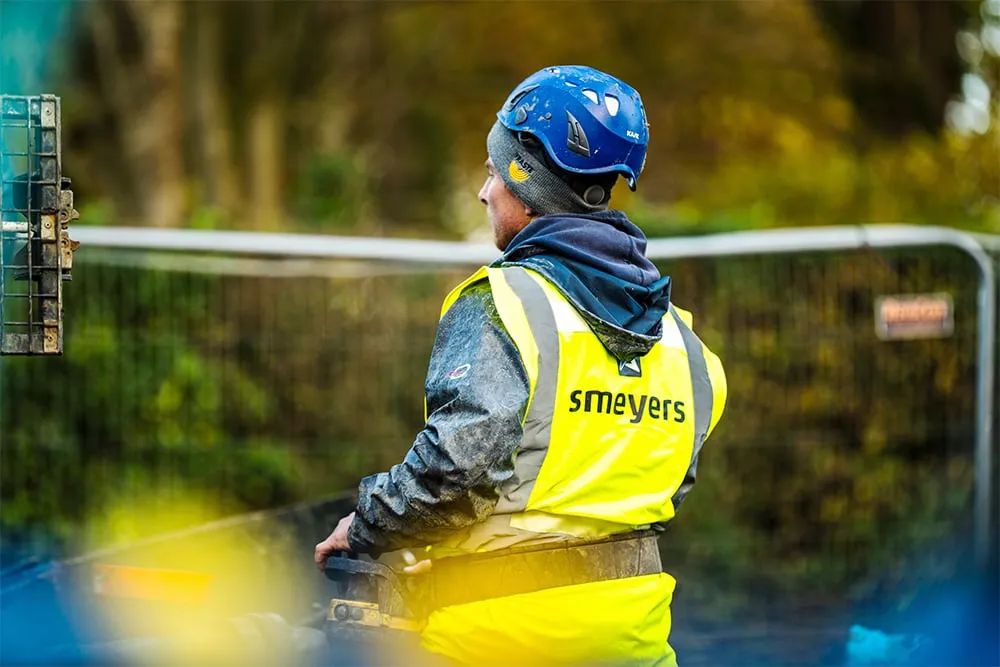
With demand for renewable and alternative energy sources continuing to rise, drainage drilling specialist Smeyers, part of the Aertssen group, has for several years been establishing itself as a major player in geothermal drilling. “Geothermal energy is not a futuristic dream, but a present-day reality and a key factor in a sustainable future,” says Jeffrey Beens.
The benefits of geothermal energy in construction projects are undeniable. Jeffrey Beens: “The biggest advantage is that the cost of supplying heat to the construction project, for heating and domestic hot water, is guaranteed and does not depend on price fluctuations, as is the case with fossil fuels. Your personal heat supply is literally in your garden or beneath your basement. Geothermal energy also offers the benefit of passive cooling during hot periods. A well-maintained BEO field has a very long service life, guaranteeing a return on investment.”
Shallow closed-loop systems
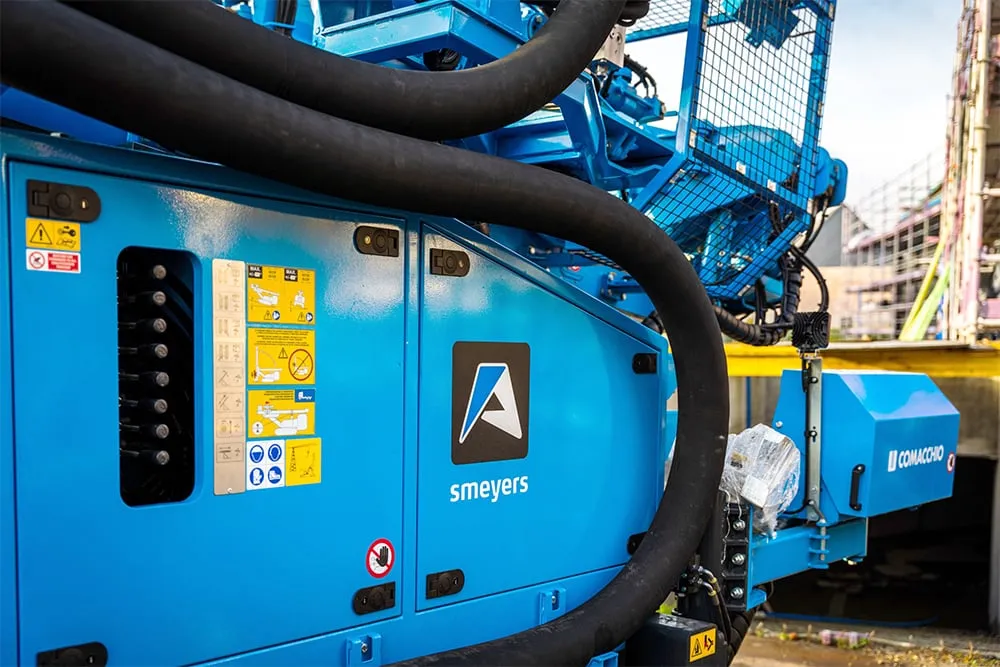
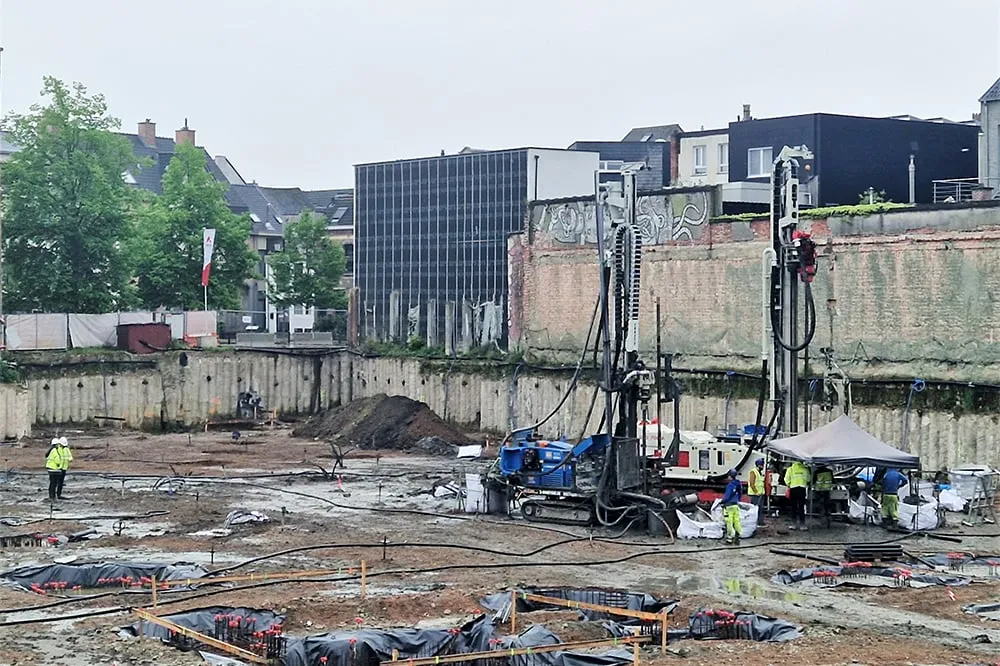
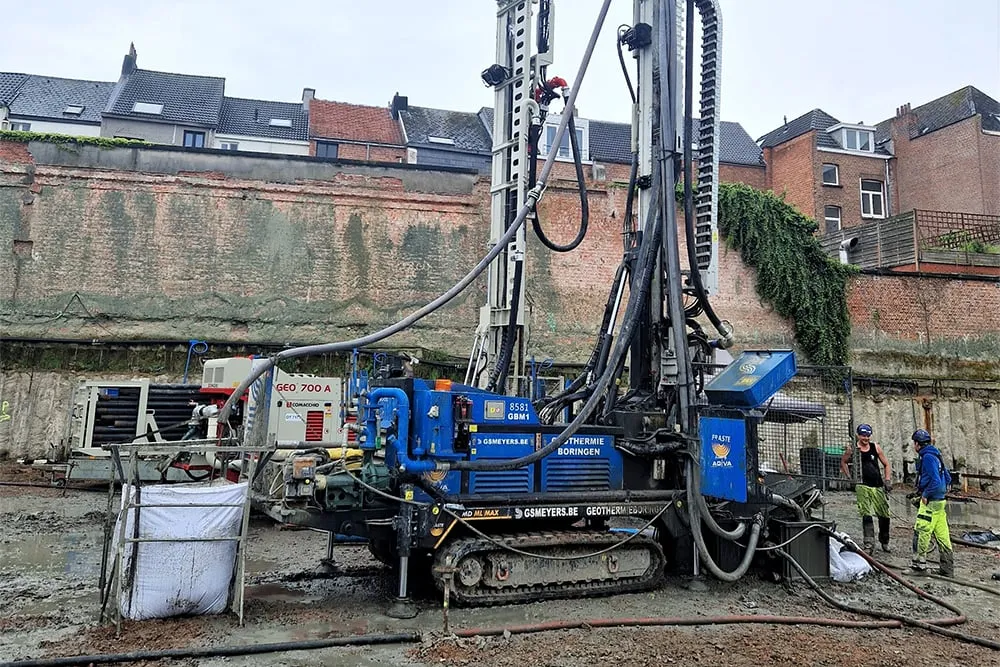
More specifically, Smeyers specialises in shallow geothermal drilling using closed-loop systems. Jeffrey Beens: “This involves drilling to a maximum depth (150 m), or in accordance with the depth criterion. BEO fields (Borehole Energy Storage) are constructed in several stages. The first stage is vertical drilling. At this point, it is essential that the borehole is drilled correctly, not only to protect the subsoil, but also to ensure the service life and profitability of the BEO field.”
“In the second stage, trenches are dug to install the horizontal network. All the boreholes, whether connected in pairs or not, are linked to horizontal pipes and routed to the plant room. There are several ways of doing this, and the best approach for each project should be considered in terms of both cost and sustainability. In the third stage, the system is filled with liquid and pressurised. In most cases, the liquid is a mixture of water and monopropylene glycol.”
Practical experience and scientific knowledge
The construction sector’s growing demand for renewable and alternative energy sources has certainly influenced Smeyers’ decision to move into geothermal drilling. “There is no doubt that geothermal energy will be used increasingly in the future,” explains Jeffrey Beens. “But it is essential that systems are installed and sized in line with the required quality standards and expertise. As with drainage systems, we want to add value to every project through practical experience and scientific knowledge. And we do so in compliance with the legal framework to avoid setbacks.”
Smeyers has made a name for itself in drainage as a reliable partner for clients working on technically complex projects. “So we want to extend this approach to geothermal energy,” says Jeffrey Beens. “This means we need not only to invest in high-performance equipment, but also to continue recruiting people with the necessary expertise. We also provide collective and individual development paths so that the right people can progress within our organisation. This allows us not only to strengthen our expertise, but also to continue improving the quality of our products. The recent expansion of our Aalter branch is also part of this ambitious growth, driven by rising market demand and our desire to be close to our customers.”
Embedded in our DNA
For Smeyers, and by extension the entire Aertssen group, the ongoing pursuit of innovative and sustainable solutions is an absolute priority. “It is embedded in our DNA. We are always willing to invest in innovative solutions and continue working on sustainable ones. As far as geothermal energy is concerned, the market is already showing clear signs of change. Geothermal energy is increasingly becoming the preferred choice. However, the cost of installing a BEO field can still be an obstacle for developers, despite the high profitability of this type of solution. In recent years, the market has seen considerable growth in the number of geothermal boreholes commissioned. The question is how to ensure the right balance between quantity and quality. Every design and every installation must respect the subsoil,” concludes Jeffrey Beens.
Question about this story? Ask your question
Keep following this
Get an email when a new story is published. No account needed.
- ThemeAlternative heating and cooling
- SubjectNews