The heat pump: a positive story (in times of climate change)

These days, we take central heating at home for granted. More and more people are choosing to combine it with a heat pump, the most cost-effective way to use renewable energy.
Both technologies have become an obvious choice and are generally accepted, but historically speaking, they are very recent developments, with heat pumps being newer still than central heating. Heating in our buildings has already come a long way.
In Roman times, most homes were heated by a wood fire or an open fire. In the 2nd century BC, bathhouses, other public buildings and large private homes were sometimes equipped with underfloor heating powered by burning wood. The first stoves were made in the 17th century, and the first central heating system in a home was installed in London in 1819. It was not until around 1965 that central heating became commonplace. Heat was initially produced by burning wood and coal, and later mainly by heating oil or natural gas. All of these are fossil fuels. But that era is gradually coming to an end.
The end of the fossil fuel era is fast approaching…
Our growing awareness of the negative impact humans have on the climate is making us increasingly attentive to sustainable heating that drastically limits CO2 emissions, especially after this catastrophic summer and the latest UN report on climate change. Heat pumps are then the obvious choice.
.. But major steps still need to be taken
In 2017, an interfederal Energy Pact was concluded in our country, with the aim of making Belgium climate-neutral by 2050. One of the first steps in this pact is to phase out our fossil fuel heating systems, starting with heating oil. But it is not that simple.
In fact, 35% of Belgian homes are still heated with heating oil. In Wallonia, the figure is even higher, at 50%.
In Flanders, 16% (or a quarter?) of households still heat their homes with heating oil. Since 2021, it has been prohibited to install an oil-fired boiler in a new build or as part of an energy-efficient renovation. Replacing a boiler with another oil-fired boiler will probably no longer be permitted from 1st January 2022.
In the Brussels-Capital Region, where 16% of homes are heated with heating oil, similar measures are being taken to ban oil-fired boilers from June 2025. A grant is being considered for Brussels consumers who want to remove their oil heating system between 2021 and 2025.
Wallonia, where half of consumers use heating oil as their heat source, will certainly not introduce a ban before 2035.
Natural gas heating will also come under pressure. Energy supplier Eneco has already decided to stop supplying natural gas from 2035.
Heat pumps are ready for the future
Our homes are increasingly well insulated, which is good news for heat pumps.
The government is increasingly insisting that homes are properly insulated, not only new builds but also renovated properties. This reduces the heating capacity required and makes investing in a (smaller) heat pump more attractive.
The capacity tariff and digital meter can work in favour of heat pumps.
Since the outdoor temperature changes only gradually, heating demand is low (low-temperature heating, around 35°C) and the building is well insulated (or should be), a heat pump will have a fairly flat electricity consumption profile. During normal operation (with a constant indoor temperature), there are no consumption peaks.
As things currently stand, a new electricity tariff will be introduced in Flanders from 1st July 2022, known as the “capaciteitstarief” (capacity tariff). Part of your bill will no longer be calculated on the basis of the amount of electricity you draw from the grid (kWh), but on the basis of the peaks in demand you create (kW). With this tariff, the VREG (Flemish Regulator of the Electricity and Gas Market) aims to encourage consumers to use the existing network more efficiently. Those who create high peaks will pay more than those who spread their consumption. This can be good news for heat pumps.
The digital meter is needed to implement this type of tariff. Given how a heat pump operates, it generally benefits from having a digital meter. The digital meter can control the heat pump in various ways to prevent consumption peaks, for example by avoiding running the tumble dryer, washing machine and oven at the same time.
Consumers will avoid consumption peaks and spread their electricity use more evenly, thereby reducing the load on the electricity grid. If there are no peaks, or fewer of them, less investment will be needed to upgrade the electricity grid, and distribution costs will not have to rise unnecessarily. In the long term, this should have a positive effect on energy prices.
The digital meter also allows suppliers to offer dynamic energy tariffs. This means you can buy electricity at more favourable rates when a lot of (renewable) energy is available. In the long term, this will help prevent peaks not only at the consumer’s premises, but across the entire grid.
Heat pumps are easy to control
Controlling installations that use electricity is very important for avoiding peaks. The government is well aware of this and offers grants for installations that meet quality requirements and are preferably controllable.
By the way, grants are still available for insulation and for removing the exclusive night meter.
A green tax shift would be the icing on the cake
Back in 2017, our public authorities proposed a green tax shift that would increase taxes on fossil fuels and reduce them on electricity, making the latter more attractive to use. After all, the high charges on electricity mean that some renewable energy applications, such as heat pumps, still account for too small a share of the market. Yet they are by far the most suitable option for reducing CO2 emissions from heating. Current governments are reportedly still giving serious consideration to this shift in taxation.
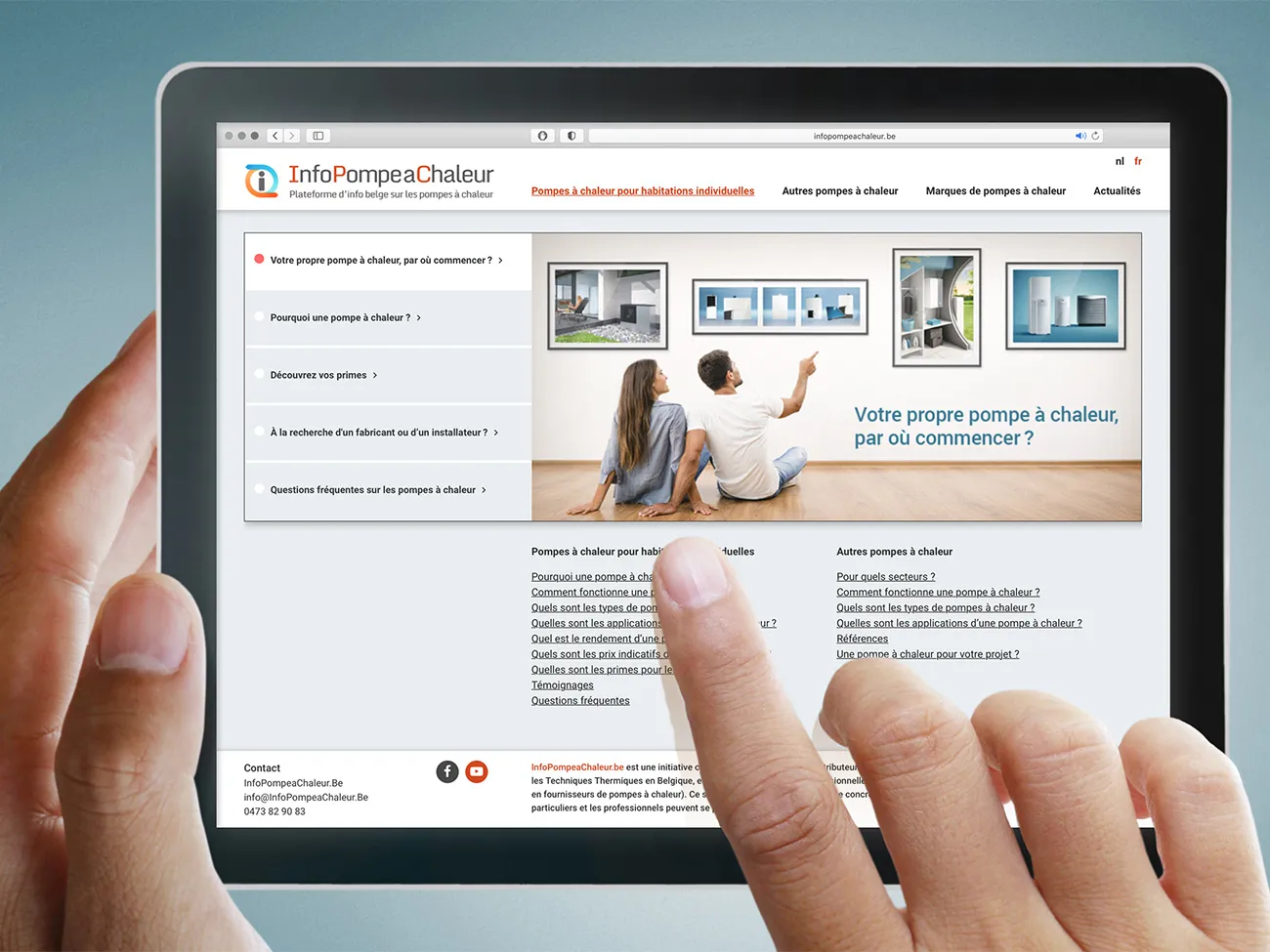
All the benefits, points to consider and myths surrounding heat pumps are covered on our website. https://www.infopompeachaleur.be/fr/

Question about this story? Ask your question
Keep following this
Get an email when a new story is published. No account needed.
- ThemeAlternative heating and cooling
- SubjectHVAC