A smoke control damper with a minimal installation depth for greater flexibility

Smoke and heat extraction is becoming increasingly important, both in day-to-day practice and as legislation evolves. It is no surprise, then, that manufacturers are continually refining products in this field. Trox did just that a few years ago with its EK-JZ smoke control damper. This innovation is now proving its worth in the refurbished ductwork network at Brussels Airport.
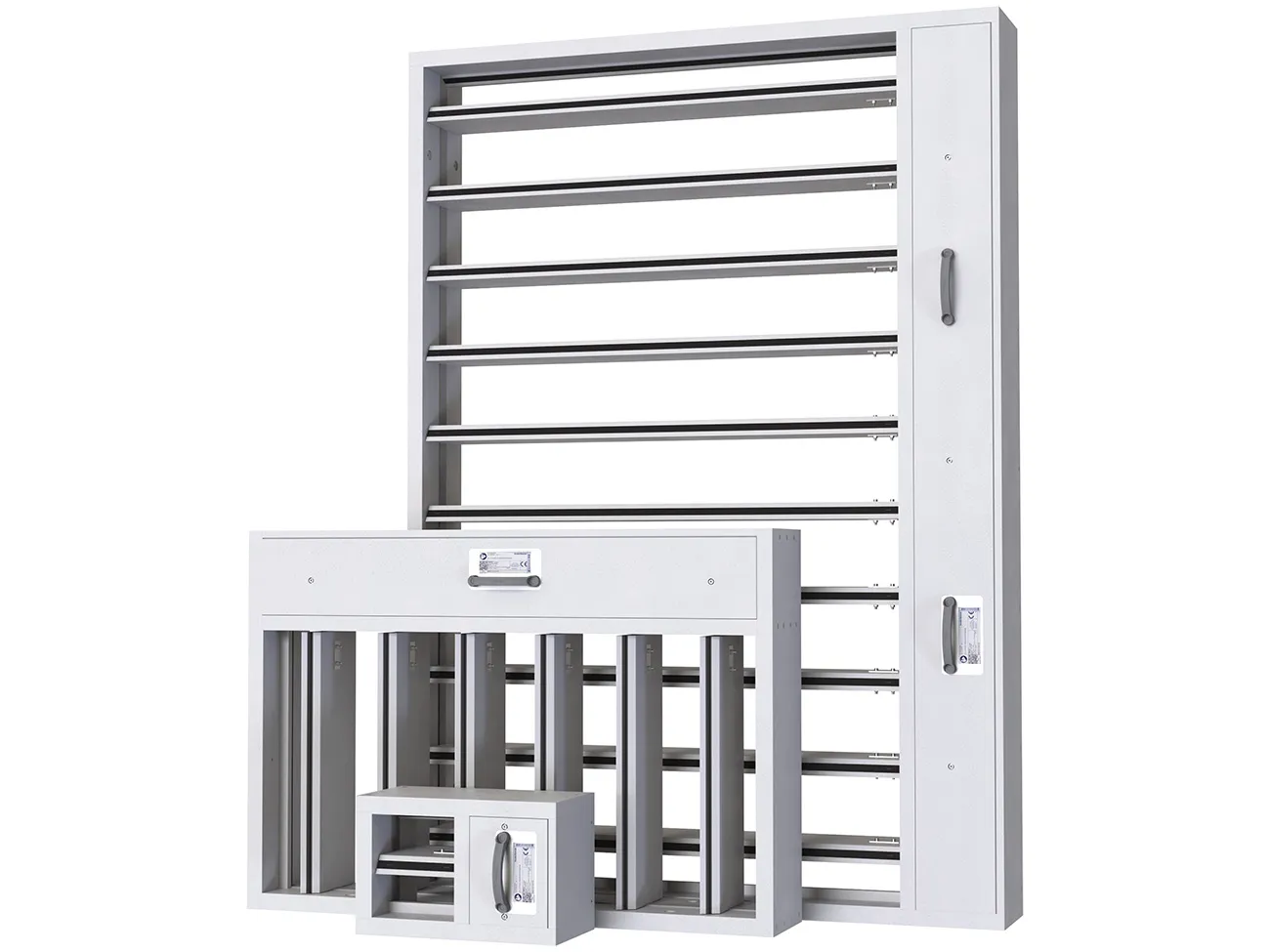
The EK-JZ is a smoke control damper that requires minimal installation depth, so it can be installed directly in ductwork, for example. Conventional dampers are less suited to this, as they are more like fire dampers and need to be installed much further into the duct. This gives the EK-JZ a wider range of possible applications.
Product selection based on CFD
This has proved to be a sound strategy. Since the EK-JZ was launched in late 2017, demand for smoke and heat extraction solutions has increased considerably. Legislation also sets more stringent requirements for correct installation. Anthony Sonvil, business development safety systems engineer at Trox: “This is most apparent during the preliminary design stage. In the past, a duct and an extract system were enough. Today, you use technologies such as CFD (computational fluid dynamics) to simulate fire scenarios, including how smoke will move and spread through a room, and select the right products accordingly. Having an installation in place is certainly important, but it is much less effective if the engineering is not up to scratch.”
Horizontal or vertical
Another advantage of the EK-JZ is that installers can position the damper horizontally or vertically, and assemble four dampers in a row or in a square. “The wide range of installation options, for which Declarations of Performance (DoPs) are also available, gave us the flexibility we needed for this project,” explains Matthias Houwen, project engineer at engineering firm Istema.
Fire resistance and low leakage rate
The damper is made entirely of fire-resistant Promat material. Even the motor is encapsulated in it, providing an additional benefit for the end customer. This means everything can be installed in the fire compartment without any problems and can continue to operate in class F300 conditions. Trox also offers an adapter from Promat to galvanised ductwork. Anthony Sonvil: “Just because the damper is made from a particular material, that does not mean the entire network has to be built the same way. When a damper is closed, it is also important to keep the leakage rate as low as possible to prevent smoke and heat from spreading from one room to another.” The airtightness guaranteed by the EK-JZ was an important requirement for the engineering firm. It meant the existing fans and corresponding free height could be retained. And because the other floors are connected to the common duct, leakage losses had to be kept to a minimum.
Velocity
“The maximum velocity is another advantage,” says Anthony Sonvil. “With the smaller models, we can work at 20 metres per second, compared with a previous maximum of 15. The larger models can reach 12 metres per second, up from 10. Since we can connect more than one damper, we opt for two smaller ones instead of one large one. This means the client does not have to make major structural alterations.” Matthias Houwen of Istema adds: “The new smoke and heat extraction system needs to extract twice the airflow of the existing installation, and we cannot adjust the suspended ceiling height. So being able to work at higher velocities is a huge advantage.”
10 dampers
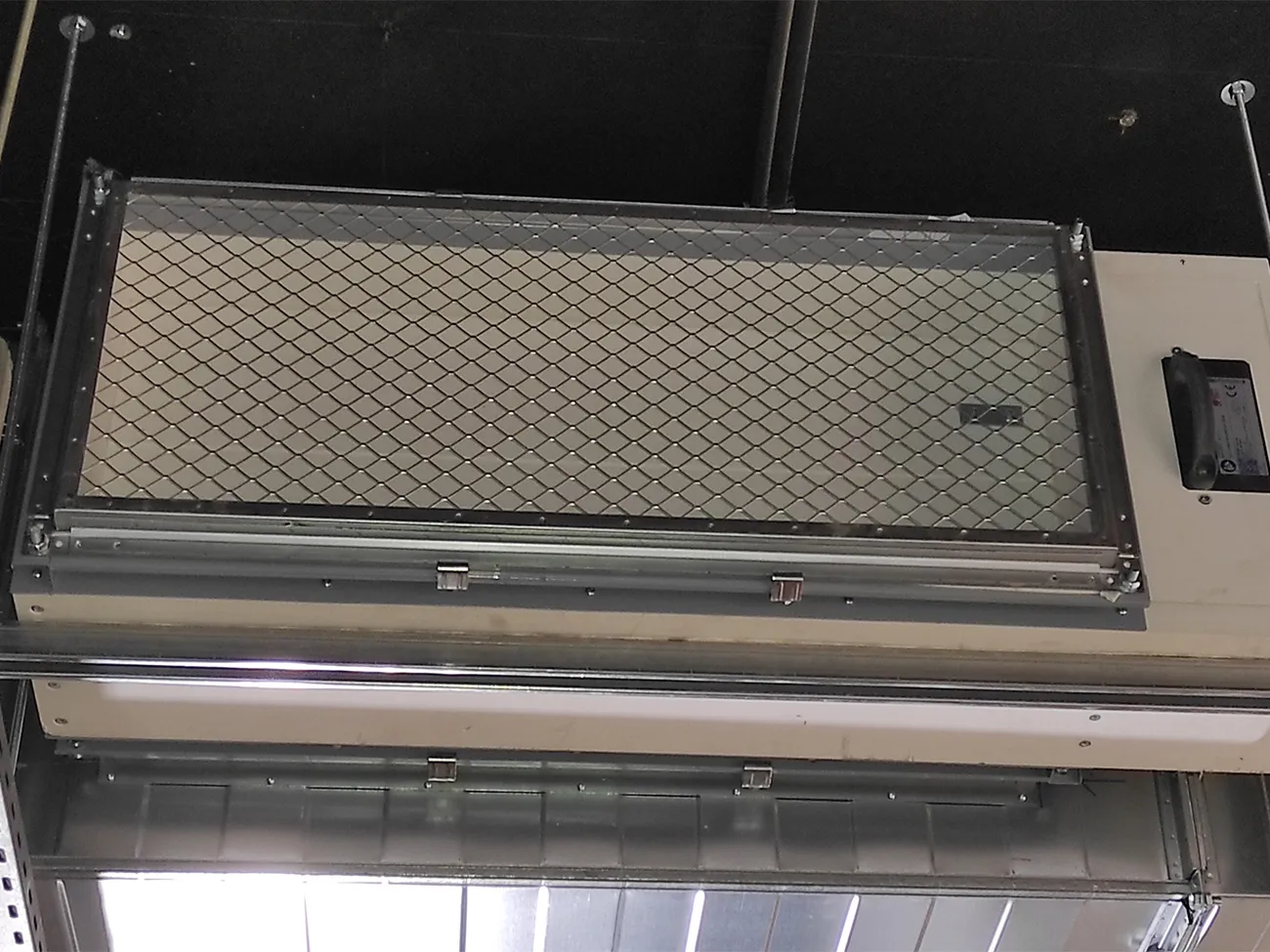
This also proved very useful for the Brussels Airport project, in which Trox took part: the main duct was built using Promat. Limited space and extensions meant Trox had to think outside the box. Joeri De Rechter, project manager at Brussels Airport: “We initially asked Trox for a standard solution. But after considering it further, the EK-JZ turned out to be the best option for the limited space available.” Anthony Sonvil adds: “At the transition between the main duct and the galvanised ducts, we installed 10 dampers so that each section could be controlled separately by isolating the main duct from the branches. It was not easy, but our experience and product knowledge helped us deliver a high-performing and safe end result.”
Een zakelijke vraag aan Trox? Get in touch
Companies in this story

Keep following this
Get an email when a new story is published. No account needed.
- ThemeHealthy indoor air
- SubjectHVAC
- CompanyTrox
- CompanyPromat