Belgian-made plug-and-play charge point
Texte Piet Andries | Photos Powerstation
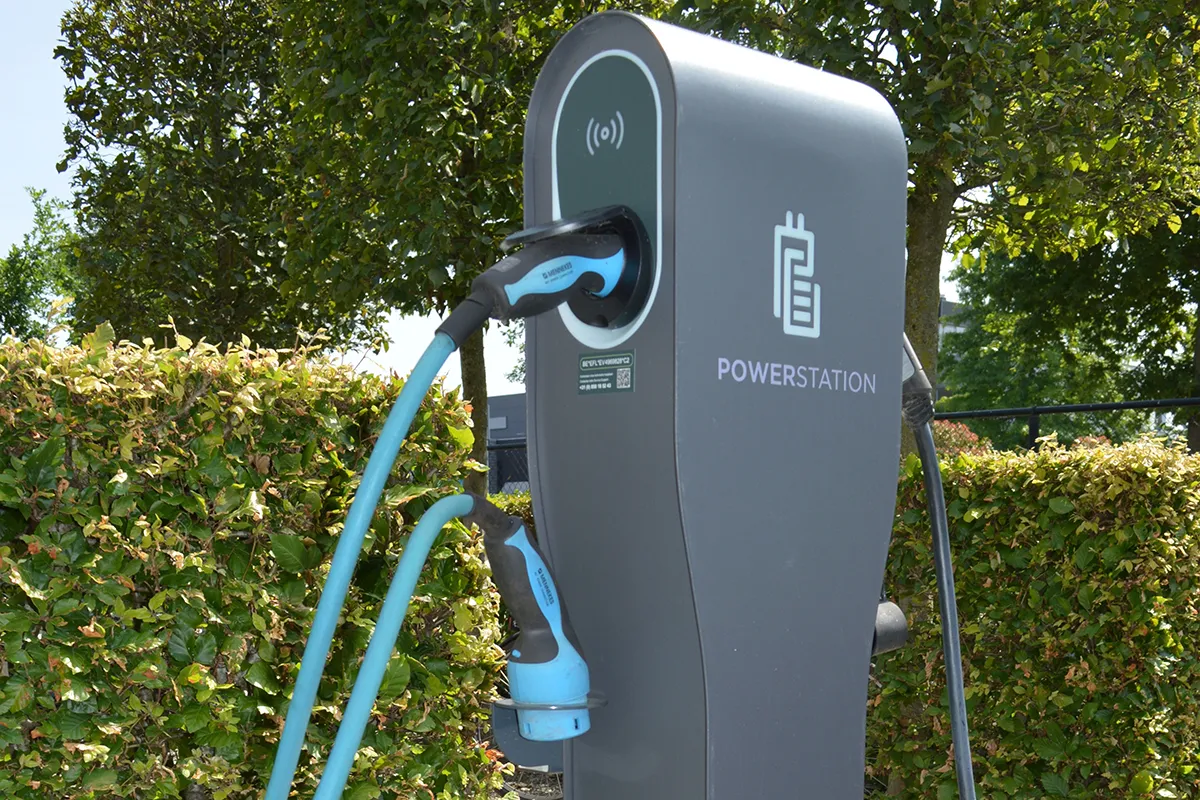
Powerstation is more than just a manufacturer of charging solutions. With local assembly and direct collaboration with installers, the company has deliberately chosen a different business model.
Belgium’s charge point market is booming and is expected to triple by the end of the decade. Yet Belgian company Powerstation, an initiative by serial entrepreneur Erik Groes, is not tempted by quick profits from mass production or rock-bottom prices. The company builds charging stations that, as well as looking good, are above all robust and built to last, with every unit assembled in Belgium. “Installers deserve a quality product with the right business model,” says Erik Groes. “That’s what we’re fully committed to. Just as Omega Pharma worked directly with pharmacists, we work directly with installers. No wholesaler, no detours. Our sector is accelerating rapidly, so we need partners who know what they want.”
A charge point that looks the part
Powerstation was born out of frustration. “Five years ago, I simply couldn’t find an attractive charge point on the market,” says Erik Groes. “So I designed the Powerstation Two myself, following a carefully considered investment in its design and choice of components. We use German controllers from Bender, and our in-house-designed casing and charging flap are patented. We assemble everything locally in a sheltered workshop. This makes us independent of a factory that has to operate at full capacity to be profitable, allowing us to focus on what really matters: higher quality standards.” Powerstation’s production and operations are organised according to lean principles, a management philosophy that aims to maximise value for the customer by systematically eliminating waste from production processes, ed. note. Its staff provide personal service, and it has a portfolio of 1,500 to 2,000 customers. “We have already turned down major contracts. We can grow, but only if we can continue to satisfy our customers.”
Ready to use straight out of the box
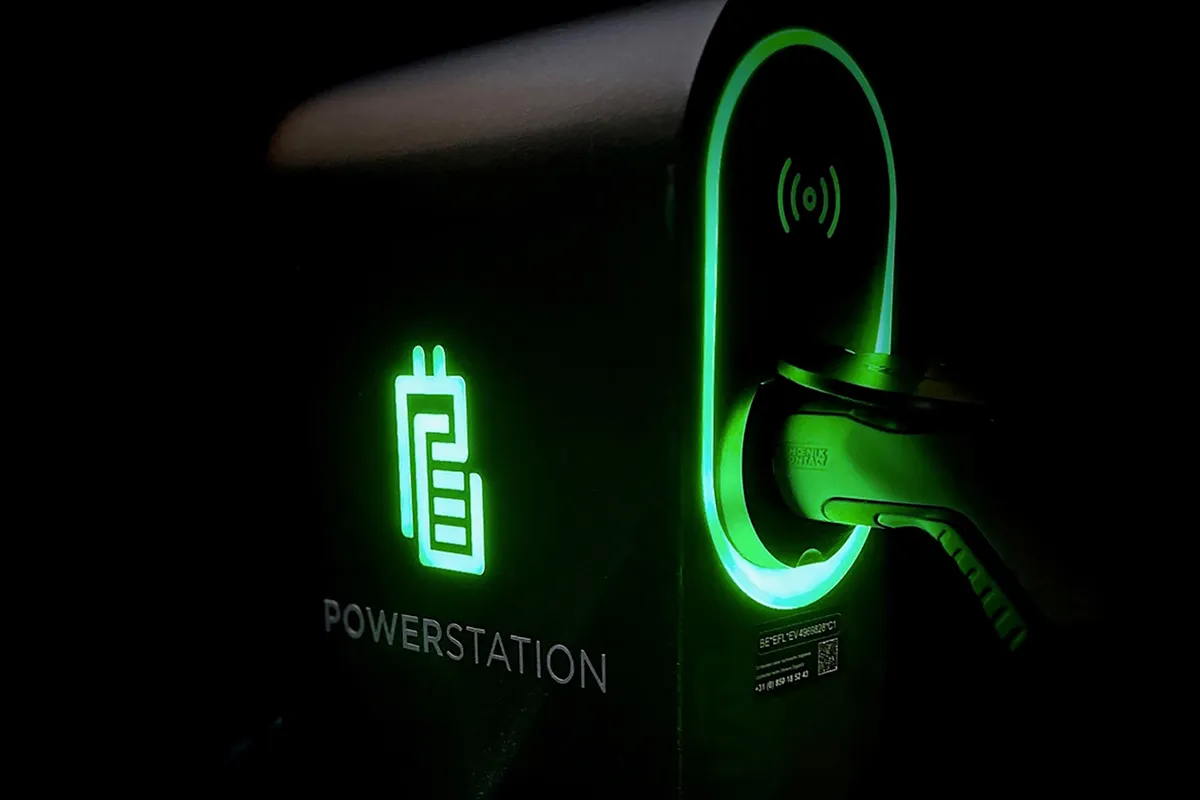
Installers are not left to fend for themselves. The company supports them with clear manuals, advance training and a foolproof installation process. “Our charge point is supplied ready to use, with a SIM card and preset parameters. Just plug it in and it works. Installation can be complicated with other brands. With us, it’s plug-and-play. We took the time to get everything right,” explains Erik Groes. “Installers who are first to establish themselves in a region will also receive our leads. We’re not looking for hundreds of installers, but for strong partners.” Alongside its charge points, the company also offers a charging card with extensive coverage, with no obligation to take one.
Made from recycled materials
The Powerstation Two delivers the required performance, with charging power of up to 22 kW per socket and support for dynamic load balancing and solar charging. The electrical connection is underneath, with a maximum charging capacity of 125 A. Thanks to its modular design, OCPP communication protocols and connectivity via Ethernet, Wi-Fi, 4G or UTP cable, the charge point is well suited to a range of
settings, from SMEs to large corporate fleets. Companies can even add their own logo to the casing. Although Powerstation is a wholly Belgian company, it also works with international partners. For private customers, it distributes the Volt Time Source 2S, a Dutch wallbox with a maximum output of 22 kW and an elegant design.
At the same time, Powerstation is looking to the future. This includes the potential of bidirectional charging, although the question of liability for the impact on batteries remains unclear, according to Erik Groes. The company is also exploring bio-based materials for the casing. This could make its charge points attractive to fleet managers facing pressure from ESG regulations. “We funded a start-up, Grounds Up, which recycles coffee grounds to make cups and printing materials. We may use this raw material for our front panels in the future,” concludes Erik Groes.
Question about this story? Ask your question
Keep following this
Get an email when a new story is published. No account needed.
- ThemeSafe and adaptable electrical installations
- SubjectElectrical engineering