











The installation sector on the threshold of 2026
More automation, larger energy systems and a growing need for specialisation
The year 2025 brought more upheaval than might appear at first glance. Behind the figures and the decline in building permits, technological, regulatory and societal change was taking place. Installers felt it on site, manufacturers in product development and customers in their wallets.
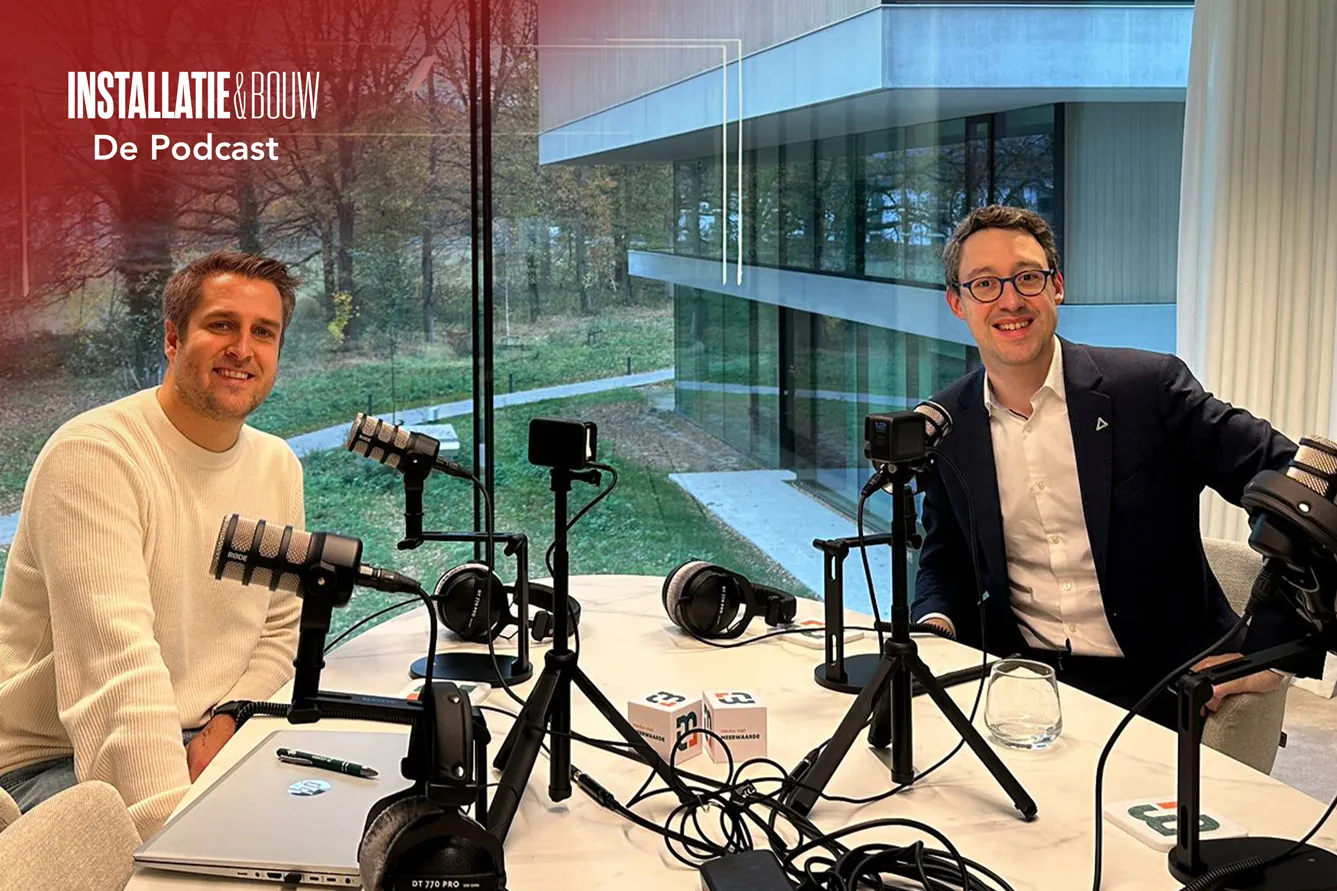
In an interview on the Installatie & Bouw podcast, Vincent Vancaeyzeele, Technology & Innovation team manager at Techlink, board member at ODE Vlaanderen and managing director of TechnoFin, analyses the major trends and how they will continue into 2026.
A year of political signals and more complex designs
The political drive towards electrification was clearly felt. The increase in VAT on gas boilers for renovation work, from 6% to 21%, gave a fresh impetus to the gradual phase-out of fossil-fuel installations.
On the technical front, Vancaeyzeele sees a major shift in the design phase.
“Much more attention is being paid to accurate heat-loss calculations and the hydraulic design of systems. The sector understands that good design upfront prevents many problems down the line. Complexity is increasing, along with the need for deeper expertise.”
Price-conscious customers and growing administrative pressure
Comfort remains important, but in 2025 price sensitivity once again dominated customer concerns, both in the residential and commercial sectors. The decline in permits and high construction costs are being felt.
Installers also faced a growing administrative burden. Periodic maintenance of oil and gas boilers must not only be carried out, but now officially recorded as well.
“Installers have to explain this extra work and its associated cost to customers. It takes time and communication, two resources that are already in short supply.”
AI advances, but has yet to reach the job site
According to Vancaeyzeele, artificial intelligence made most of its strides behind the scenes in 2025. Manufacturers and distributors made significant progress with design software and automated measurements using camera technology.
But a genuine breakthrough on the job site is still some way off.
“There is a degree of reluctance. AI works very well in ideal conditions, but end users expect perfection. Building a prototype is one thing; delivering a robust, reliable and error-resistant finished product takes time and extensive testing.”
He therefore does not expect self-learning installations to become mainstream in 2026.
Energy systems are growing: larger batteries, familiar controls
While AI is still finding its feet, energy storage is advancing more quickly. Battery prices have fallen significantly again, making it possible to install larger systems in both residential and commercial buildings.
For heat pumps, the heating curve remains the basis of control.
“Ultra-intelligent controls are sometimes announced, but in practice, conventional controls remain the most robust,” explains Vancaeyzeele.
In large buildings, he sees a clear rise in demand for BACS (Building Automation and Control Systems), which integrate heating, cooling, ventilation, lighting and energy monitoring. “This is where the major opportunities will lie in 2026.”
The quiet revolution in the electrical sector
According to Vancaeyzeele, the biggest changes are expected in the electrical sector.
“We are on the cusp of a new generation of circuit breakers with integrated energy monitoring. They will be widely promoted in 2026 and will become the new standard.”
This type of circuit breaker directly measures the consumption of a heat pump, cooker or other major electrical load, enabling smart energy management at a later stage.
“This is a crucial step towards genuine energy management in homes.”
Specialisation is becoming essential
Demand for technical professionals is soaring, but the influx of new talent is not keeping pace. All subsectors are drawing from the same talent pool: plumbing, electrical, HVAC, PV, batteries and even Defence.
According to Vancaeyzeele, the sector will move towards multidisciplinary teams rather than relying on a single all-rounder.
“Electrification increases the need for collaboration. Two HVAC installers and an electrical technician: that is the model for the future.”
STEM entrants as a lifeline
Techlink continues to invest heavily in the next generation through initiatives such as Install Skills (East and West Flanders), the French-language competition Concours du Meilleur Élève Chauffagiste, and the Install Tomorrow Experience Day, where around 2,000 students visit Walibi to take part in practical technical workshops.
“We need to get young people interested in technology,” concludes Vancaeyzeele. “These are occupations with skills shortages, but they offer huge prospects for the future.”
Question about this story? Ask your question
Keep following this
Get an email when a new story is published. No account needed.
- ThemeThe evolving installer profession
- SubjectNews







