Safe and effective sealing of linear joints and service penetrations requires expertise
Texte & photos Bostik
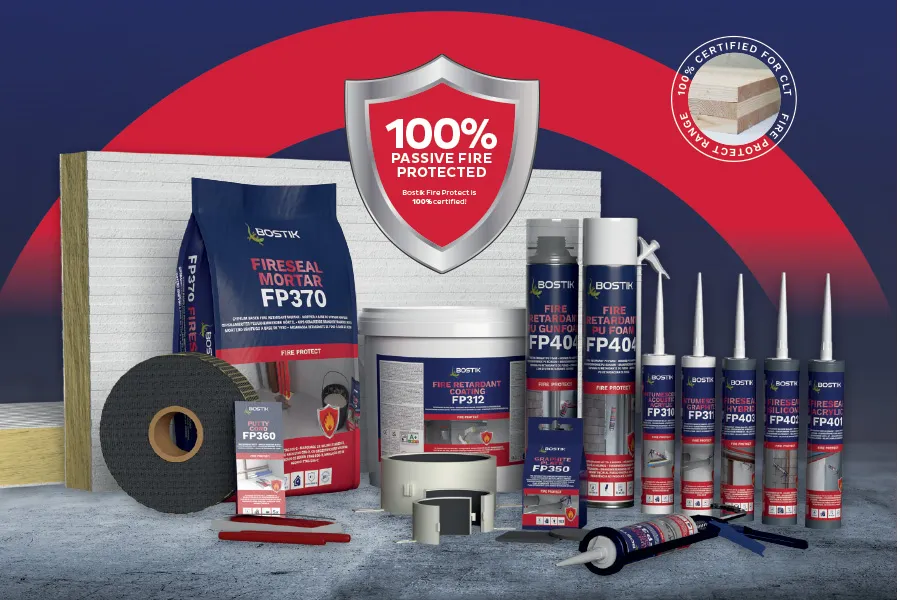
A building fire cannot be prevented. Even the safest building in the world can fall victim to flames. “Unfortunately, the saying ‘prevention is better than cure’ does not always apply to building fires,” explains Nick Haring, Business Developer for Fire Protect and Airtight Construction at Bostik. “However, we can minimise the impact of a fire. To do so, it is essential to compartmentalise flames and smoke carefully. Linear joints and service penetrations play an important role in both residential and public service buildings.” Under the name Fire Protect, Bostik offers a complete range of certified products that effectively control the spread of flames, smoke and toxic fumes through joints and service penetrations.
The importance of compartmentation
To understand the need for compartmentation, it is important to know that more than half of the people who die in a fire were not in the room where it started. What is more, most victims are not killed by the fire itself, but by smoke spreading through the building at tremendous speed. “To understand the importance of compartmentation, you need to know that more people die from smoke than from fire,” explains Nick Haring. “They do not even need to be in the same room. 60 minutes of fire resistance means 90 minutes of smoke resistance. This applies to construction joints, but also to service penetrations, an area in which Bostik specialises.” Fire and smoke compartmentation is mandatory in residential buildings to prevent flames, smoke and toxic fumes from spreading from one dwelling to another. “Public service buildings must also have appropriate fire and smoke compartmentation, depending on their size, function and contents.”
Tested in practice
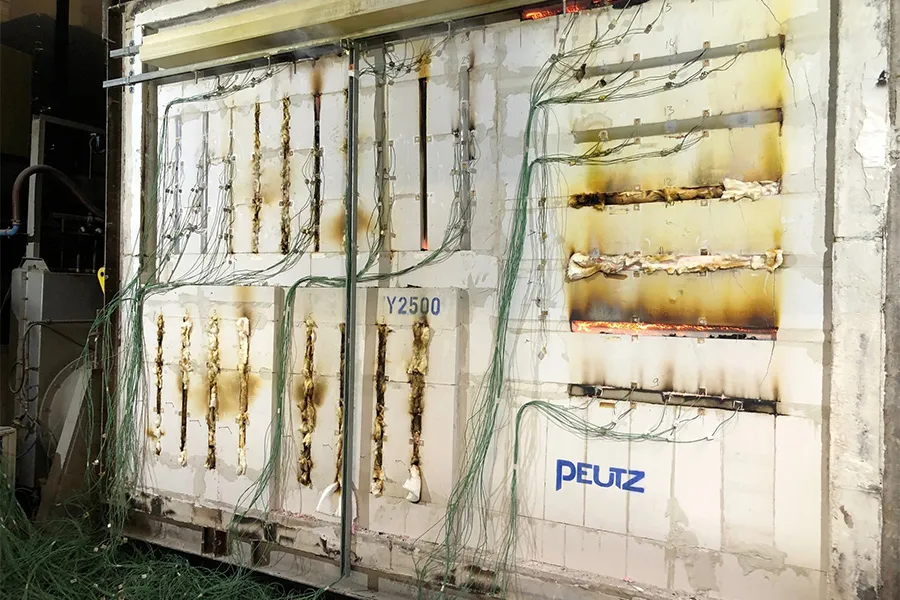
Once fire and smoke barriers have been built, particular attention must be paid to linear joints and service penetrations. Flames, smoke and toxic fumes can only be effectively contained if these are fitted with suitable fire- and smoke-resistant seals. “By linear joints, we mean construction joints between the fire barrier and the ceiling, the fire barrier and the wall, or the fire barrier and the frame,” explains Nick Haring. “Sealing these joints safely requires products and systems that comply with EN 1366-4.” Bostik offers a wide range of products that meet this standard. “All our products have been tested in practical situations by an independent, certified laboratory, in different constructions and across a wide range of joint widths. The results of these tests can be found in the classification and test reports, which are available free of charge on our website.”
Polymer sealant or foam
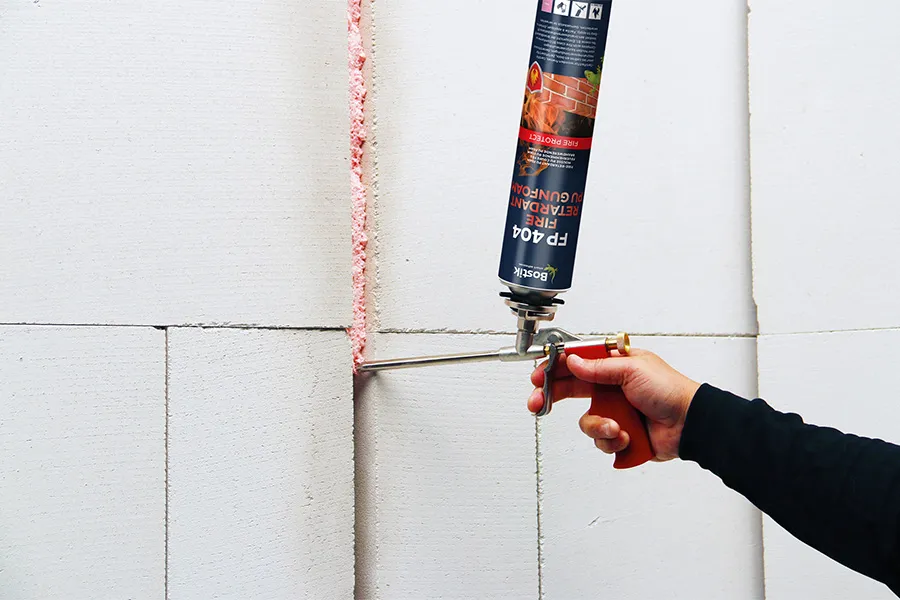
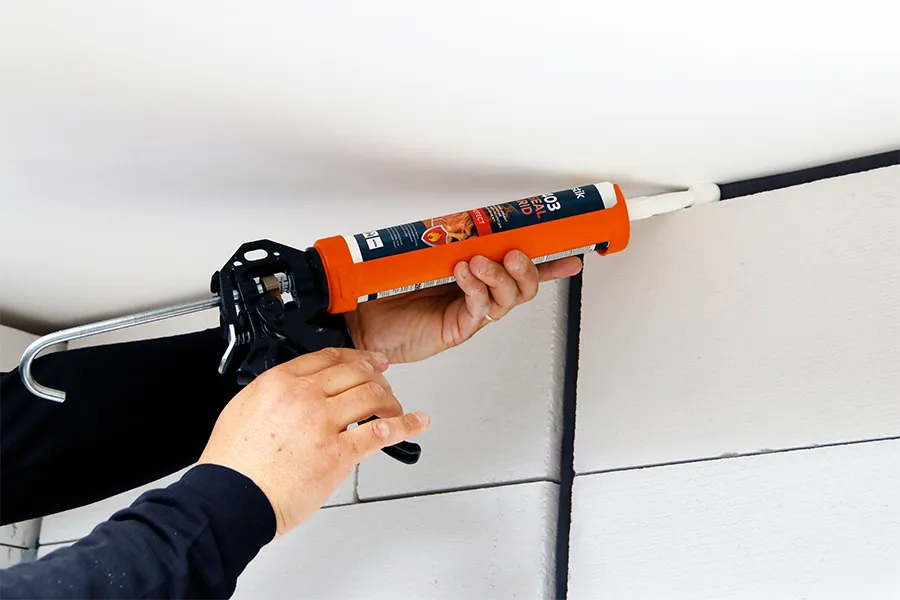
Bostik FP 403 Fireseal Hybrid polymer sealant is a unique product for sealing linear joints. It is tested and certified for horizontal and vertical joints, connection joints, wooden and steel window frames, masonry substrates and all Metal Stud applications. “In some configurations, it can even be used to create joints up to 60 mm wide,” explains Nick Haring. The sealant can also be painted easily. “FP 404 fire-retardant PU foam, which has been successfully tested on brick walls 70 to 200 mm thick, is also very popular. This makes it ideally suited to builders and contractors in the prefabrication sector.” However, he emphasises, these products cannot be applied just any way. “A good product alone does not guarantee a fire- and smoke-resistant joint. You need to apply the right products correctly, at the right thickness and in the right places. It is therefore important to request the classification reports for the products you need during the engineering phase. Do the product and project classifications match? Is a product suitable for the thickness of the wall or floor in question? And what is the maximum width for horizontal and vertical joints?” To advise and support customers in this process, Bostik is keen to bring the relevant stakeholders together as early as possible. “This enables us to anticipate mistakes and costly emergencies, and to raise building safety to the highest level.”
Fire-resistant service penetrations
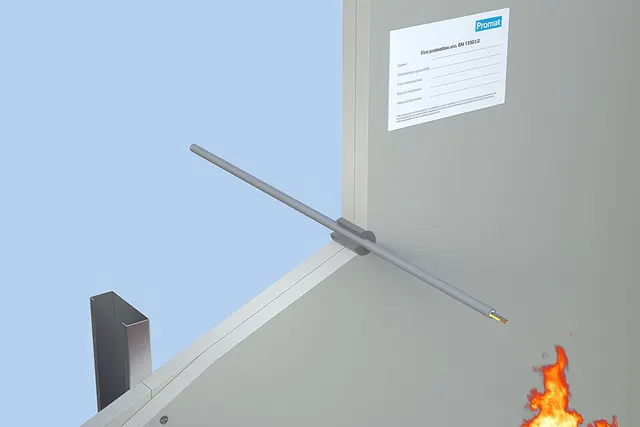
Following on from linear joints, Nick Haring also highlights the importance of fire-resistant service penetrations in fire and smoke compartmentation. “There is still a lot to be done in this area,” he notes. “Unfortunately, we still see far too often that, when multiple penetrations are needed for electrical cables and conduits, for example, they are all grouped together in one corner. This may seem efficient, but it does nothing to improve fire and smoke safety. In that situation, safe and effective sealing is no longer possible.” Penetrations often need to be spaced at least 3 cm apart and extend out from the wall, he points out. “The choice of the right product is also essential. The product must be suitable for the construction material in question. It is also important to use the right screws for the application, for example.”
Also for CLT applications
Bostik also offers a wide range of products for sealing service penetrations in fire and smoke compartments. They have been successfully tested in accordance with EN 1366-3. “What makes our product range unique is that, in addition to brick walls and floors, we also offer certified solutions for cross-laminated timber (CLT). Alongside intumescent sealants (acrylic and graphite), our range includes rock wool boards in various thicknesses, pipe collars, pipe wraps, sealant cords and mortars. These not only ensure fire and smoke safety, but also make work much faster. All our products comply with EMICODE® EC1 Plus and are ideally suited to BREEAM projects. We would be pleased to explain the options in more detail in a personal meeting.”
A business enquiry for Bostik Benelux? Get in touch
Companies in this story
Keep following this
Get an email when a new story is published. No account needed.
- ThemeFire prevention
- SubjectProducts
- CompanyBostik Benelux