











“NIT 300 finally provides more guidance”
Texte Kris Vandekerckhove | Photos Buildwise
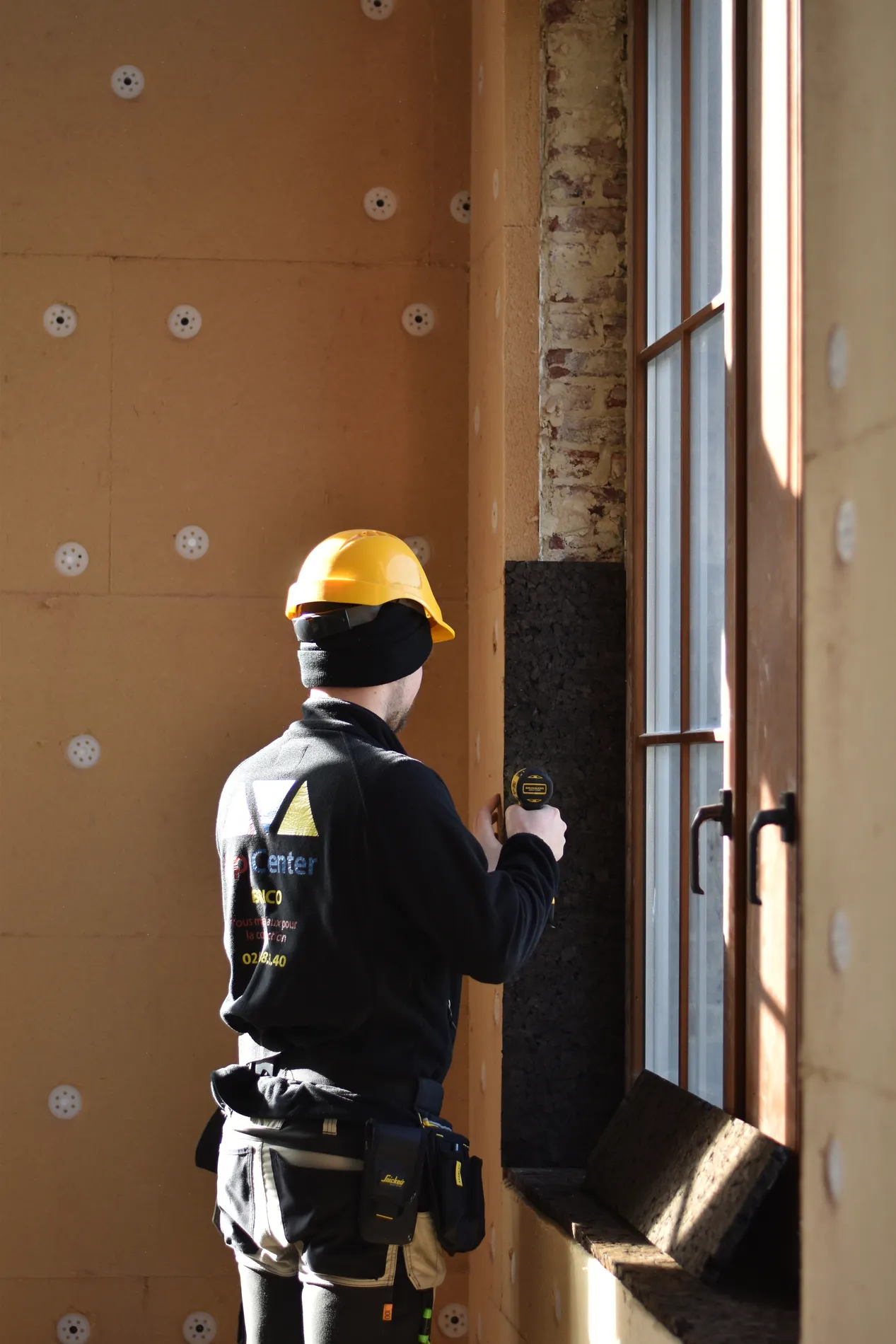
Internal insulation, without guesswork
Internal insulation of façades is the obvious next step in many renovation projects, but it is also the one that raises the most questions. In the latest episode of the Archicomm podcast, Timo De Mets, R&D expert at Buildwise, shares his insights.
The aim of the podcast? To clear up the uncertainty with a clear message: internal insulation is feasible, provided it is approached methodically.
Why internal insulation is essential today
Timo De Mets immediately puts the subject in the wider context of the renovation challenge: “If we want to make our buildings more energy-efficient and future-proof, we need to consider the building envelope as a whole. Roof insulation and window replacement are generally straightforward. But façades are more complex: the areas are large, the impact is significant and constraints are common.”
There are three main techniques for insulating façades:
1. Cavity wall insulation
This involves filling the existing cavity with insulating material. It is a relatively simple and affordable solution, but is limited by the width of the cavity. In addition, many older homes do not have cavity walls. Even where an uninsulated cavity is present, a preliminary assessment must confirm that the technique is suitable.
2. External insulation
Insulation is applied to the outside of the façade, usually finished with render or cladding. Technically, this is the most robust solution, but it changes the appearance of the façade and is not always permitted or desired, particularly for listed buildings or where there is insufficient space at the property boundary.
3. Internal insulation
Insulation is installed on the inside of the façade. This preserves the exterior appearance, but requires greater attention to building physics because it changes how the existing wall dries out. “Internal insulation is therefore not an exception. Often, it is the only option available,” says Timo De Mets. “And yet it continues to cause a lot of uncertainty on site.”
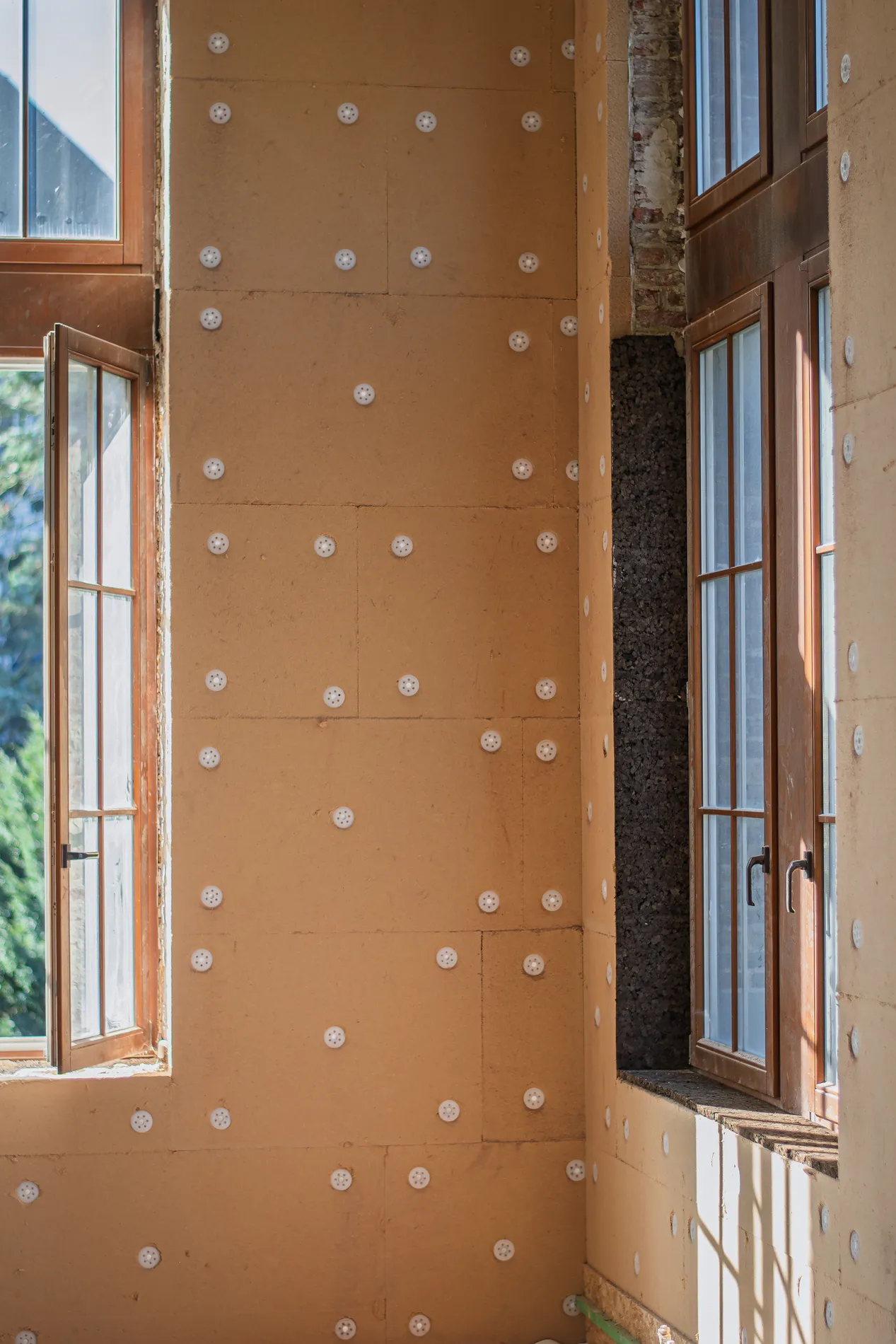
What is behind this reluctance?
Concerns about internal insulation mainly relate to moisture. And this concern is justified, explains Timo De Mets: “When you insulate internally, the way the wall dries out changes. The wall becomes colder and dries more slowly. Moisture from rain, which was previously relatively harmless because it evaporated quickly, can remain in the wall for longer. This increases the risk of moisture-related problems.” A classic example is the ends of timber beams. Before the wall is insulated, they are in a relatively warm, dry part of the wall. After internal insulation work, they may end up in a colder, damper zone. Without the right precautions, this can lead to timber deterioration or rot. “But,” Timo De Mets stresses, “that does not mean internal insulation automatically causes problems. It simply needs to be designed intelligently.”
NIT 300: a structured approach rather than guesswork
It is in this context that Buildwise has published the new Technical Information Note (NIT) 300. It provides a clear framework for applying internal insulation reliably and with control. The approach is based on three steps.
1. A thorough preliminary assessment
Internal insulation does not start with installing insulation, but with assessing the situation. Are there any moisture problems? What is the condition of the masonry? Are there timber or metal elements built into the façade? What is the building’s orientation, and how exposed is it to rain? The aim is not to avoid risks by abandoning insulation, but to assess them properly so they can be managed.
2. System selection and sizing
There is no one-size-fits-all “ideal” solution. The right choice depends on the project’s priorities: acoustics, fire safety, environmental impact, loss of internal floor space, and so on. Sizing is also crucial. Adding more insulation does not always deliver better performance. Excessive thickness can significantly slow the wall’s drying and increase the risks. NIT 300 therefore provides practical recommendations and tables for determining the maximum safe thickness in each situation. This is not just about the insulation material, but the complete system: fixings, airtightness, any vapour control layers and the internal finish.
3. Particular attention to installation details
Even the best system will fail if it is poorly installed. Junctions with floors, internal walls and window openings are critical. If these details are not handled correctly, the energy savings can fall well short of expectations. In the worst cases, mould can develop. Internal insulation therefore requires precision both in the design and on site.
A genuine driver of renovation
The podcast’s central message is clear: internal insulation is not a last resort. It is a valuable tool in an overall renovation strategy, provided it is applied correctly. With NIT 300, Buildwise’s main aim is to give professionals greater confidence. By mastering the principles of building physics, carrying out the right preliminary assessments and paying particular attention to sizing and details, they can install durable internal insulation while keeping risks under control.
This is no longer a matter of improvisation, but of informed, controlled decisions
Question about this story? Ask your question
Keep following this
Get an email when a new story is published. No account needed.
- SubjectNews







