











ATTB becomes Climafed: much more than a new name
Texte Climafed et Wouter Polspoel Photos Climafed
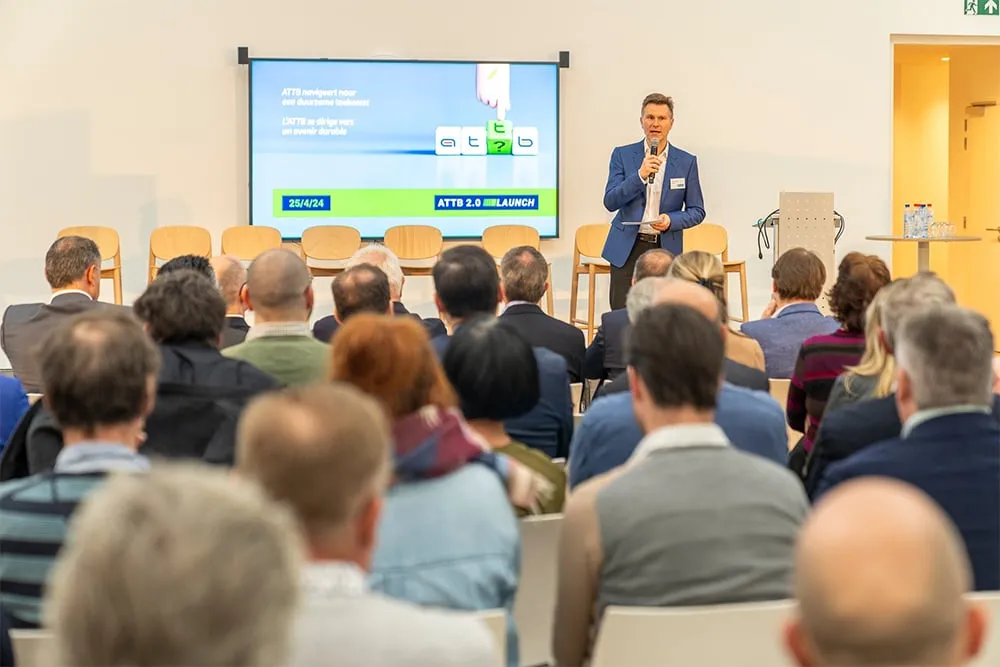
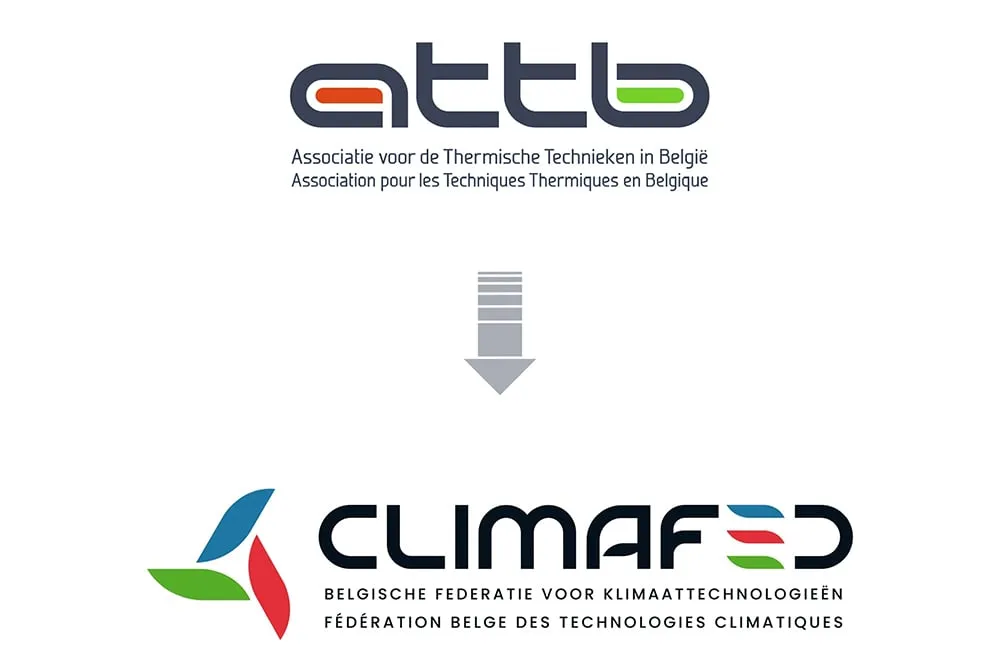
The Association of Thermal Techniques of Belgium (ATTB) has been renamed Climafed, Belgian Federation of Climate Technologies. Along with a new name, the federation has a new identity, a new website and a completely revamped organisational structure, all reflecting its mission: to help shape a sustainable, resilient future in the face of the threat of climate change.
ATTB was founded in 1973 as an association of boiler manufacturers. Over time, manufacturers and importers of renewable heating systems joined the network, as did companies offering related products or services. What began as an initiative to collect market data has grown into an information and representation platform for the entire sector.
The launch of the new name, corporate identity and website under the name Climafed, Belgian Federation of Climate Technologies represents much more than a cosmetic update. It reflects the organisation’s pivotal position and mission in the Belgian heating market: to play a leading role in promoting energy-efficient solutions and the transition to renewable sources, in order to stop or at least slow global warming.
Climate challenges and European policy
Climate technologies play a crucial role, as heating and cooling account for 50% of energy consumption in Europe. Making this energy carbon-neutral is essential to keeping global warming below 2°C, the goal of the international Paris climate agreement, with the hope of doing half a degree better still.
European policy documents such as the European Green Deal aim for the EU to achieve net-zero CO2 emissions by 2050. These provisions became legally binding when the European Parliament and Council adopted the Climate Law in 2021. As a result, Member States will need to be able to heat and cool all their buildings without using fossil fuels by 2050.
Although progress has been made, it is still insufficient. Since 1990, the reference year used by Europe, combined emissions from residential and non-residential buildings have fallen by almost 29% (from 25 068 kilotonnes of CO2 equivalent in 1990 to 17 992 in 2022). However, there is a significant difference between the two sectors: while emissions from the residential sector have fallen by 37.1%, emissions from the tertiary sector have risen by 14.5% (building heating). Furthermore, fuel consumption, particularly the use of gas, is steadily increasing across Belgium’s building stock. Between 1990 and 2022, fuel consumption in the residential sector increased by 17.4%, while the tertiary sector saw an increase of 30%.

Transformation and redefinition
Christophe Leroy, President of Climafed, explains how the federation’s new organisational structure should put Belgium on course to achieve a fossil-free building stock by 2050: “To provide even better support for its members and stakeholders, Climafed now represents not only manufacturers and importers of energy-efficient heating and hot water solutions, but also of cooling and ventilation solutions. This enables us to offer multifunctional solutions to specific challenges, with the aim of reducing CO2 emissions at the lowest possible social cost.”
Climafed has also designed its new website, www.climafed.be, around specific application categories: “new residential construction and major energy renovations”, “residential replacements and renovations” and “collective and non-residential projects”. The solutions offered (not only heat and cold sources such as heat pumps, boilers, solar thermal, heat and cold networks and cogeneration systems, but also ventilation, hydraulics, measurement equipment, services and support) are mainly divided into three specific areas of application to enable a more targeted approach.
“This change in segmentation goes beyond a simple adjustment to the website. It represents the essence of Climafed’s new operational structure and the way it presents itself to the outside world,” stresses Christophe Leroy.
“The same applies to the various position statements now featured on Climafed’s new website,” says Patrick O, Climafed’s Public Affairs Manager, “in which the different sectors now represented within Climafed put forward common positions.” The website www.Climafed.be will in future be supplemented with briefing papers, product-specific news and sector-specific “use cases”.
Question about this story? Ask your question
Keep following this
Get an email when a new story is published. No account needed.
- SubjectNews







