Ventilation expert and tiny house specialist join forces
Texte Wouter Polspoel | Photos VERO DUCO
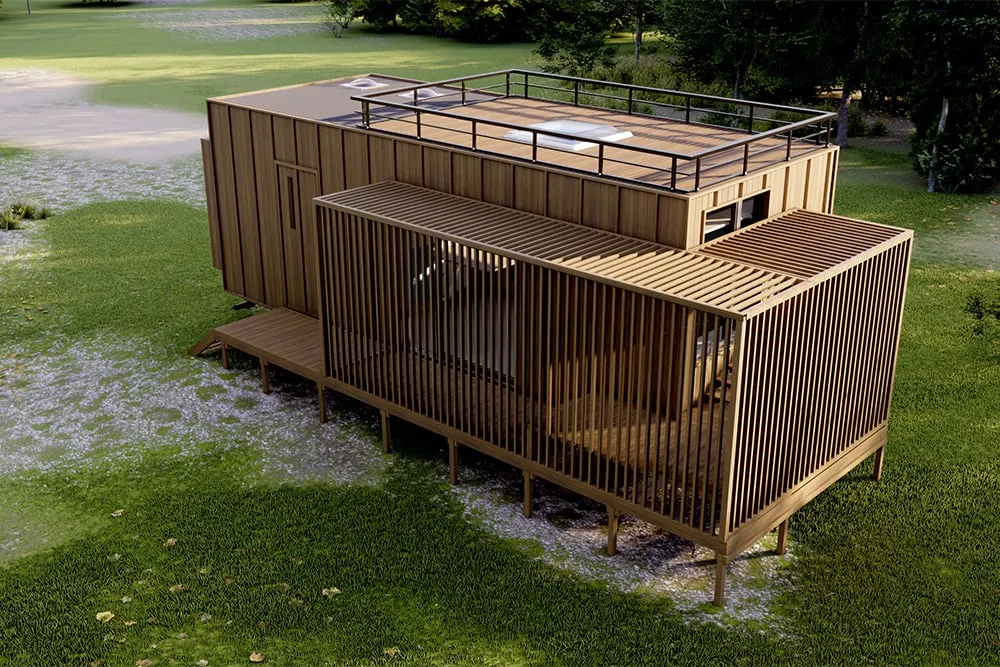
Atelier Tiny Living, whose mission is to help builders create the tiny home of their dreams, was founded around a year and a half ago and is already a great success. DUCO is contributing to that success with its Ducobox mechanical extract ventilation systems, providing these small homes with the fresh air they need.
Atelier Tiny Living is the brainchild of young entrepreneur Danny Schoemans. After studying interior architecture, he worked on set construction and in joinery and timber-frame construction. He gained extensive experience in making homes airtight and insulating them. The COVID pandemic then gave him the springboard to set up as a self-employed joiner in Brussels, before he founded Atelier Tiny Living shortly afterwards.
Build it yourself or have it built
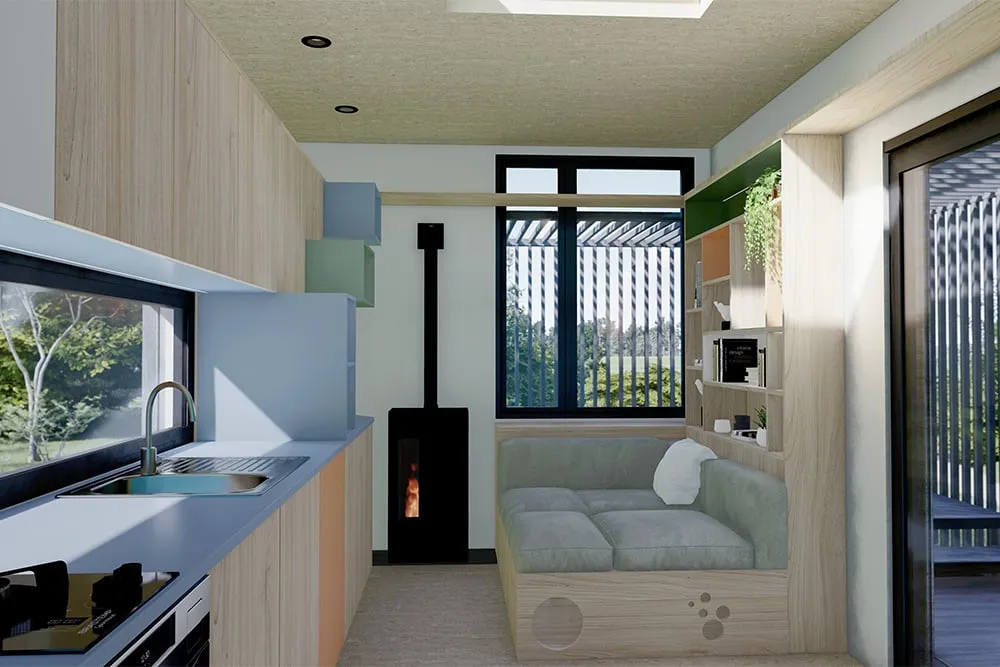
People who approach Atelier Tiny Living to build their small home can either entrust the entire project to the company or build it themselves in its workshop under the entrepreneur’s supervision. “We support self-builders, for example by drawing up construction plans and giving them the option of buying the necessary building materials through us,” explains Danny Schoemans. “This allows us to combine our expertise and materials with the self-builder’s passion and creativity.”
The people who buy tiny houses are a varied group, according to the company’s managing director. “Some are first-time buyers who choose an eco-friendly, minimalist concept with a low footprint. Then there are people who move into smaller homes for financial reasons. Finally, there is also the slightly older generation looking for a comfortable holiday home.”
Made to measure
Every tiny house has a sturdy timber frame, made from the finest materials and types of wood. Each build is deliberately tailored to the customer. Several discussions are needed before the final design is agreed.
One important decision in the next phase is how to ventilate the tiny house. Some Atelier Tiny Living customers opt for a simple air vent, while others choose a more energy-efficient solution with a ventilation system. Danny Schoemans is committed to using only high-performance equipment and will never compromise on quality, even if that means a slightly higher price. He quickly chose DUCO as his ventilation systems partner. He first got to know the ventilation specialist while renovating his own home, which he equipped with a DUCO ventilation system.
Zonal ventilation, where and when it is needed
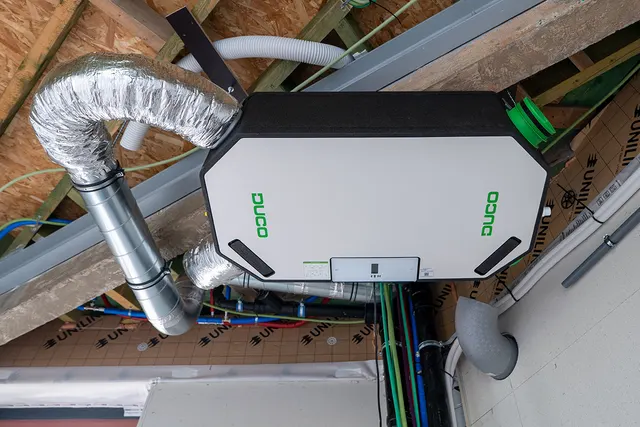
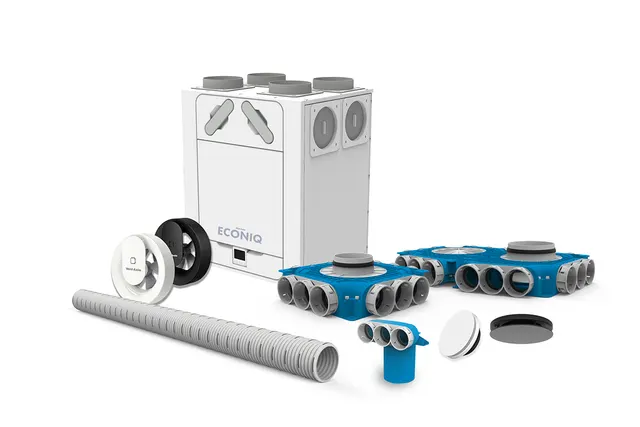
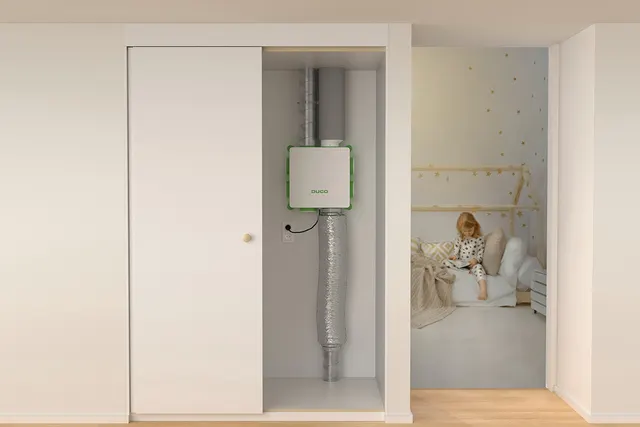
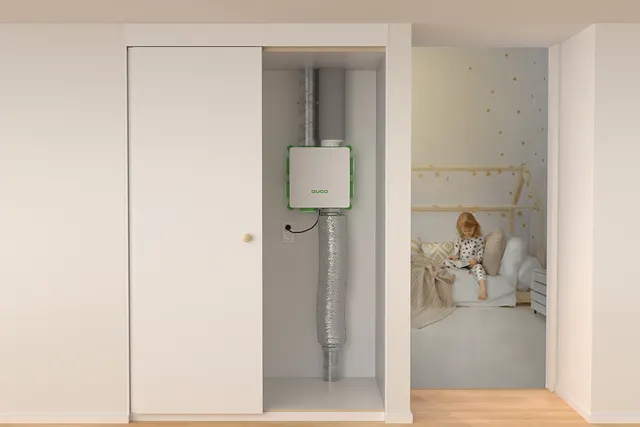
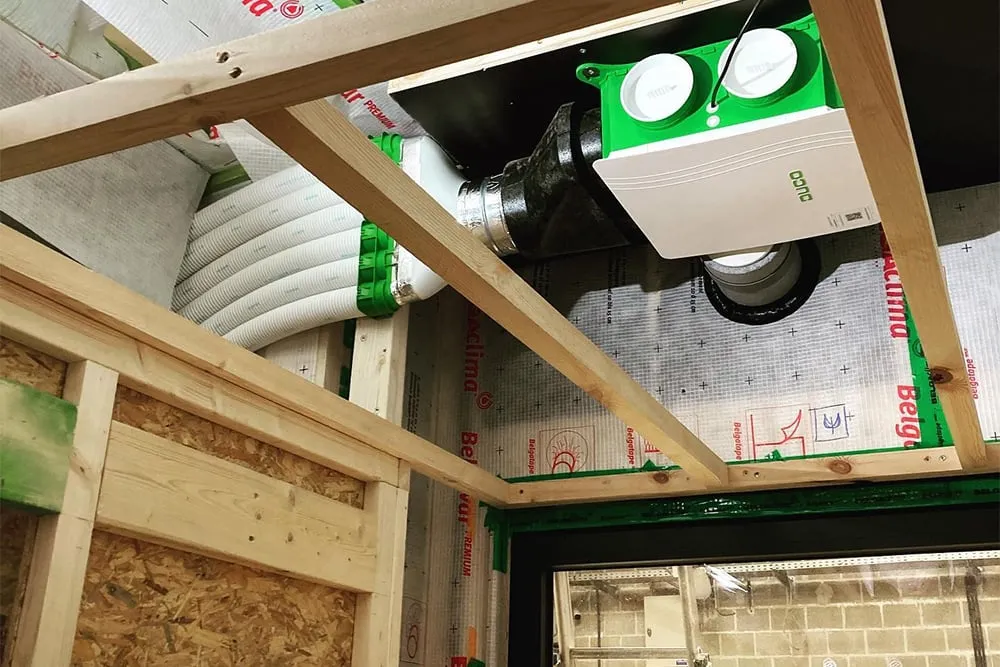
When Atelier Tiny Living customers choose a ventilation system for their tiny house, the construction company selects either the DucoBox Focus or the DucoBox Silent Connect. This ventilation unit is very easy to install in confined spaces. “Thanks to the convenient plug & play principle, the necessary calculations are completed in no time, so the entire system can be installed in less than half a day,” says Danny Schoemans, who speaks highly of the solution. “Another advantage is that DUCO distributors such as Van Marcke and Desco always have the ventilation units in stock, which saves us a lot of time.”
The DucoBox Focus’s internal control valves ensure that polluted and/or humid air is extracted only where needed and in the right quantities. Once the indoor climate in the tiny house has been optimised, the valves close automatically, resulting in exceptionally quiet and energy-efficient operation.
Dual learning in construction
Atelier Tiny Living sees itself as both a construction company and a training provider. The company works with students on dual learning programmes, who spend just a few days a week at school and the rest of their time gaining practical skills in a real workplace. “The students who work here build three or four tiny houses during their placement. They learn straight away to meet high standards, because our tiny houses are homes for life. When students then come to work for us or want to collaborate with us, we can trust them to meet our requirements and standards and deliver only the best quality,” concludes Danny Schoemans.
Lightweight housing
In Wallonia, the legislation governing the installation of a tiny house is slightly more flexible than in Flanders. Wallonia has incorporated tiny houses into its Walloon Sustainable Housing Code. They are classified as lightweight housing, alongside yurts, caravans, bubble houses and wooden cabins. This framework gives tiny houses legal status, subject to a number of requirements, including no foundations or upper storeys and a limited ground footprint.
Question about this story? Ask your question
Companies in this story

Keep following this
Get an email when a new story is published. No account needed.
- ThemeHealthy indoor air
- SubjectVentilation
- CompanyVan Marcke NV