More personalised and greener
Texte Tom Rampelbergh | Photos Royal Botania, Gervi, Signify, iF Design, Ledvance
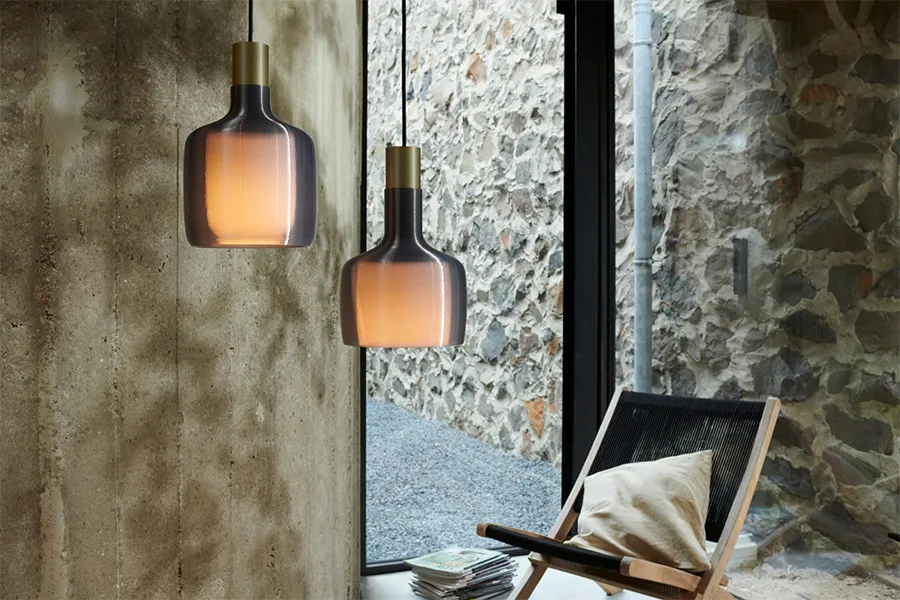
We all agree on the importance of good lighting inside and around a building. A room, house or other building may be perfectly designed from an aesthetic and functional point of view, but add poor or unsuitable lighting and it loses its appeal. The lighting sector is also continuing to move forward. What are the current prospects in terms of design, technology and engineering?
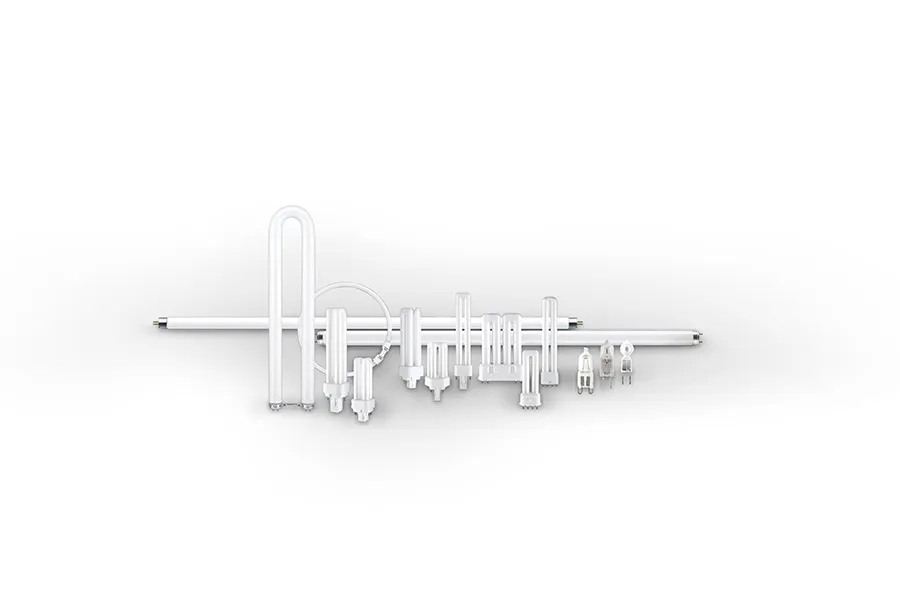
It goes without saying that energy efficiency has become critically important. Today’s high energy prices, which continue to rise or remain high, are further proof of the need to take a close look at the consumption of all our household appliances and, consequently, at opportunities to save energy through lighting. This is certainly not a new trend, with the gradual phasing out of energy-hungry bulbs being one example. We said goodbye to incandescent bulbs some time ago, and fluorescent lighting will soon follow suit. From September 2023, for example, the familiar T8 tube, which helped usher in modern lighting, will disappear. But there is no need to worry. LED lighting has been on the market for more than 15 years, and innovation continues, so there is sure to be a worthy LED alternative. Feel free to ask one of the many lighting specialists in our country for advice. They can provide all the information you need, along with a good lighting design.
Sustainable lighting
Sustainability is clearly one of the key topics of the day. Everything related to sustainability, circularity and green thinking is becoming increasingly important. We are also seeing new business models that offer lighting as a service. Better still, ETAP is cautiously introducing circular light as a service. The aim is to take the entire burden off the client, from the initial design through to circular reuse at the end of the product’s life. Such a solution ensures that the LED lighting remains suited to the workers concerned, while freeing up funds for the company to use for other investments.
There is also the assurance that, at the end of the process, all components will be collected and reused appropriately. Signify’s service is also worth mentioning. It allows customers to design or customise their own luminaires on demand. The manufacturer then 3D prints the design at the former Philips factory in Turnhout to deliver a high-quality product. “It saves time, energy costs, waste during production, packaging and transport,” the manufacturer explains. “It also paves the way for more innovative concepts and more complex shapes and colours. What’s more, all our luminaires are recyclable, which fits perfectly with the circular economy.”
Hybrid concepts
Aesthetics, of course, remain paramount, and expectations for luminaire design are high. At Signify, 3D printing gives the end user complete control in this regard, but it is clearly not an option for everyone.
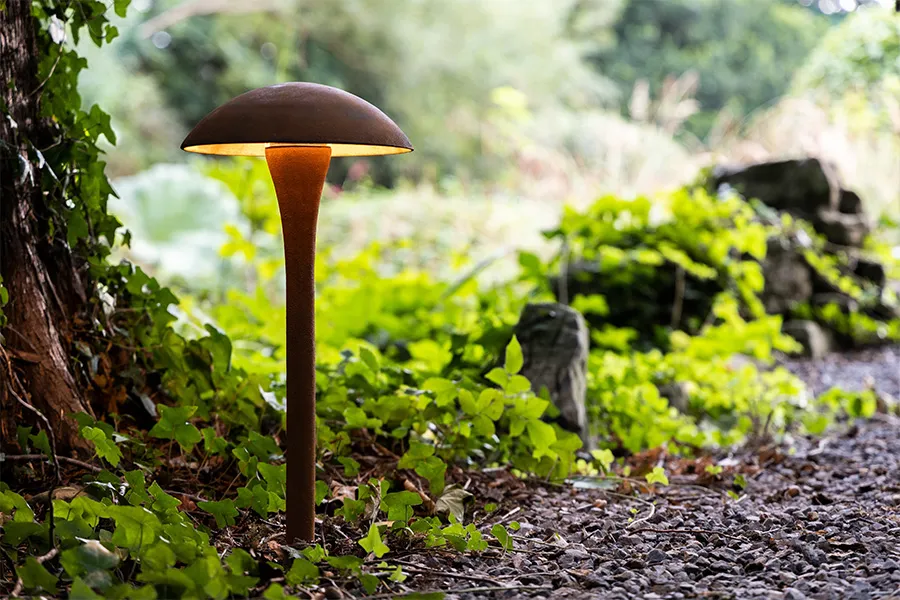
Fortunately, many (renowned) designers continue to do their utmost to offer us the most beautiful, elegant, organic or psychedelic designs, across a wide range of Belgian and international manufacturers. Our shared desire to display something unique is also reflected in lighting trends. Customisable luminaires, tailored to personal preferences and/or to the interior or exterior of each individual home, are available. Think of luminaires with lampshades offered in a range of finishes. Or luminaires that cater to our desire for nature with slightly more “exuberant” ideas: a garden path dotted with playful mushroom-shaped floor lights.
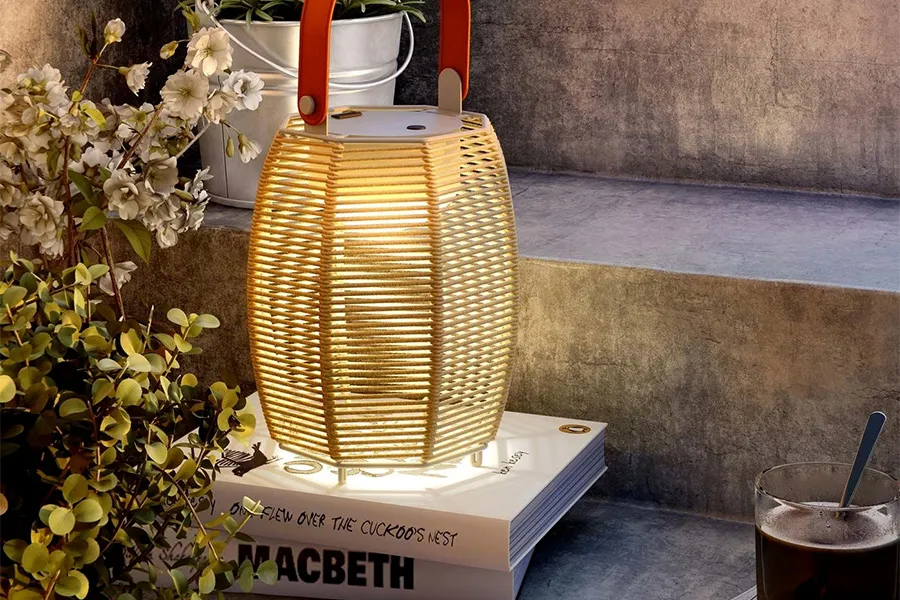
The blurred transition between indoors and outdoors is another notable trend. The coronavirus pandemic taught us that our home should be a haven where we can escape the hectic pace of the outside world at any time. It is only natural, then, that we want to furnish it so we can enjoy it to the full in every season. Indoor and outdoor spaces are therefore equally important, and this is reflected in luminaire design too. We are making less and less distinction between the two and want the same design indoors and outdoors. We even “simply” take our portable luminaires inside or outside. But, of course, without losing sight of lighting quality.
Question about this story? Ask your question
Keep following this
Get an email when a new story is published. No account needed.
- SubjectElectrical engineering