Too hot at home? These 6 tips will help you keep your cool indoors

Hot days often mean stifling heat and excessive sweating at the office, on the train, in the classroom and so on. If you want to avoid the same fate at home, the key is to master the art of keeping solar heat out. Otherwise, the damage will already be done. These six tips will help you do just that.
1 Keep windows and doors closed during the day
Is a hot day or heatwave on the way? Keep doors and windows closed from early morning until the temperature cools down in the evening. The aim is to stop warm air from entering your home and raising the indoor temperature.
2 Keep the sun out
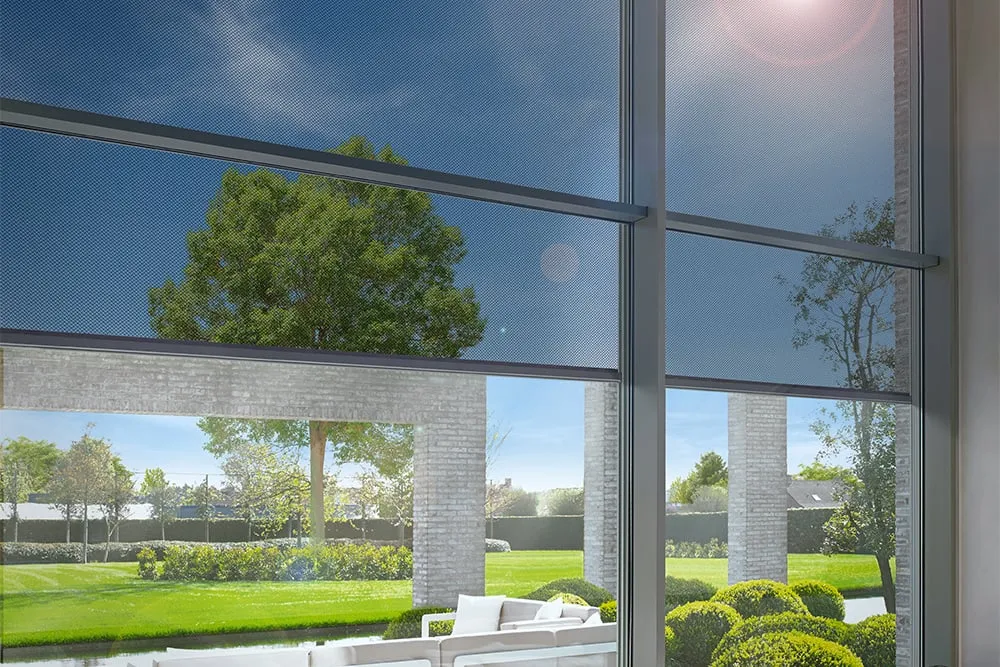
Another essential step on hot, sunny days is to make sure your windows are not directly exposed to the sun. This is particularly important for south-facing windows. A roof overhang, an awning, sliding panels or blinds can help prevent a greenhouse effect and the tropical indoor temperatures that come with it. Internal solar shading, such as curtains and blinds, is unfortunately not as effective, because by then the damage has already been done. The heat is already inside. In a well-insulated, airtight home, it is difficult to get rid of heat once it has built up.
3 Keep blinds or roller shutters down all day
Do you have blinds, or are you thinking of installing them? If so, make the most of them. Get into the habit of lowering them in the morning when you leave home, and keep them down all day in hot weather. Roller shutters also protect your windows from the sun’s heat, of course, but they leave the interior in darkness all day.
4 Let automatic controls manage your external solar shading
A small oversight, such as accidentally leaving your blinds open in the morning, can quickly push up the indoor temperature on the hottest days. Fortunately, there are also “smart blinds” that are controlled automatically according to your preferences and the latest data stored in the cloud. No additional sensors or home automation system are needed. A smart control app such as “Renson Solmate” is all it takes to set up intelligent control of your blinds, even as part of a renovation or a later installation.
5 Let in the cool night air
It makes sense to open your windows in the evening when it is cooler outside than indoors. Ideally, open two opposite windows, or one window on each floor (along with all the internal doors), to let in as much cool night air as possible. Building materials store some of this coolness and gradually release it during the next hot day. This means you start the following day in a cooler home, which also takes longer to warm up. Don’t feel safe leaving a window open? Or are insects a nuisance? You can have burglar-resistant window grilles with an integrated insect screen installed. This is an interesting option if you are planning to replace your windows.
6. Create a green buffer zone
Plants, shrubs or trees strategically placed around your home create a natural buffer against the sun. Houseplants are also a good way to keep temperatures under control. The moisture they release has a cooling effect on the indoor air.
What about air conditioning?
These 6 tips allow you to passively cool your home by preventing the indoor temperature from rising too high. If you do nothing until it is too late, you will have to turn to active cooling, such as air conditioning. During a heatwave, it can be an excellent back-up. However, you can make substantial savings on your energy bill if your air conditioner does not have to run for hours on end throughout the year. Make no mistake: this is unfortunately the case in many new homes, which are well insulated and airtight and have large, south-facing windows. Prevention is better than cure if you want a cooling system that is not only energy efficient but also sustainable. Nature will thank you!
www.renson.net
Question about this story? Ask your question
Keep following this
Get an email when a new story is published. No account needed.
- SubjectVentilation